


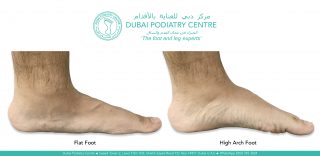
Flat feet are often blamed for foot problems, but very high-arched feet can be just as challenging, and in many cases, more problematic.
Both flat feet and high-arched feet have their advantages. A flatter foot distributes pressure more evenly across the ground, while a high-arched foot can be more rigid and efficient in propulsion. However, it is the structural differences between these two foot types that determine the kinds of problems that develop.
What Happens in a High-Arched Foot
A high-arched foot is naturally more rigid and elevated. While this may seem strong, it also means the foot has less ability to absorb shock.
Even a slight collapse of a high arch can create significant strain. This is because the ligaments that hold the bones in their precise anatomical position are suddenly placed under high tensile stress. These structures are not designed to stretch excessively, so even small changes can lead to discomfort and instability.
One of the most common areas affected is the forefoot arch, located just behind the toes. This arch runs across the foot from the big toe to the fifth toe.
When this area begins to collapse:
- The forefoot structure loses stability
- The fat pad that normally cushions the bones can migrate forward toward the toes
- The toes may begin to retract, often described as resembling a bird gripping a branch
- The patient can feel as though they are walking directly on bone
Why Corns Are More Common in High-Arched Feet
Unlike flat feet, which tend to spread pressure more evenly, high-arched feet concentrate pressure into specific points.
With limited ground contact, the load is primarily taken by the heel and the forefoot. If even one metatarsal head drops slightly, it becomes a focal point of excessive pressure.
This is why high-arched feet are at a much greater risk of developing:
- Corns
- Callus
- Localised pain under the forefoot
- Stress-related injuries to the bones
Flat feet, by comparison, often do not develop corns as frequently because there are fewer isolated pressure points.
The Role of Orthotic Therapy
A common misconception is that a high-arched foot should be flattened. This is not the goal.
Instead, the correct approach is to bring the ground up to the foot.
This is achieved through custom orthotic therapy. A gypsum cast is taken of the foot in a non-weight-bearing position, capturing the foot at its natural, fully elevated arch height.
From this, an orthotic is created that:
- Matches the exact structure of the individual foot
- Supports the arch without forcing it down
- Distributes weight evenly from the heel to the forefoot
- Reduces high-pressure points
- Relieves tensile stress on ligaments
- Helps prevent corns and stress fractures
Why This Matters
Without proper support, a high-arched foot continues to absorb pressure unevenly. Over time, this can lead to chronic pain, recurrent corns, and structural strain.
By supporting the foot in its natural shape, orthotic therapy allows for controlled, even weight transfer and significantly reduces the risk of long-term damage.
For more information or to book an appointment please call our clinic +971 4 3435390 or WhatsApp +971 50 3553024