fbpx

Please wait...


BLOG

No more posts

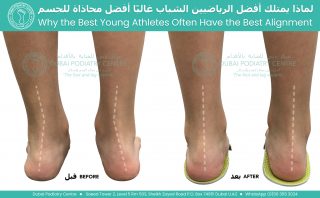
Before and after foot alignment correction in a young athlete showing reduced pronation, improved heel position, and enhanced lower limb biomechanics with corrective orthotics


When we watch elite athletes perform, we often admire their speed, strength, agility, and coordination. What many people do not realise is that beneath these athletic abilities lies something equally important: good biomechanical alignment.

In many cases, the young athletes who successfully progress through junior sport and eventually reach professional levels are those whose bodies remain symmetrical, balanced, and resistant to repetitive injury.


The Importance of Lower Limb Alignment

The feet are the foundation of the body’s kinetic chain. Every step, jump, sprint, and change of direction begins with the way the feet interact with the ground.

When the subtalar joints of the feet and ankles become excessively pronated (rolling inward), a chain reaction can occur throughout the lower limb:

    • Internal rotation of the tibia (shin bone)
    • Increased stress on the knee joint
    • Altered hip mechanics
    • Anterior pelvic tilt
    • Reduced postural efficiency
    • Increased muscular compensation throughout the body

As a result, running mechanics become less efficient and athletic performance can suffer.


Why Some Young Athletes Fall Behind

It is common to see children who are naturally talented at a young age begin to struggle as sporting demands increase.

Around the ages of 10–16 years, training intensity often increases dramatically. During this period, poor lower limb alignment may begin to reveal itself through repetitive injuries rather than obvious pain at first.

Common problems may include:

    • Medial knee pain
    • Recurrent groin strains
    • Patellofemoral pain
    • Achilles tendon discomfort
    • Shin splints
    • Ankle instability
    • Recurrent muscle tightness
    • Increased fatigue during training

A football player may develop repeated groin strains and knee pain when changing direction. A rugby player may suffer ongoing knee injuries during contact and sprinting activities. A tennis player may experience instability while lunging, accelerating, or moving backwards to retrieve shots.

Unfortunately, many promising young athletes spend more time recovering from injuries than participating in training. By the mid-teenage years, some are unable to continue progressing through elite development pathways because their bodies simply cannot tolerate the physical demands being placed upon them.


The Role of Modern Biomechanical Assessment

Advances in biomechanical assessment technology now allow clinicians to identify alignment issues far earlier than ever before.

By analysing posture, gait, foot function, lower limb alignment, and movement patterns, it is often possible to identify the underlying mechanical stresses that contribute to repetitive injuries.

In many cases, excessive pronation of the subtalar joint is a significant contributing factor.

When the foundation is unstable, the structures above it must compensate.

Corrective Orthotics vs Accommodative Orthotics

Not all orthotics are designed with the same purpose.

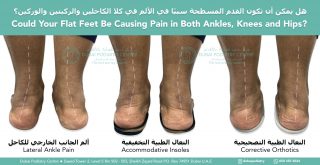
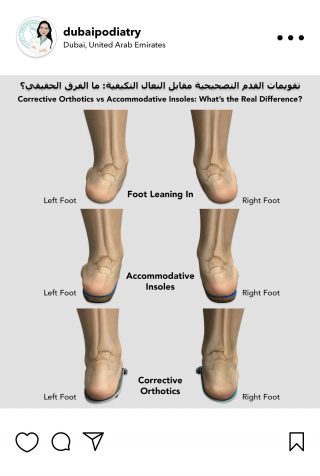
Comparison of foot alignment without support, with accommodative insoles, and with corrective orthotics, demonstrating the effect of orthotic devices on foot posture and heel alignment


Accommodative orthotics are primarily designed to cushion and support the foot. While they may provide comfort, they do not necessarily correct abnormal alignment.

Corrective orthotics are designed to influence foot and ankle position and improve lower limb biomechanics. By improving subtalar joint alignment, corrective orthotics may help:

    • Improve foot stability
    • Reduce excessive internal rotation
    • Improve knee alignment
    • Improve pelvic positioning
    • Reduce abnormal stress on muscles and ligaments
    • Reduce the risk of repetitive overuse injuries

For growing athletes, maintaining good alignment throughout adolescence can be particularly important because the body is continually developing and adapting.


Investing in an Athlete’s Future

Every young athlete dreams of reaching their full potential.

Talent, commitment, coaching, and hard work are all essential ingredients for success. However, maintaining a body that can tolerate years of training is equally important.

A comprehensive biomechanical assessment can help identify whether poor lower limb alignment is placing a young athlete at increased risk of injury. Early intervention may help reduce repetitive strain, improve movement efficiency, and keep athletes participating in the sport they love.

For many aspiring footballers, rugby players, tennis players, runners, and other athletes, addressing alignment early may be one of the most important investments they can make in their future sporting career.

At Dubai Podiatry Centre, we believe that injury prevention starts with proper alignment. The earlier biomechanical issues are identified, the greater the opportunity to support healthy growth, efficient movement, and long-term athletic development.


For more information or to book an appointment please call our clinic +971 4 3435390 or WhatsApp +971 50 3553024



A patient attended our clinic today complaining of severe pain underneath the outside of his left foot. The pain had become so intense that he was limping and described the sensation as walking on a sharp piece of glass.

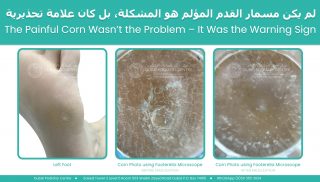
On examination, we found a hard corn underneath the fifth metatarsal head on the outside border of his left foot. Many people assume that a corn is the problem, but in reality a corn is often the body’s attempt to protect itself from excessive pressure.

We removed the corn painlessly, and the patient experienced immediate relief. However, we explained that unless we addressed the underlying cause, the corn would simply return.

To investigate further, we performed a 3D body scan and biomechanical assessment.

The results were fascinating.

The patient had a significant imbalance throughout his body. His left leg was functionally longer than his right. His pelvis was tilted, with the right side anteriorly tilted and the left side posteriorly tilted. He was carrying considerably more body weight through the left side of his body, creating excessive pressure beneath the outside of the left foot.

His medical history helped explain the pattern. He had previously undergone two lower back surgeries on the left side, suffered left hip problems, torn ACL injuries involving the left knee, and undergone left Achilles tendon surgery.

Over many years, his body had adapted to these injuries.

The scan showed that his pelvis had shifted towards the left side, causing increased loading through the left leg and foot. At the same time, his right foot was internally rotated and functioning almost like a golfer at the top of a backswing position. This created high tensile stress through the right Achilles tendon, the right knee, and the lower back while simultaneously increasing compression forces through the left side of the body.

The painful corn underneath the left foot was simply the area where the body was absorbing the greatest amount of pressure.

The development of a corn follows a predictable sequence.

First, the body produces a layer of hard skin to protect itself. This creates a broad plaque of callus, similar to a pancake of thicker skin.

If the pressure continues, the body creates a concentrated plug of dense keratin at the centre of the pressure point. Keratin is the same material found in toenails. This hard central core forms what we recognise as a hard corn.

As pressure continues to increase, inflammation develops beneath the area. Patients often describe burning, stinging, or sharp sensations. This was the stage our patient had reached.

If left untreated, the next stage can be the formation of a soft corn. The tissues become saturated with inflammatory fluid and appear white, rubbery, and extremely painful.

The final stage is tissue breakdown and ulceration.

This progression is particularly important in patients with diabetes, neuropathy, or vascular disease. These patients may not feel the early warning signs of pressure and pain. As a result, the protective stages can progress unnoticed until an ulcer develops.

Many patients believe ulcers appear suddenly and without warning. In reality, the body often gives multiple warning signals beforehand, but if sensation is reduced, those signals may not be recognised.

For this patient, the solution was not repeated corn removal.

The solution was correcting the forces causing the corn.

We prescribed custom corrective orthotics designed specifically for his individual biomechanics. The right orthotic was intentionally very different from the left because each side of the body required a different correction.

The aim was to improve pelvic balance, reduce the functional leg length discrepancy, redistribute pressure more evenly between both feet, and decrease excessive loading through the left foot.

We performed further scans with the orthotics in place and saw immediate improvements in alignment and pressure distribution.

The body can be compared to a wobbly table. If one table leg is shorter than the others, the tabletop becomes uneven. Placing a carefully measured support beneath the shorter leg restores balance.

Corrective orthotics work in a similar way. While we cannot make one leg physically grow longer, we can improve balance and alignment so that the body functions more efficiently and with less stress.

The patient will return in three months for reassessment. As the body adapts to improved alignment, muscle tension, posture, and weight distribution can all change. Repeat scanning will allow us to monitor these changes and determine whether further orthotic adjustments are required.

The important lesson from this case is that a corn is rarely just a skin problem.

A corn is often a warning sign that excessive pressure is travelling through a specific part of the foot. Removing the corn may provide temporary relief, but identifying and correcting the underlying mechanical cause is what provides a long-term solution.


For more information or to book an appointment please call our clinic +971 4 3435390 or WhatsApp +971 50 3553024


Copyright Dubai Podiatry 2026. All rights reserved.

WhatsApp us