


Plantar fasciitis is one of the most common causes of heel and arch pain. A typical symptom is pain underneath the heel when you first get out of bed in the morning, or when you stand up after sitting at your desk, driving or relaxing for a period of time.
The plantar fascia is a strong band of connective tissue running along the sole of the foot from the heel towards the forefoot. It plays an important role in supporting the arch and stabilising the foot during standing and walking.
When the plantar fascia is repeatedly placed under excessive tensile stress, particularly where it attaches to the calcaneus (heel bone), the area can become painful and irritated.
Importantly, plantar fasciitis is not always simply a problem with the plantar fascia itself. Foot and lower-limb biomechanics can contribute to excessive loading of the fascia. This is why successful treatment should aim not only to settle the painful area, but also to identify and reduce the mechanical stresses that are causing it.
Here are some simple measures that can be carried out at home.
1. Contrast Foot Baths – Warm and Cool Water Therapy
Contrast bathing can be a useful part of a home-care routine.
Prepare two containers deep enough for the water to reach approximately midway up the lower legs.
Warm bath: approximately 40–42°C
Cool bath: approximately 22°C
Place both feet and lower legs into the warm water for approximately one minute.
Then transfer them into the cool water for one minute.
Continue alternating between the warm and cool water, repeating the process approximately five times. The complete treatment should take around 10–12 minutes.
The change in temperature produces alternating warming and cooling of the tissues and changes in local blood flow. Many patients find this soothing, particularly towards the end of the day.
We generally recommend doing contrast bathing in the latter part of the day rather than immediately before going to bed, as some people find the treatment quite stimulating.
Always check the temperature carefully before immersing your feet. Contrast bathing may not be appropriate if you have reduced sensation, neuropathy, vascular disease, diabetes-related foot complications or another condition affecting your ability to accurately feel temperature.
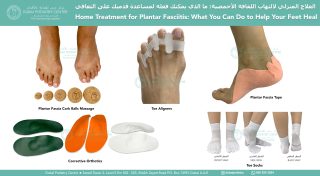
2. Massage the Plantar Fascia with Cork Balls
Cork balls are an excellent and simple way of gently massaging the sole of the foot while sitting at home or at your desk.
Different-sized cork balls can be used for different areas of the foot.
With a small cork ball, place the ball underneath the heel while seated and gently rest the foot over it. Make small circular movements around the plantar heel, alternating between clockwise and anticlockwise movements.
A medium or larger cork ball can be placed underneath the arch. Gently roll the foot backwards and forwards over the ball to massage the plantar fascia and surrounding soft tissues.
This is particularly useful if you spend long periods sitting.
One of the characteristic symptoms of plantar fasciitis is pain when standing after rest. Gentle movement and massage before standing can help prepare the foot for loading again.
The massage should feel comfortable rather than painful. Aggressive rolling directly over an acutely painful heel is unnecessary and can aggravate already sensitive tissue.
3. Plantar Fascia Support Tape
Traditional plantar fascia taping often involves applying several individual strips of tape underneath and around the foot. Although this can be effective, it can also be cumbersome and difficult for patients to apply themselves.
A purpose-designed single plantar fascia support tape can be a much simpler home option.
The tape is only a few millimetres thick and can provide gentle padding underneath the foot while helping to reduce some of the tensile load placed upon the plantar fascia.
It is generally worn during the daytime, when the foot is weight-bearing and the plantar fascia is repeatedly being loaded.
Taping is not intended to permanently correct the underlying biomechanics. Instead, think of it as temporary mechanical assistance while the irritated tissue is recovering.
4. Support the Arch and Correct Excessive Foot Movement
If plantar fasciitis continues to return, it is important to look at why the plantar fascia is being overloaded.
The plantar fascia does not work independently from the rest of the foot and leg.
For example, excessive movement through the subtalar joint and lowering of the arch can increase the mechanical demands placed upon the plantar fascia. Changes in the forefoot and transverse arch may also affect the way the foot loads during walking.
When the foot is not functioning efficiently, the plantar fascia may be subjected to increased tension as it contributes to supporting and stabilising the foot.
This is why a suitable supportive insole or individually prescribed corrective foot orthotic can be extremely beneficial for some patients.
The purpose is not simply to cushion the painful heel. A properly selected device should address the mechanical forces contributing to the problem and reduce unnecessary tensile stress through the plantar fascia.
For patients with significant biomechanical abnormalities, a professional assessment is advisable rather than simply purchasing a very soft heel cushion.
5. Give Your Toes Enough Space
Footwear is another important part of plantar fasciitis management.
The toes are designed to spread and function as part of the foot’s natural support system. Constantly squeezing them together inside narrow or pointed footwear can interfere with normal forefoot mechanics.
We often recommend toe socks combined, where appropriate, with very soft silicone toe aligners to allow the toes to sit in a more natural position.
These can be combined with an orthotic incorporating appropriate arch and transverse-arch support.
The shoe itself should have sufficient width through the toe box to allow the toes to open rather than compressing them together.
For some patients, a wider, foot-shaped or barefoot-style toe box can be very helpful. However, footwear needs to be selected according to the individual foot and the stage of recovery; a sudden transition into very flexible or minimally cushioned footwear may not be appropriate during an acutely painful episode.
How Long Does Plantar Fasciitis Take to Heal?
This is one of the most important things to understand.
Plantar fasciitis rarely disappears overnight.
The plantar fascia is a very strong, highly loaded structure, and the attachment at the heel is repeatedly stressed every time you stand and walk.
Even when the underlying mechanical problem is being corrected and the symptoms begin to improve, it can take several months for the area to settle fully. In many of the patients we treat, we advise allowing approximately three to four months for progressive recovery, although individual healing times vary.
The key is consistency.
Contrast bathing, gentle cork-ball massage, plantar fascia support taping, appropriate footwear and correctly prescribed arch support can all work together to reduce stress on the painful area while the tissues recover.
Don’t Just Treat the Heel – Find Out Why It Hurts
Perhaps the most important message is that plantar fasciitis should not always be viewed simply as an isolated painful heel.
Persistent plantar fascia pain can be a sign that the foot is compensating for a wider biomechanical issue.
The position and movement of the forefoot, arch, subtalar joint, ankle, knee, pelvis and hip can all influence how forces are transmitted through the foot.
If your plantar fasciitis keeps returning, is becoming progressively worse, or has not improved despite appropriate home treatment, it is worth having your walking pattern and lower-limb biomechanics professionally assessed.
At Dubai Podiatry Centre, we assess the foot as part of the complete lower-limb mechanical system. By identifying why the plantar fascia is being overloaded, treatment can be directed towards both relieving the painful tissue and reducing the mechanical stresses that contributed to the problem in the first place.
Dubai Podiatry Centre
Helping your feet function better from the ground up.
This article provides general educational information and is not a substitute for individual medical assessment. Persistent or severe heel pain, swelling, neurological symptoms, inability to bear weight, or pain following an injury should be professionally assessed.
For more information or to book an appointment please call our clinic +971 4 3435390 or WhatsApp +971 50 3553024