

fbpx

Please wait...


BLOG

No more posts

When choosing sports footwear, athletes often concentrate on the shoe itself, looking at grip, stability, cushioning and fit.

However, one important detail is frequently overlooked.

The socks you wear inside your sports shoes can influence how comfortably your toes move, how pressure is distributed across the forefoot and how much friction develops between your toes.

At Dubai Podiatry Centre, we recommend considering five toe socks for certain sporting activities, particularly where repetitive movement, perspiration and friction can contribute to foot problems.

Different sports place very different demands on the feet, which is why choosing the correct toe socks and footwear combination is important.
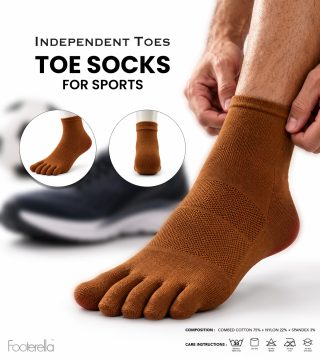
 

Promotional image of a brown five-toe sports sock, with side and heel views inset and a blurred athletic shoe and football in the background

1. Toe Socks for Padel, Tennis, Squash and Badminton

Racket sports require rapid changes of direction, sudden stopping, lateral movement and powerful acceleration.

Players repeatedly push sideways, forwards and backwards as they move around the court.

These movements place considerable demands on the forefoot, toes and ankles.

Why Are Racket Sports Shoes Designed Differently?

Dedicated racket sports shoes are generally designed with a stable platform, secure upper and appropriate lateral support.

Many have a relatively broad forefoot platform to help the player remain stable during rapid sideways movements.

The outsole also needs sufficient grip and a construction suitable for the court surface.

A shoe that is excessively narrow or poorly fitted may compress the toes and reduce comfort during powerful movements.

However, shoe width alone does not determine ankle stability. Heel security, outsole design, traction, ankle control and the player’s movement mechanics are also important.

Why Toe Socks Can Be Beneficial

During racket sports, the toes help with balance, pressure distribution and propulsion.

A properly fitted toe sock allows each toe to sit within its own individual fabric compartment.

Unlike a conventional sock that may bunch or compress the toes, a correctly sized toe sock can provide separation without excessive pressure.

This may help the toes move more comfortably within the available space in the shoe.

The benefits can include:

1. Reduced friction between neighbouring toes
2. Improved moisture management during intense exercise
3. Less direct rubbing between the toes
4. Greater comfort for players who prefer their toes to remain separated
5. Potentially fewer friction related skin problems when the socks and shoes fit correctly

Why Toe Freedom Matters

Think about the way a baseball or cricket player uses their fingers.

The fingers need to move independently to control the ball during gripping and release.

If several fingers were tightly bound together, the player’s normal throwing technique could be affected.

The toes also contribute to movement, balance and control, although their role is different from that of the fingers.

During running, jumping and pushing away from the ground, the toes participate in the final stages of weight transfer and propulsion.

Allowing comfortable toe movement within the shoe is therefore desirable.

Toe socks may help some athletes achieve this, but there is not yet strong evidence that wearing toe socks alone increases pushing force, speed or sporting performance.

Choosing the Correct Socks for Racket Sports

Traditional tennis socks are often designed with additional cushioning, supportive fabric and a comfortable fit around the ankle.

However, even a good tennis sock may allow moisture and friction to develop between closely positioned toes.

For athletes who repeatedly experience blisters or skin irritation between their toes, breathable toe socks may be worth trying.

Choose a design with a comfortable fit, effective moisture management and enough room within the shoe for all five toe compartments.

Avoid excessively thick toe socks if they make your racket sports shoes feel tight.


2. Toe Socks for Football and Rugby

Football and rugby create a very different footwear environment.

Players often wear closely fitted boots designed to provide secure contact between the foot and the playing surface.

Football boots in particular can have a relatively narrow forefoot and a closely fitted upper.

A secure fit is important for comfort, control and minimising excessive movement of the foot inside the boot.

However, tight footwear and socks can create problems for the toes.

Common Foot Problems in Football and Rugby

Players may experience:

1. Blisters between the toes
2. Corns caused by repeated pressure and friction
3. Calluses around the toes and forefoot
4. Toenails rubbing against neighbouring toes
5. Moisture accumulation between the toes
6. Skin irritation after prolonged training or matches

These problems can be particularly troublesome when athletes train frequently and spend long periods wearing enclosed boots.

Why Thin Toe Sock Liners Can Help

For football and rugby players, we recommend considering a very thin toe sock liner underneath the conventional team sock.

The liner should be made from lightweight, breathable fabric and fit comfortably around each toe.

The aim is to create a thin barrier between neighbouring toes without adding unnecessary bulk inside the boot.

A suitable combination may include:

First layer: Thin toe sock liner

A lightweight liner with five individual toe compartments, ideally made from breathable fabric with good moisture management.

Second layer: Football or rugby sock

The regular sports sock is worn over the liner.

Third layer: Properly fitted sports boot

The boot should fit securely without excessive compression of the toes.

The thin toe sock liner may help reduce skin friction between adjacent toes, while the outer sports sock provides the familiar fit and support required for training and competition.

Why Not Simply Wear Two Regular Socks?

Two conventional socks may increase bulk and pressure within an already closely fitted boot.

They also do not provide an individual fabric barrier between neighbouring toes.

A thin toe sock liner can offer this separation while keeping the additional thickness to a minimum.

However, if the boot becomes too tight, adding any second layer can increase pressure and create new problems.

Toe sock liners should only be used when there is sufficient room in the footwear.

Can Toe Socks Prevent Blisters and Corns?

Toe socks may help reduce friction between adjacent toes.

This can be useful for athletes who repeatedly develop blisters or skin irritation in these areas.

However, corns and calluses are also influenced by toe alignment, footwear pressure and repetitive loading.

If a player has recurring painful corns, calluses or blisters, the underlying pressure should be assessed rather than relying on socks alone.


3. Toe Socks for Hiking and Long Distance Walking

Hiking places prolonged demands on the feet.

During several hours of walking, the feet experience repeated loading, perspiration, friction and sometimes swelling.

Walking downhill can also increase pressure at the front of the boot, particularly around the toes and toenails.

For these reasons, choosing the correct socks is especially important.

Why Toe Socks Are Useful for Hiking

Five toe socks provide an individual fabric covering for each toe.

This may help reduce rubbing between neighbouring toes and provide a barrier where toenails repeatedly contact the skin of adjacent toes.

They can also help manage perspiration between the toes when made from suitable moisture wicking materials.

For some hikers, combining a thin toe sock with a cushioned outer hiking sock can provide additional comfort.

Our Recommended Hiking Sock Combination

First layer: Five toe socks

Choose a comfortable toe sock that separates each toe and allows moisture to move away from the skin.

Second layer: Soft cushioned hiking socks

Wear a soft, cushioned hiking sock over the toe socks.

Some diabetic style socks provide generous cushioning, gentle cuffs and smooth seams.

These may be comfortable for hiking, provided they are breathable, appropriately fitted and suitable for prolonged walking.

Third layer: Properly fitted hiking boots

Choose hiking boots with sufficient space for both layers of socks.

The toes should be able to move comfortably without being compressed.

The heel should remain secure, and the foot should not slide excessively inside the boot.

Why Double Layering Can Help

When two suitable layers of socks are worn together, some friction may occur between the fabric layers rather than directly against the skin.

This can help reduce rubbing for certain hikers.

The inner toe sock also provides separation between the toes, which conventional double sock combinations do not.

However, double layering is not essential for everyone.

Some hikers are more comfortable with one well fitted technical hiking sock.

The best option depends on the individual foot, the footwear and the conditions.


4. Choosing Hiking Boots for Toe Socks and Additional Cushioning

When wearing toe socks underneath thicker hiking socks, it is important to account for the extra volume inside the boot.

Feet may also swell during prolonged walking, particularly in hot weather.

For this reason, hiking boots should be fitted while wearing the exact sock combination you intend to use.

You may require a wider or higher volume boot, or occasionally a longer size.

However, increasing by two and a half or three shoe sizes is not routinely recommended.

A boot that is excessively long can allow the foot to slide forwards, increasing friction, instability and the risk of toenail injuries.

Instead, choose a boot that provides sufficient toe room, secure heel positioning and comfortable support.

When trying on hiking boots, walk on an incline if possible and check that your toes do not strike the front of the boot when moving downhill.


5. The Importance of Keeping Toes Dry During Sport

Whether you are playing tennis, football, rugby or hiking, perspiration is an important consideration.

When moisture remains trapped between the toes, the skin can soften and become more vulnerable to friction and irritation.

Warm, damp conditions can also encourage fungal infections such as athlete’s foot.

Toe socks made from breathable, moisture wicking materials may help manage moisture between the toes.

However, they do not guarantee that fungal infections or blisters will be prevented.

Good hygiene remains essential.

After exercise, remove damp socks, wash and carefully dry your feet, particularly between the toes, and allow your sports shoes to dry thoroughly.


6. Which Toe Socks Should You Choose for Your Sport?

Padel, Tennis, Squash and Badminton

Choose lightweight or moderately cushioned toe socks that allow comfortable toe movement within a stable court shoe.

Football and Rugby

  • Choose very thin toe sock liners that fit comfortably underneath the regular team socks without making the boots too tight

Hiking and Long Distance Walking

  • Consider breathable toe socks with a soft, cushioned outer hiking sock if your boots have sufficient room for both layers

Everyday Sports Training

  • Choose breathable toe socks suited to your footwear, exercise intensity and individual comfort

Our Advice at Dubai Podiatry Centre

Different sports require different footwear, but one principle remains important.

Your toes need sufficient room to function comfortably, and your socks should not create unnecessary compression or friction

For racket sports, toe socks may help maintain comfortable toe separation inside a stable court shoe

For football and rugby, thin toe sock liners may reduce friction between the toes inside closely fitted boots

For hiking, toe socks combined with appropriate outer socks and correctly fitted boots may improve comfort during prolonged walking

Toe socks are not a substitute for properly fitted footwear, and they cannot guarantee improved sporting performance or prevent every blister or injury

However, for athletes who experience repeated friction, moisture or discomfort between their toes, they can be a simple and practical addition to their sporting equipment

At Dubai Podiatry Centre, we believe that even small changes to footwear and sock selection can make a meaningful difference to foot comfort during sport

Dubai Podiatry Centre

Sports Podiatry, Foot Biomechanics and Orthotic Therapy

www.dubaipodiatry.com

This article provides general educational information and does not replace an individual clinical assessment.


For more information or to book an appointment please call our clinic +971 4 3435390 or WhatsApp +971 50 3553024
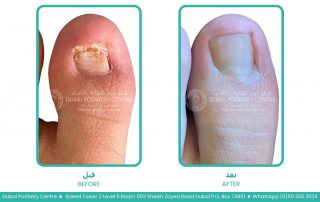


Most people wear conventional socks without giving much thought to what happens between their toes.

However, the spaces between our toes are one of the areas of the feet most likely to trap moisture, sweat and dead skin cells.

This is particularly common in hot climates such as Dubai, in people who sweat excessively, and in those whose toes are naturally positioned very close together.

At Dubai Podiatry Centre, we recommend considering five toe socks as a simple way to improve daily foot hygiene, particularly for patients who experience excessive moisture between their toes.


1. Why Is Hygiene Between the Toes So Important?

When toes are pressed together, the skin surfaces remain in constant contact.

During the day, perspiration can become trapped in these small spaces, particularly when wearing enclosed shoes for long periods.

This can create an environment where moisture accumulates, the skin becomes softened, and dead skin cells collect.

Warm, damp conditions encourage the growth of fungi and bacteria.

One of the most common infections affecting the spaces between the toes is athlete’s foot, also known as tinea pedis.

Symptoms can include itching, peeling skin, white softened skin, cracking, redness and an unpleasant odour.

Keeping the skin between the toes clean and dry is an important part of reducing the risk of these problems.


2. What Makes Toe Socks Different?

Unlike conventional socks, toe socks have five individual compartments, one for each toe.

This simple design creates a fabric barrier between neighbouring toes.

Rather than allowing the skin of one toe to remain pressed directly against the next, each toe is individually covered.

This can provide several benefits.

Improved moisture management

Moisture wicking toe socks can help absorb and move perspiration away from the skin between the toes

Reduced skin contact

The fabric separates neighbouring toes and reduces direct skin contact

Reduced friction

Individual toe compartments may help reduce rubbing between adjacent toes, particularly during walking, running and hiking

Improved hygiene

The fabric may collect some shed skin cells and moisture, which are then removed when the socks are taken off and washed

Greater comfort

For people with closely positioned toes, a correctly fitted toe sock can provide a comfortable barrier between the skin surfaces

The most important benefit is the potential to maintain a drier environment between the toes.

Although toe socks may help reduce moisture and friction, clinical evidence that they dramatically reduce fungal infection rates is limited. Good foot hygiene, properly fitting footwear and changing damp socks remain essential.


3. Toe Socks in Hot Weather

Living in a hot climate can make it particularly difficult to keep feet dry.

In Dubai, many people spend the day moving between hot outdoor temperatures and air conditioned indoor environments.

Feet can perspire inside enclosed shoes, particularly during walking, exercise or long working days.

For patients who experience excessive sweating, toe socks made from breathable, moisture wicking fabrics can be particularly useful.

By placing fabric between each toe, moisture can be absorbed and transferred away from the skin more effectively than when damp skin surfaces remain directly in contact.

However, socks must be changed when they become damp. No sock can keep the feet completely dry if perspiration is excessive.


4. Toe Socks and Athlete’s Foot

Athlete’s foot is a fungal infection that commonly develops between the fourth and fifth toes, although other spaces can also be affected.

Fungi thrive in warm, moist environments.

When toes remain pressed together, the skin between them can stay damp for prolonged periods.

Toe socks may help by reducing direct skin contact and managing moisture between the toes.

For patients who repeatedly develop athlete’s foot, we recommend paying particular attention to daily hygiene.

Wash your feet regularly, dry carefully between every toe, wear clean moisture wicking socks and allow shoes to dry between uses.

Toe socks can be part of this routine.

Important: Toe socks do not treat an existing fungal infection. If you have athlete’s foot, appropriate antifungal treatment may still be required.


5. Learning to Put On Toe Socks

One of the most common comments we hear is that toe socks take longer to put on than conventional socks.

This is completely normal.

With regular socks, you simply slide your foot inside.

With toe socks, each toe needs to be guided into its own compartment.

Initially, this can feel a little awkward.

However, after approximately two to four weeks of regular use, many people develop a technique that makes the process much easier.

It may take a minute rather than a few seconds, but the additional effort can be worthwhile for the comfort and hygiene benefits.

A useful technique is to sit comfortably, gather the sock towards the toe compartments, guide each toe into position and then pull the remaining fabric gently over the foot.

Make sure that the fabric is not tightly stretched between the toes.


6. Toe Socks Can Encourage Flexibility and Agility

There is another interesting benefit to putting on toe socks.

The process encourages you to bend comfortably towards your feet, coordinate your hands and toes, and maintain a degree of flexibility.

As we get older, maintaining the ability to reach our feet is important for personal hygiene, toenail care and independence.

If you notice that reaching your feet is becoming increasingly difficult, it may be worth considering whether changes in mobility, flexibility or body weight are contributing.

Gradual weight gain around the abdomen can sometimes make it more difficult to reach the toes.

However, difficulty putting on socks is not a reliable measure of obesity. Joint stiffness, back pain, reduced flexibility and other conditions can also affect this movement.

If you are concerned about changes in your weight, waist measurement or mobility, a healthcare professional can help you assess these appropriately.

The important point is that maintaining flexibility and the ability to care for your feet is a valuable part of healthy ageing.


7. Toe Socks for Hiking and Long Distance Walking

Toe socks can be particularly useful for hiking, especially when walking for several hours.

During long walks, repeated friction between the toes can cause irritation and blisters.

Some people also experience pressure from their toenails against neighbouring toes, particularly when walking downhill.

A correctly fitted toe sock creates a fabric barrier between the toes and may help reduce this rubbing.

For longer hikes, an additional cushioned outer sock can sometimes provide extra comfort.

Our Recommended Hiking Sock Combination

First layer: Five toe socks

Choose a thin, breathable toe sock that fits comfortably around each individual toe.

This helps separate the toes and manage moisture between them.

Second layer: Cushioned hiking socks

Wear a soft, cushioned hiking sock over the toe socks.

Some diabetic style socks have smooth seams, gentle cuffs and generous cushioning, making them comfortable options for certain walkers.

However, not all diabetic socks are suitable for hiking, so choose a design with appropriate moisture management, fit and durability.

Third layer: Properly fitted hiking boots

The hiking boot must have sufficient space to accommodate both layers of socks without compressing the toes.

This combination may help reduce friction and provide additional cushioning, particularly during long walks.


8. Why Wearing Two Conventional Socks May Cause Problems

Wearing two pairs of conventional socks is not always beneficial.

If the socks are thick or the shoes are too narrow, the additional fabric can compress the toes together.

This may increase pressure and friction, creating discomfort and potentially contributing to blisters.

If moisture becomes trapped, the skin may also remain damp for longer periods.

For people who prefer two layers of socks, using a thin toe sock as the first layer can be a useful alternative.

The individual toe compartments create a barrier between neighbouring toes, while the outer sock provides additional cushioning.

However, double layering is not necessary for everyone. A single well fitted technical hiking sock may work equally well or better.

The best choice is the combination that keeps your feet comfortable, dry and free from excessive pressure.


9. Choosing the Correct Hiking Boot Size

If you decide to wear toe socks underneath a second pair of hiking socks, your hiking boots must accommodate the additional fabric.

A boot that fits perfectly with one thin sock may become too tight when two layers are worn.

This is particularly important around the toes.

Excessive compression can cause pain, blisters, numbness and toenail injuries.

When purchasing hiking boots, take the exact sock combination you intend to wear and try the boots on with both layers.

Check that your toes can move comfortably, your heel remains secure and your toes do not strike the front of the boot when walking downhill.

Some people may need a larger or wider boot, but there is no universal requirement to increase by two and a half shoe sizes.

Increasing the length excessively can create heel movement, instability and additional friction.

The correct boot is the one that fits your foot and chosen socks properly, not simply a predetermined larger shoe size.


10. How Often Should You Change Your Toe Socks?

For good foot hygiene, toe socks should generally be changed every day.

If you sweat excessively, exercise or spend long periods in hot conditions, you may need to change them more frequently.

Wash them according to the manufacturer’s instructions and allow them to dry completely before wearing them again.

Avoid wearing damp socks and make sure your shoes have adequate time to dry between uses.

If you are prone to athlete’s foot, inspect the skin between your toes regularly for redness, peeling, cracks or white softened skin.

People with diabetes, neuropathy or poor circulation should seek professional advice about appropriate socks and footwear, particularly if there are any areas of skin damage.


Our Advice at Dubai Podiatry Centre

Sometimes, improving foot hygiene does not require complicated treatment.

A simple change in the type of socks you wear can make a meaningful difference to comfort and moisture management.

Five toe socks provide a fabric barrier between neighbouring toes, helping to reduce direct skin contact, manage perspiration and minimise friction.

They can be particularly useful in hot climates, for people with closely positioned toes, and during activities such as hiking and long distance walking.

When combined with good daily foot hygiene, appropriate footwear and regular sock changes, they can be a valuable addition to your foot care routine.

Healthy feet begin with simple daily habits, and keeping the spaces between your toes clean and dry is one of them.

Dubai Podiatry Centre

Specialist Foot Care, Foot Hygiene and Biomechanical Assessment

www.dubaipodiatry.com

This article provides general educational information and does not replace an individual clinical assessment.


For more information or to book an appointment please call our clinic +971 4 3435390 or WhatsApp +971 50 3553024


One of the most common reasons people delay seeking treatment for toenail problems is simple embarrassment.

Many patients tell us they have been hiding their feet for years. They avoid sandals, swimming pools, pedicures, and sometimes even showing their feet to family members. Some have been covering their toenails with nail polish or avoiding treatment altogether because they feel self-conscious about how their nails look.

The truth is that podiatrists see toenail problems every single day.

Whether your toenails are thickened, discoloured, fungal, damaged, ingrown, lifted, crumbly, misshapen, or have been neglected for years, there is no judgment. Our goal is to help you restore the health of your feet and regain confidence in your appearance.

Many toenail conditions are much more common than people realise. Fungal infections, bacterial infections, trauma from sports, injuries, and poorly fitting footwear can all affect the appearance and health of the toenails. Sometimes a single accident or even one particular pair of shoes can start a problem that gradually worsens over time.

The good news is that treatment options are available.

Depending on the condition, treatment may involve:

  • Professional nail care and reduction
  • Antifungal treatments
  • Oral medication when appropriate
  • Treatment of bacterial infections
  • Footwear recommendations
  • Toe socks to improve toe separation and reduce fungal recurrence (link for toe socks)
  • Temporary or permanent nail procedures when necessary


Sometimes the treatment plan may sound dramatic at first. For example, a severely damaged or chronically infected toenail may occasionally need to be removed to allow a healthy nail to regrow. However, this is often the quickest route back to a healthy, comfortable, and attractive nail.

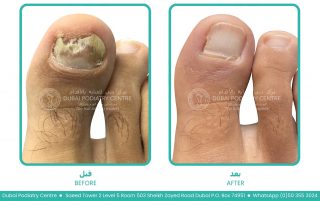
Before treatment of fungal toenail infection showing a damaged big toenail with yellow discoloration, nail thickening, crumbling debris, and signs of onychomycosis.

Severe fungal toenail infection before treatment showing thickened, yellow-brown, brittle nail with extensive nail damage and discoloration.

Fortunately, toenails are remarkably good at regenerating. Smaller toenails can often regrow within approximately three months following removal, while larger toenails may take six months to a year to fully grow back, depending on the individual and the size of the nail. In the context of a lifetime of healthy feet, this is a relatively short period of time.


At your consultation, your podiatrist will assess the cause of the problem and develop a personalised treatment plan designed to restore the health and appearance of your toenails. Every patient is different, and treatment should be tailored to the individual.

Most importantly, everything discussed during your appointment is completely confidential. We understand that many people feel anxious or embarrassed about their feet, but there is no need to suffer in silence.


Our job is to help you get your feet back to how you remember them being—or perhaps even better than before.


So if you have been hiding your feet, postponing treatment, or feeling embarrassed about your toenails, don’t wait any longer. Make an appointment with a podiatrist and take the first step towards healthier feet and greater confidence.


For more information or to book an appointment please call our clinic +971 4 3435390 or WhatsApp +971 50 3553024


Many people are surprised to learn that fungal toenail infections often begin with a fungal skin infection between the toes, commonly known as athlete’s foot (tinea pedis).


The fungi responsible for athlete’s foot are commonly found in our environment and can also exist naturally on the skin without causing problems. However, when conditions become warm, dark, and moist, the fungal organisms can multiply rapidly. This is especially common between the fourth and fifth toes, where the skin surfaces are often pressed tightly together inside shoes.


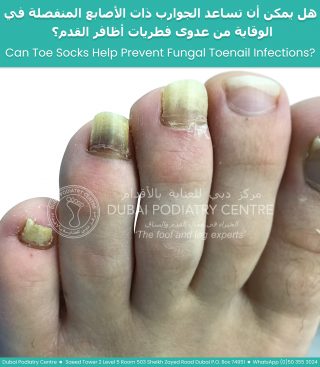
Multiple toes affected by fungal toenail infection (onychomycosis) showing yellow, thickened, and discolored toenails. Clinical image used to discuss whether toe socks can help prevent fungal toenail infections and improve foot hygieneWhen the toes are squeezed together for long periods, moisture becomes trapped and air circulation is reduced. This creates the perfect environment for fungal spores to grow and spread. Over time, the infection may remain confined to the skin between the toes, or it may spread into the neighbouring toenails, particularly the fourth and fifth toenails, resulting in fungal nail infection (onychomycosis).


One simple but highly effective preventative measure is the use of cotton toe socks.


Unlike conventional socks, toe socks individually separate each toe with a layer of fabric. This creates a physical barrier between the toes, helping to reduce skin-to-skin contact and minimise the warm, moist conditions that fungi thrive in.

The benefits of toe socks include:

  • Improved air circulation between the toes
  • Reduced moisture accumulation
  • Less skin friction and irritation
  • A physical barrier that helps limit the spread of fungal spores
  • Reduced recurrence of athlete’s foot
  • Lower risk of fungal infection spreading into the toenails


Cotton toe socks are particularly beneficial for individuals who suffer from recurring athlete’s foot, fungal toenail infections, excessive sweating, or who spend long periods wearing enclosed footwear.


While toe socks are not a treatment for an established fungal infection, they can be an excellent part of a long-term prevention strategy. Combined with good foot hygiene, proper shoe disinfection, and prompt treatment of any athlete’s foot infection, toe socks can help create a healthier environment for the feet and reduce the likelihood of future fungal problems.


At Dubai Podiatry Centre, we frequently recommend toe socks as part of a comprehensive foot care programme for patients prone to athlete’s foot and fungal toenail infections. Sometimes the simplest changes can make a significant difference in maintaining healthy feet.


Link for : Toe Socks


For more information or to book an appointment please call our clinic +971 4 3435390 or WhatsApp +971 50 3553024


Copyright Dubai Podiatry 2026. All rights reserved.

WhatsApp us