
fbpx

Please wait...


BLOG

No more posts

Warts can occur almost anywhere on the body, but a wart on the sole of the foot behaves very differently from a wart on the hand, finger or top of the foot.

Although they are caused by the same family of viruses human papillomavirus (HPV), their location and the type of skin in which they develop can make a significant difference to how we treat them.

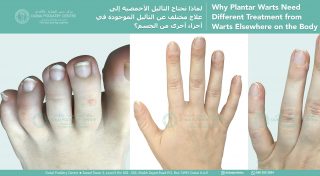
Examples of common warts on the top of the foot, hand and fingers, showing how they differ from plantar warts

At Dubai Podiatry Centre, we often see patients who have already tried traditional wart treatments such as salicylic acid or liquid nitrogen on a plantar wart, sometimes repeatedly, without understanding why a treatment that may work very well on a wart elsewhere on the body can be much less effective on the sole of the foot.

The simplest way to understand this is to think about how much of the wart we can actually reach.

Warts Elsewhere on the Body: Think of a Water Balloon

Imagine a small water balloon sitting on a table.

Most of the balloon is above the table. If you wanted to paint its surface, you could probably cover around 90% of it quite easily. Only the small area touching the table would be difficult to reach.

A wart growing outward from the skin can be thought of in a similar way.

On areas such as the hand, finger or top of the foot, a wart may project outward from the surface. This means that a large proportion of the wart is directly accessible to treatment.

This is one reason why traditional surface treatments can work particularly well in these locations.

Salicylic Acid

One of the simplest and most widely available wart treatments is salicylic acid.

Salicylic acid is a keratolytic, which means that it breaks down keratin and gradually removes the thickened, virus infected skin cells.

It is available from pharmacies in several forms. It may come as a liquid that looks rather like clear nail polish and is painted directly onto the wart, or it may be incorporated into a medicated plaster or padded dressing that keeps the treatment against the affected skin.

When much of the wart is projecting outward, there is a relatively large surface area available for the medication to act upon.

Liquid Nitrogen

Another commonly used treatment is cryotherapy, usually with liquid nitrogen.

The wart tissue is rapidly frozen, damaging the infected cells and encouraging the body’s immune response against the virus.

Again, when the wart projects outward from the skin, the treatment can be applied directly to a substantial proportion of the affected tissue.

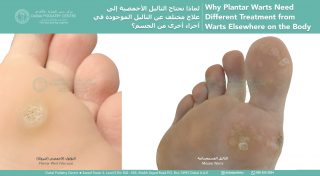
Close-up comparison of a single plantar wart (verruca) and clustered mosaic warts on the soles of the feet

Plantar Warts Are Different

A plantar wart, sometimes called a verruca, develops on the weight bearing skin of the sole of the foot.

Here, the situation is almost the reverse of our water balloon example.

Instead of most of the lesion projecting outward where we can easily treat it, much of the plantar wart can become embedded within thickened plantar skin.

Standing and walking also continually place pressure on the lesion. Rather than being able to expand freely outward, the wart becomes compressed within the thick keratinised layers of the sole.

This means that what we see on the surface may represent only a relatively small part of the affected tissue.

The 90% versus 10% analogy is a useful way of visualising this difference: with an outward growing wart, most of the lesion may be readily accessible to treatment, whereas with a plantar wart, much more of the affected tissue may lie beneath the visible surface.

These percentages are an analogy rather than a literal anatomical measurement, but they help explain why treatment results from warts elsewhere on the body should not automatically be applied to plantar warts.

Why Is the Skin on the Sole So Different?

Another useful way to understand this is to imagine fish scales.

Under magnification, the outermost layer of our skin consists of flattened keratinised cells arranged together to create a protective barrier.

For a simple visual analogy, imagine the delicate scales of a little goldfish. This represents the relatively thinner epidermis found over much of the body.

Now compare those with the much tougher protective scales you might imagine on a very large fish.

That is closer to how we can think about the specialised thick skin on the soles of our feet.

The plantar surface has a particularly thick outer keratin layer because it has to withstand enormous amounts of pressure, friction and repeated loading throughout our lives.

That protection is extremely useful for walking but it presents a challenge when treating a plantar wart.

When HPV infects the skin elsewhere on the body, the resulting wart may be able to proliferate outward relatively easily.

On the sole, however, the combination of the thick stratum corneum and pressure from standing and walking means that the lesion tends to become incorporated into the thickened plantar skin rather than simply projecting outward.

Why We Use Dermojet for Plantar Warts

This difference in anatomy is one of the reasons we use Dermojet treatment for selected plantar warts at Dubai Podiatry Centre.

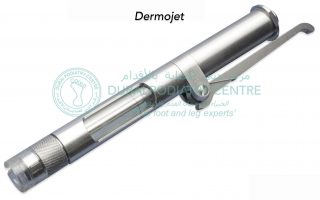
A Dermojet is a needle free, high pressure jet injection device. Rather than relying purely upon a treatment being placed onto the external surface of the wart, it allows medication to be delivered through the thick plantar skin into the targeted tissue.

This is particularly useful on the sole of the foot, where the thick outer layer of skin can otherwise act as a substantial barrier.

The aim is therefore very different from simply painting or freezing what can be seen at the surface.

Why We Would Not Automatically Use the Same Approach Elsewhere

Treatment should always be chosen according to the location and characteristics of the wart.

If a wart is projecting outward from thinner skin elsewhere on the body, much of the affected tissue is already accessible from the surface. Treatments such as salicylic acid or cryotherapy may therefore be more appropriate.

A high pressure delivery system designed to penetrate thick plantar skin would not automatically be the appropriate choice for an outward projecting wart elsewhere on the body.

This is why there should not be a one treatment fits all approach to warts.

Same Virus, Very Different Environment

The important point is that a plantar wart is not necessarily difficult to treat simply because the virus itself is different.

It is the environment in which the wart is growing that changes.

The sole of the foot has:

  • exceptionally thick keratinised skin
  • repeated pressure from standing and walking
  • friction and compression
  • a substantial protective stratum corneum
  • different accessibility compared with an outward projecting wart elsewhere on the body

Understanding these differences helps us choose a treatment that is appropriate for the anatomy rather than simply treating every wart in exactly the same way.

The Water Balloon Rule

A simple way to remember it is this:

Wart projecting outward:
Think of a water balloon sitting on a table. Most of it is exposed and accessible, so a surface treatment can reach a large proportion of the lesion.

Plantar wart on the sole:
Think of the balloon being pushed down into a thick, tough surface. Much less is visible and accessible from above, so treatment may need to address tissue beneath the superficial keratin.

At Dubai Podiatry Centre, this anatomical difference is an important consideration when assessing plantar warts and deciding which treatment approach is most appropriate for each patient.

Warts should be properly assessed before treatment, particularly if a lesion is painful, bleeding, changing in appearance, persistent, or if there is uncertainty about whether it is actually a wart.


For more information or to book an appointment please call our clinic +971 4 3435390 or WhatsApp +971 50 3553024


Dermojet device used for plantar wart treatment, showing a needle-free high-pressure injector designed to deliver medication into deep verrucas on the sole of the foot.At Dubai Podiatry Centre, our highest success rate for plantar warts comes from our Dermojet treatment.

Dermojet uses a high-velocity stream of liquid delivered through a mechanical device. When the pressure is released, a microjet of liquid is ejected from the apparatus and penetrates through the skin to reach the deeper part of the plantar wart, allowing the treatment to be delivered more efficiently.

Warts elsewhere on the body usually grow outward. However, warts on the sole of the foot grow inward because of pressure from standing and walking. This means that treatments such as liquid nitrogen, salicylic acid, and laser, which may work well on external warts on other parts of the body, can have very different outcomes when used on the sole of the foot.

في مركز دبي لطبّ القدم، نحقق أعلى نسبة نجاح في علاج الثآليل الأخمصية (ثآليل باطن القدم) باستخدام علاج الديرموجيت (Dermojet).

يعتمد الديرموجيت على إطلاق تيار عالي السرعة من السائل عبر جهاز ميكانيكي. وعند تحرير الضغط، يُقذف تيار دقيق من السائل من الجهاز ليخترق الجلد ويصل إلى الجزء الأعمق من الثؤلول الأخمصي، مما يسمح بإيصال العلاج بكفاءة أكبر وفعالية أعلى.

عادةً ما تنمو الثآليل في مناطق أخرى من الجسم إلى الخارج. أما الثآليل الموجودة في باطن القدم فتنمو إلى الداخل بسبب الضغط الناتج عن الوقوف والمشي. وهذا يعني أن العلاجات مثل النيتروجين السائل، وحمض الساليسيليك، والليزر، والتي قد تكون فعّالة في علاج الثآليل الخارجية في أجزاء أخرى من الجسم، قد تعطي نتائج مختلفة تمامًا عند استخدامها لعلاج الثآليل الموجودة في باطن القدم.

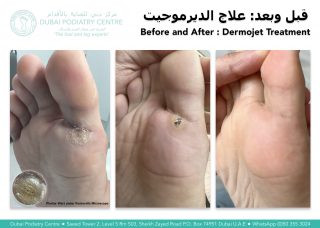
Before and after plantar wart treatment using Dermojet showing wart resolution on sole of foot


A wart on the top of the hand, for example, is more exposed and easier to reach with acid or liquid nitrogen. A plantar wart, commonly called a verruca, is inverted into the sole of the foot and is therefore less accessible.

For this reason, Dermojet is mainly reserved for plantar warts and verrucas on the sole of the foot. It is not usually required for outward-growing warts elsewhere on the body, where treatments such as liquid nitrogen or salicylic acid may be more suitable.

على سبيل المثال، يكون الثؤلول الموجود على ظهر اليد أكثر انكشافًا وأسهل وصولًا للعلاج باستخدام الأحماض أو النيتروجين السائل. أما الثؤلول الأخمصي، المعروف شائعًا باسم الفيروكا (Verruca)، فيكون منغرسًا إلى الداخل داخل باطن القدم، ولذلك يكون الوصول إليه أكثر صعوبة.

لهذا السبب، يُخصَّص علاج الديرموجيت (Dermojet) بشكل أساسي للثآليل الأخمصية والفيروكا الموجودة في باطن القدم. ولا تكون الحاجة إليه عادةً ضرورية لعلاج الثآليل التي تنمو إلى الخارج في مناطق أخرى من الجسم، حيث قد تكون العلاجات مثل النيتروجين السائل أو حمض الساليسيليك أكثر ملاءمة.


For more information or to book an appointment please call our clinic +971 4 3435390 or WhatsApp +971 50 3553024


Dermojet is an effective treatment option for plantar warts and verrucae on the soles of the feet. It is often considered for lesions that have not responded to home treatments such as salicylic acid, or to other professional treatments including cryotherapy and laser therapy. In many cases, these more persistent plantar warts may respond well to a course of Dermojet treatment.

Dermojet is a localised treatment and typically heals without noticeable scarring or changes to skin quality. It works by delivering a fine microjet of liquid through a very small opening in the skin. This allows the treatment to penetrate into the deeper layers of the tissue, where it creates controlled micro-trauma within the lesion. The body then responds by initiating a healing process from within, which can help the verruca gradually resolve.

More superficial treatments, such as salicylic acid, primarily act on the outer layers of the skin. Cryotherapy and laser treatments are also commonly used and may be effective in many cases, although their mechanisms differ. Dermojet works at a deeper level within the tissue, which may make it a suitable option for certain stubborn or long-standing verrucae.


يُعد الديرموجيت (Dermojet) خيارًا علاجيًا فعّالًا للثآليل الأخمصية والفيروكا الموجودة في باطن القدم. وغالبًا ما يُؤخذ بعين الاعتبار في الحالات التي لم تستجب للعلاجات المنزلية مثل حمض الساليسيليك، أو للعلاجات الطبية الأخرى مثل العلاج بالتبريد (النيتروجين السائل) والعلاج بالليزر. وفي العديد من الحالات، قد تستجيب هذه الثآليل الأخمصية المستعصية أو المزمنة بشكل جيد لسلسلة من جلسات علاج الديرموجيت.

يُعد الديرموجيت علاجًا موضعيًا، وعادةً ما يلتئم الجلد بعده دون ظهور ندبات ملحوظة أو تغيرات في جودة الجلد. ويعمل من خلال إطلاق نفثة دقيقة جدًا من السائل عبر فتحة صغيرة للغاية في الجلد، مما يسمح للعلاج بالوصول إلى الطبقات العميقة من الأنسجة. وهناك يُحدث إصابة مجهرية مُتحكَّمًا بها داخل الثؤلول، فيستجيب الجسم ببدء عملية الشفاء من الداخل، مما يساعد على تراجع الفيروكا واختفائها تدريجيًا.

أما العلاجات الأكثر سطحية، مثل حمض الساليسيليك، فإنها تعمل بشكل رئيسي على الطبقات الخارجية من الجلد. كما يُستخدم كل من العلاج بالتبريد والعلاج بالليزر على نطاق واسع وقد يكونان فعّالين في العديد من الحالات، إلا أن آلية عملهما تختلف. ويتميّز الديرموجيت بأنه يعمل في مستوى أعمق داخل الأنسجة، مما قد يجعله خيارًا مناسبًا لبعض حالات الفيروكا العنيدة أو طويلة الأمد.

For more information or to book an appointment please call our clinic +971 4 3435390 or WhatsApp +971 50 3553024

Copyright Dubai Podiatry 2026. All rights reserved.

WhatsApp us