
fbpx

Please wait...


BLOG

No more posts

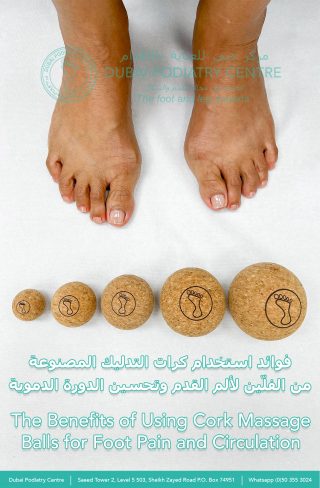
فوائد استخدام كرات التدليك المصنوعة من الفلّين لألم القدم وتحسين الدورة الدموية


التخفيف الطبيعي من آلام القدم الشائعة

يمكن أن يكون تدليك القدم مفيدًا جدًا للعديد من مشكلات القدم الشائعة مثل:

ألم مقدّمة القدم (مشكلات مشط القدم أو metatarsalgia)

ألم الكعب (التهاب اللفافة الأخمصية – plantar fasciitis)

أو انزعاج القوس الذي يحدث بين مقدّمة القدم ومؤخّرتها.

تتطوّر هذه الحالات غالبًا بسبب الإفراط في الاستخدام، أو ارتداء أحذية ضيّقة، أو الوقوف لفترات طويلة. ويساعد التدليك الموجّه في تخفيف الانزعاج، وتنشيط الدورة الدموية، وتعزيز الاسترخاء.


لماذا تعتبر كرات التدليك المصنوعة من الفلّين مثالية؟

يجد الكثير من الناس صعوبة في الوصول إلى أقدامهم بسبب ضعف الحركة، وقد يكون من المحرج أو غير المريح طلب المساعدة من الآخرين لتدليك القدم.
هنا تأتي كرات التدليك المصنوعة من الفلّين كحل مثالي — فهي خفيفة الوزن، وسهلة الحمل، وسهلة الاستخدام في أي مكان: في العمل، أو المنزل، أو حتى أثناء السفر.

يمكنك تدليك قدميك بسهولة أثناء الجلوس خلف المكتب أو على الأريكة أثناء مشاهدة التلفاز.


كيفية استخدام كرات التدليك المصنوعة من الفلّين

تتوفر كرات الفلّين بأحجام مختلفة، من صغيرة جدًا إلى كبيرة، وكل حجم مصمّم لاستهداف منطقة معينة من القدم:

الكرات الكبيرة إلى المتوسطة: مثالية لتدليك قوس القدم، وتوفر ضغطًا متوازنًا وواسع النطاق.

الكرات الصغيرة إلى الصغيرة جدًا: مثالية للدحرجة تحت مقدّمة القدم أو وسادة الكعب، وللوصول إلى النقاط الدقيقة مثل مكان ارتباط اللفافة الأخمصية بعظم الكعب.

استخدم حركات دائرية أو أمامية وخلفية، وابدأ من مقدّمة القدم وحرّك الكرة نحو الكعب.
ارفع القدم وكرّر العملية عدة مرات، مع الحرص دائمًا على توجيه الحركة من الأصابع نحو القلب — فهذه الاتجاهات تعزز التصريف اللمفاوي الطبيعي وتحفّز الدورة الدموية.


روتين بسيط لقدمين صحيتين

أثناء الجلوس، دع وزن ساقك يوفّر الضغط الطبيعي على كرة الفلّين.
تُعدّ الحركات الدائرية الصغيرة أو الدحرجات البطيئة للأمام والخلف ممتازة لتخفيف التوتر في:

مقدّمة القدم (لعلاج ألم مشط القدم)

القوس (للتشنجات أو الشد العضلي)

الكعب (لتخفيف اللفافة الأخمصية)

حتى في حال عدم وجود ألم، فإن الاستخدام المنتظم يساعد على تنشيط الدورة الدموية والحفاظ على مرونة وقوة القدمين.


مادة طبيعية بفوائد صحية

تُصنع كرات التدليك من الفلّين الطبيعي، الذي يتميّز بدرجة حرارة قريبة من حرارة الجلد، مما يجعل استخدامها مريحًا.
كما أن الفلّين مادة طبيعية مضادة للبكتيريا والفطريات، مما يضمن مستوى عالٍ من النظافة.
وبفضل خفّتها، يمكنك بسهولة الاحتفاظ بواحدة في حقيبة الجيم أو درج المكتب أو حقيبة السفر.


احتياطات

تُعدّ كرات التدليك المصنوعة من الفلّين مناسبة لمعظم الأشخاص؛ ومع ذلك، يُنصح المرضى الذين يعانون من الاعتلال العصبي أو ضعف الإحساس في القدمين بعدم استخدامها دون استشارة طبية.
أما بالنسبة لمن يتمتعون بدورة دموية ووظيفة عصبية سليمة، فهي وسيلة آمنة وفعّالة لتحفيز الدورة الدموية والحفاظ على حيوية الأعصاب.

بقلم: ميشيل تشامبلن، كبيرة أخصائيي القدم (البودياتريست)
مركز دبي لتقويم القدم (Dubai Podiatry Centre)


للمزيد من المعلومات أو لحجز موعد، يُرجى الاتصال على:
📞 ‎+٩٧١ ٤ ٣٤٣٥٣٩٠
📱 واتساب: ٩٧١٥٠٣٥٥٣٠٢٤


The Benefits of Using Cork Massage Balls for Foot Pain and Circulation


Relieving Common Foot Pains Naturally


Foot massage can be highly beneficial for many common foot problems such as pain in the ball of the foot (metatarsalgia), heel pain (plantar fasciitis), and arch discomfort that occurs between the forefoot and rearfoot.

These conditions often develop from overuse, tight footwear, or prolonged standing and targeted massage can help to ease discomfort, increase circulation, and promote relaxation.


Why Cork Massage Balls Are Ideal


Many people find it difficult to reach their feet due to reduced mobility, and it can feel awkward or inconvenient to ask others to help with foot massage. That’s where cork massage balls are an excellent solution.

They are lightweight, portable, and easy to use anywhere, at work, at home, or even while travelling. You can massage your feet discreetly under your desk, or while sitting on the sofa watching television.


How to Use Cork Massage Balls


Cork balls come in various sizes, from extra-small to large, each designed to target different areas of the foot:

  • Large to medium balls: Ideal for massaging the arch of the foot, providing broad, even pressure.
  • Small to extra-small balls: Perfect for rolling under the forefoot pad or heel pad, and for reaching precise points such as where the plantar fascia attaches to the heel bone.


Use circular and back-and-forth movements, starting at the forefoot and rolling the ball towards the heel. Lift the foot and repeat several times, always promoting blood flow from the toes toward the heart.

This direction supports natural lymphatic drainage and circulation.


Simple Routine for Healthy Feet


While sitting, let the weight of your leg provide natural pressure on the cork ball. Small circular motions or slow front-to-back rolls are excellent for relieving tension in the:

  • Forefoot (for metatarsalgia)
  • Arch (for strain and tightness)
  • Heel (for plantar fascia relief)


Even if there’s no pain, regular use encourages healthy blood flow and helps maintain supple, strong feet.


Natural Material with Health Benefits


Cork massage balls are made from natural cork, which has a similar temperature to skin, making them comfortable to use. Cork is also naturally antibacterial and antifungal, ensuring excellent hygiene.

Because they are lightweight, you can easily keep one in your gym bag, office drawer, or travel kit.


Precautions


Cork massage balls are suitable for most people; however, patients with neuropathy or reduced sensation in their feet should avoid using them without medical guidance.

For those with healthy circulation and nerve function, they are a safe and effective way to promote circulation and nerve vitality.


By Michelle Champlin, Chief Podiatrist

Dubai Podiatry Centre


For more information or to book an appointment please call our clinic +971 4 3435390 or WhatsApp +971 50 3553024


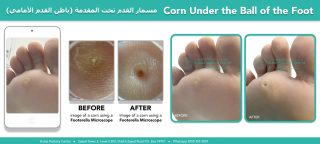
لماذا يعود مسمار القدم باستمرار أسفل كرة القدم (باطن القدم الأمامي)؟

يُعدّ مسمار القدم المستمر تحت كرة القدم، وخاصة تحت رأس العظم المشطي الثاني أو الثالث، من أكثر مشاكل القدم إزعاجًا. يشعر الكثيرون بالإحباط عندما يعود المسمار بعد أسابيع قليلة من إزالته. من الطبيعي أن يتساءل المرء عما إذا كان من الممكن “استئصاله نهائيًا”، ولكن لإيقاف عودته، يجب أولًا أن نفهم سبب تشكّله من البداية.

لماذا يتكوّن مسمار القدم أسفل رؤوس العظام المشطية

توجد أسفل كرة القدم خمسة عظام مشطية طويلة ورفيعة. تشبه هذه العظام الأقلام ذات النهايات المستديرة، وتستقر عادة في طبقة من العضلات والأنسجة الدهنية الليفية التي تمتص الصدمات أثناء المشي.

لكن في بعض الأحيان، قد ينزلق أحد هذه العظام (غالبًا الثاني أو الثالث) إلى الأمام وينخفض إلى الأسفل. عندما يحدث ذلك، يضغط رأس العظم بشدة على الجلد، مثل حصاة تحاول اختراق نعل الحذاء.
تكون الاستجابة الطبيعية للجسم هي تكوين طبقات من الجلد السميك (الجلد المتقرن أو الكالو) لحماية الجلد من التقرّح أو الانفتاح.

وعندما تصبح الضغوط شديدة جدًا، يُنتج الجسم مسمار قدم صلب مكوَّن من الكيراتين، يظهر على شكل كتلة صفراء كثيفة ذات شكل ماسي، لتعمل كدرع يحمي الأنسجة من التلف الأعمق.

لماذا يعود المسمار من جديد

حتى إذا قام اختصاصي الأقدام (البودياتريست) بإزالة المسمار، فإن موضع العظم الأساسي يظل خاطئًا. وبما أن الضغط لا يزال قائمًا، يستمر الجسم في حماية نفسه بتكوين مسمار جديد.
عادةً ما يعود المسمار خلال دورة نمو جلدية واحدة — أي كل حوالي أربعة أسابيع. ما لم يُصحَّح موضع العظم المشطي، سيستمر المسمار في الظهور بشكل متكرر إلى أجل غير مسمى.

الطريقة الصحيحة لإيقاف المشكلة

العلاج الأمثل هو العلاج بالأحذية التقويمية (الأورثوتيك). تعمل هذه الأجهزة التقويمية المخصصة مثل تقويم الأسنان، حيث ترفع وتعيد محاذاة العظم المشطي المنخفض تدريجيًا إلى مكانه الصحيح.
يساعد ذلك في توزيع الضغط بالتساوي عبر كرة القدم، مما يسمح للمسمار بالاختفاء تدريجيًا.

وكما تحتاج تقويمات الأسنان إلى وقت لتحريك السن، يتطلب العلاج بالأورثوتيك عادةً من أربعة إلى ستة أشهر من الاستخدام المنتظم قبل ملاحظة التحسّن الدائم.
حتى بعد إعادة العظم إلى مكانه الطبيعي، قد يستمر الجلد في تكوين بعض التقرّن خلال عدة دورات جلدية كجزء من آلية الحماية الطبيعية، وهذا أمر طبيعي تمامًا.

لماذا الجراحة ليست الحل

لا يُنصح باستئصال مسمار القدم جراحيًا. فالمسمار الصلب بحد ذاته هو استجابة وقائية من الجسم.
إزالته جراحيًا قد تؤدي إلى تلف الأنسجة السليمة، أو تكوين نسيج ندبي، أو حتى مسمار عصبي وعائي، وهو أكثر ألمًا وصعوبة في العلاج.

الخلاصة

المسمار الذي يعود باستمرار ليس مشكلة جلدية، بل هو نتيجة ضغط ميكانيكي. الحل طويل الأمد هو تصحيح مصدر الضغط بإعادة المحاذاة التقويمية، وليس الاستمرار في إزالة المسمار.

إذا كنت تعاني من مسمار قدم متكرر تحت كرة القدم، فاستشر اختصاصي أقدام (Podiatrist) يمكنه تقييم ميكانيكية القدم لديك، وتصميم دعامة تقويمية مخصصة، لمساعدتك على استعادة الراحة الدائمة.

للمزيد من المعلومات أو لحجز موعد، يُرجى الاتصال على:
📞 ‎+٩٧١ ٤ ٣٤٣٥٣٩٠
📱 واتساب: ٩٧١٥٠٣٥٥٣٠٢٤


A persistent corn under the ball of the foot, especially beneath the second or third metatarsal head, can be one of the most frustrating foot problems. Many people feel exasperated when the corn returns only a few weeks after having it removed. It’s natural to wonder whether there’s a way to “cut it out” permanently, but to stop a corn from coming back, we must first understand why it forms in the first place.

Why a Corn Forms Under the Metatarsal Heads

Underneath the ball of the foot are five long, slender metatarsal bones. They are shaped like crayons with rounded ends, designed to sit neatly in a layer of muscle and fibrofatty tissue that cushions them during walking.

However, sometimes one of these metatarsal bones, most commonly the second or third, can slip forward and drop downward. When this happens, the head of the bone presses too firmly into the skin, like a pebble trying to poke through a shoe sole. The body’s natural defence is to build layers of hard skin (callus) to prevent the bone from breaking through and causing an ulcer.

When the pressure becomes extreme, the body creates a pure keratinised corn, a dense, yellow, diamond-shaped lump designed to protect the tissues from deeper injury.


Why It Keeps Coming Back

Even if a podiatrist removes the corn, the underlying bone is still in the wrong position. Because the pressure remains, the body continues to defend itself by forming another corn. Typically, it reappears within one skin cycle — about every four weeks. Unless the position of the metatarsal bone is corrected, the corn will continue to re-form indefinitely.

The Right Way to Stop It

The gold-standard treatment is orthotic therapy. Custom orthotics act like braces for the teeth, gently lifting and realigning the dropped metatarsal bone back into its proper position. This redistributes pressure evenly across the ball of the foot, allowing the corn to gradually disappear.

Just as orthodontic braces take time to move a tooth, orthotic therapy usually requires four to six months of consistent use before lasting improvement is seen. Even once the bone has been repositioned, the skin may continue to form a callus for several skin cycles as part of its natural protective habit, this is completely normal.

Why Surgery Is Not the Answer

Surgically excising a plantar corn is not recommended. The hard corn itself is the body’s protective response; removing it surgically can destroy healthy tissue and create scar tissue or even a neurovascular corn, which is far more painful and difficult to treat.

In Summary

A corn that keeps coming back is a sign of mechanical pressure, not a skin problem. The long-term solution is to correct the pressure with orthotic realignment, not to keep cutting out the corn.

If you have a recurring corn under the ball of your foot, visit a podiatrist who can assess your biomechanics, create a custom orthotic, and help you achieve lasting comfort.


For more information or to book an appointment please call our clinic +971 4 3435390 or WhatsApp +971 50 3553024


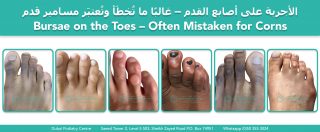
الأكياس الزلالية في أصابع القدم – تُشخَّص غالبًا بالخطأ على أنها مسامير جلدية

بقلم ميشيل تشامبلين، أخصائية القدم الرئيسية – مركز دبي لطب القدم

تُخطأ الأكياس الزلالية في أصابع القدم غالبًا وتُشخَّص على أنها مسامير جلدية، إلا أن الحالتين تختلفان تمامًا.
فالمسمار الجلدي هو تراكم سميك من الجلد الصلب يتكوّن بسبب الضغط أو الاحتكاك،
بينما الكيس الزلالي هو كيس مملوء بسائل يُنتجه الجسم كوسادة واقية لحماية الأنسجة المتهيجة، خصوصًا حول الأوتار والعظام.


أسباب تكوّن الأكياس الزلالية في أصابع القدم

عندما تبدأ الأصابع في الانكماش أو الانثناء (تأخذ شكل المخلب)، تضطر الأوتار الممتدة من مقدمة الساق فوق ظهر القدم إلى الانحناء بشدة عند مفاصل الأصابع.
تتحكم هذه الأوتار في حركة القبض والانبساط للأصابع، ومع مرورها فوق المناطق العظمية يتولد احتكاك متكرر.

ولحماية الأوتار من التآكل أو التمزق، يقوم الجسم بتكوين كيس صغير مليء بمادة هلامية – وهو الكيس الزلالي – كآلية دفاع طبيعية تعمل كوسادة تمنع إصابة الوتر.

تتكوّن الأكياس الزلالية غالبًا على قمم أصابع القدم الصغيرة، وخاصة فوق المفاصل التي تحتك بالأحذية،
أو على جانب إصبع القدم الخامس (الخنصر) إذا كان الحذاء ضيقًا.


الأسباب الشائعة للأكياس الزلالية في أصابع القدم

قد تتكوّن الأكياس الزلالية في الأصابع نتيجة عدة عوامل ميكانيكية أو متعلقة بنمط الحياة، منها:

انهيار القوس العرضي في مقدمة القدم، مما يؤدي إلى ارتفاع الأصابع للأعلى.

تقوس القدم العالي (pes cavus) الذي يدفع الأصابع طبيعيًا إلى الخلف.

الجوارب أو الجوارب النسائية الضيقة التي تشد الأصابع.

الأحذية غير المناسبة، خصوصًا الضيقة التي تضغط على إصبع القدم الصغير.

المهن التي تتطلب ارتداء أحذية ضيقة لفترات طويلة، مثل طواقم الطائرات، حيث تؤدي الجوارب الشفافة المشدودة إلى سحب الأصابع للخلف في وضع منثنٍ يشبه المخلب.

مع مرور الوقت، قد تلتهب الأكياس الزلالية أو يتكوّن فوقها مسمار جلدي أو طبقة من الجلد السميك، مما يجعل تشخيصها أكثر صعوبة.


العلاج والتصحيح طويل المدى

يركّز العلاج الناجح على تصحيح الخلل الميكانيكي الأساسي، وليس فقط تقليل حجم الكيس الزلالي.

العلاج بالفرشات التقويمية (الأحذية الطبية) – تصمم خصيصًا لرفع القوس العرضي وإعادة توازن القدم وتقويم الأصابع.

الجوارب والفوط الخاصة بالأصابع – تحافظ على استقامة الأصابع وتمنع انكماشها.

الفواصل أو المباعدات السيليكونية بين الأصابع – تُستخدم لإعادة محاذاة الأصابع وتخفيف الضغط.

الأحذية المناسبة – يجب أن تكون مريحة وتسمح بحركة طبيعية للأصابع.

الربط أو الشريط الطبي للقدم – يُستخدم أحيانًا لدعم المحاذاة أثناء مرحلة التصحيح.

عادةً ما تختفي الأكياس الزلالية خلال أربعة إلى ستة أشهر بعد إزالة سبب الاحتكاك الميكانيكي.


لماذا لا يُنصح بحقن الكورتيزون في معظم الحالات

على الرغم من أن حقن الكورتيزون قد تقلل حجم الكيس بسرعة، إلا أنها تحمل خطرًا كبيرًا:
قد تُضعف الوتر وتفقده مرونته الطبيعية، مما قد يؤدي إلى ضرر دائم أو حتى تمزق الوتر.

لهذا السبب، يُفضَّل العلاج المحافظ الذي يركز على تصحيح السبب الميكانيكي – تمامًا كما يُستخدم تقويم الأسنان لتصحيح اصطفاف الأسنان – للحصول على نتائج طويلة الأمد.


الخلاصة

الكيس الزلالي ليس شيئًا سيئًا بحد ذاته، بل هو طريقة الجسم لحماية الأوتار من الضرر.
لكن عندما يتكوّن في أصابع القدم، فهو مؤشر على وجود خلل ميكانيكي يجب تصحيحه.

من خلال العلاج التقويمي، وتصحيح محاذاة الأصابع، وارتداء الأحذية المناسبة، يمكن معالجة الأكياس الزلالية بأمان وطبيعية،
مما يمنع إصابة الأوتار مستقبلًا ويحافظ على راحة القدمين على المدى الطويل.


للمزيد من المعلومات أو لحجز موعد، يُرجى الاتصال على:
📞 ‎+٩٧١ ٤ ٣٤٣٥٣٩٠
📱 واتساب: ٩٧١٥٠٣٥٥٣٠٢٤


Bursae on the Toes – Often Mistaken for Corns

By Michelle Champlin, Chief Podiatrist – Dubai Podiatry Centre


Bursae on the toes are very commonly mistaken for corns, yet they are entirely different conditions. A corn is a thickened plug of hard skin that forms due to pressure or friction. A bursa, however, is a fluid-filled sac that the body creates as a protective cushion over irritated tissues, particularly around tendons and bones.


Why Bursae Develop on the Toes

When the toes begin to retract or claw, the tendons that run from the front of the leg over the top of the foot must bend sharply across the toe joints. These tendons are responsible for gripping movements of the toes. As they move back and forth over bony areas, friction develops.


To protect the tendons from fraying or tearing, the body creates a small jelly-like sac—the bursa. This is the body’s built-in defense mechanism, acting as a cushion to prevent tendon injury.


Bursae most commonly develop on the tops of the smaller toes, especially over the knuckles where shoes rub, or on the side of the fifth toe if footwear is tight.


Common Causes of Toe Bursae

Toe bursae can develop from several biomechanical or lifestyle factors, including:

  • Collapsed transverse arch under the forefoot, causing the toes to retract upward.
  • High-arched feet (pes cavus), which naturally draw the toes back.
  • Tight socks, stockings, or tights that pull on the toes.
  • Ill-fitting footwear, especially narrow shoes that compress the little toe.
  • Occupations such as cabin crew, where long hours in fitted shoes are common with stocking abandons that pull and retract the toes into a bent and clawed position.


Over time, bursae may become inflamed or form a callus or corn over the area, making them easy to misdiagnose.


Treatment and Long-Term Correction

Successful treatment focuses on correcting the underlying biomechanics, not just reducing the bursa itself.

  • Orthotic therapy – Custom orthotics lift the transverse arch, rebalance the foot, and straighten the toes.
  • Toe socks and toe stockings – Designed to keep toes straight and prevent retraction.
  • Silicone toe separators or toe aligners – Used to realign the toes and relieve pressure.
  • Accommodative footwear – Properly fitted shoes with space for toe movement.
  • Foot strapping or taping – Sometimes applied to support alignment during the corrective phase.


With this combination, bursae typically settle within four to six months, once the mechanical irritation is removed.


Why Steroid Injections Are Rarely Recommended

While a steroid injection can theoretically reduce a bursa quickly, it carries a serious risk: the tendon can become brittle and lose its natural elasticity. This can lead to long-term damage and even tendon rupture.

Therefore, conservative correction, similar to wearing braces for teeth, is preferred for the best long-term results.


Key Takeaway

A bursa is not a bad thing, it’s the body’s way of protecting tendons from damage. However, when it develops on the toes, it signals an underlying mechanical imbalance that should be corrected.

Through orthotic therapy, toe alignment, and proper footwear, bursae can be resolved safely and naturally, preventing future tendon injury and keeping your feet comfortable for the long term.


For more information or to book an appointment please call our clinic +971 4 3435390 or WhatsApp +971 50 3553024


هل لديك مسمار في القدم؟ ما هو ولماذا يحدث

يمكن أن يتكوَّن مسمار القدم فوق أو تحت أي بروز عظمي في القدم. تُعَدّ مسامير القدم آلية دفاع طبيعية — فهي طريقة الجسم لحماية نفسه من الضغط المفرط والاحتكاك. هناك عدة أنواع من مسامير القدم: المسامير الصلبة، المسامير الرطبة، والمسامير البذرية.

المسامير الصلبة

المسامير الصلبة هي الأكثر شيوعًا. غالبًا ما تتكوَّن على أو تحت منطقة عظمية، مثل جانب إصبع القدم الصغير حيث يضغط الحذاء بإحكام، أو تحت كرة القدم (أسفل رؤوس مشط القدم).

يتكوَّن المسمار الصلب من جلد متقرن كثيف يشبه إلى حد كبير الظفر، وغالبًا ما يظهر بشكل ماسي. يتكوَّن لحماية النسيج السفلي من التقرّح، ويعمل كأنه “سدادة” طبيعية.
ومع ذلك، قد تصبح هذه الطبقة الواقية مضغوطة وصلبة لدرجة أنها تشعر وكأنها حجر صغير تحت الجلد، ويمكن أن تكون مؤلمة جدًا.

كما يمكن أن تظهر المسامير الصلبة تحت مقدّمة القدم، خصوصًا إذا:

  • انخفضت الطبقة الدهنية أسفل رؤوس مشط القدم.
  • انهار القوس العرضي (القوس الصغير الذي يمتد عبر مقدّمة القدم).

عندما ينهار هذا القوس، تضغط عظام المشط الطويلة عبر الأنسجة الرخوة، مما يخلق نقاط ضغط عالية. فيتفاعل الجسم بتكوين مسامير صلبة للحماية من تلف الجلد.

العلاج للمسامير الصلبة

  • اختيار أحذية مناسبة لتقليل الضغط على جانبي الأصابع.
  • استخدام تقويمات قدم مخصصة لرفع ودعم رؤوس مشط القدم وتوزيع الضغط بعيدًا عن المنطقة المؤلمة.عادةً ما يستغرق الأمر من 4 إلى 6 أشهر حتى يتوقف الجسم عن تكوين الجلد الصلب الزائد بعد تصحيح الضغط.

المسامير الرطبة (الطرية)

تتكوَّن المسامير الرطبة بين الأصابع، حيث يجتمع الاحتكاك والرطوبة. تصبح البشرة هنا منقوعة (طرية ومطاطية) بسبب احتباس الرطوبة، مما يؤدي إلى إحساس بالحرقان أو اللذع.

يحدث ذلك عندما تكون الأصابع مضغوطة بإحكام، فلا يتمكن المسمار من الجفاف. يؤدي تراكم السوائل في الأنسجة — كجزء من آلية دفاع الجسم — إلى التهاب المنطقة وألمها.

العلاج للمسامير الرطبة

  • الحفاظ على المنطقة جافة ومهوّاة.
  • استخدام فواصل أو فواصل أصابع لتخفيف الضغط.
  • تطبيق بخاخات مضادة للفطريات أو مجففة إذا كانت الرطوبة مفرطة.

المسامير البذرية

المسامير البذرية صغيرة جدًا، مجتمعة، ومؤلمة للغاية. تظهر كنقاط صفراء صغيرة — مثل نثر البذور — وغالبًا لا تكون مرتبطة بنقاط الضغط. بدلاً من ذلك، ترتبط بنهايات عصبية مفرطة النشاط في الجلد، وقد تكون وراثية أحيانًا.

العلاج للمسامير البذرية

  • استخدام كريمات تحتوي على اليوريا أو مستحضرات ترطيب لتقليل تراكم الكيراتين.
  • ارتداء جوارب مبطّنة وأحذية ناعمة مريحة لتقليل الحساسية.

متى يجب مراجعة اختصاصي القدم (البودياتريست)

إذا كنت تعاني من مسامير متكررة أو مؤلمة، فمن المهم الحصول على علاج احترافي. يمكن لاختصاصي القدم إزالة المسمار بأمان، وتحديد سببه، وتصميم تقويم قدم مخصص لمنع تكراره.
إذا تُرك المسمار دون علاج، فقد يزداد سوءًا أو يؤدي إلى تقرحات، خاصة لدى المصابين بالسكري أو الاعتلال العصبي.

في مركز دبي للبودياتري (Dubai Podiatry Centre)

في مركز دبي للبودياتري، يقوم أخصائيونا بتقييم السبب الميكانيكي الدقيق للمسمار.

تشمل خطط العلاج:

  • إزالة المسمار وتخفيف مناطق الضغط
  • تقويمات قدم مصممة خصيصًا
  • نصائح حول اختيار الأحذية
  • كريمات ترطيب أو تقشير (كيراتوليتية)

لا داعي للعيش مع ألم القدم — فمعظم مسامير القدم يمكن منعها نهائيًا بمجرد معالجة السبب الأساسي.

✍️ بقلم ميشيل تشامبلين، كبيرة أخصائيي القدم
مركز دبي للبودياتري — خبراء في صحة القدم والميكانيكا الحيوية

للمزيد من المعلومات أو لحجز موعد، يُرجى الاتصال على:
📞 ‎+٩٧١ ٤ ٣٤٣٥٣٩٠
📱 واتساب: ٩٧١٥٠٣٥٥٣٠٢٤


Have You Got a Foot Corn? What It Is and Why It Happens

A foot corn can develop over or under any bony prominence of the foot. Corns are a natural defence mechanism – the body’s way of protecting itself from excessive pressure and friction. There are several types of corns: hard corns, soft corns, and seed corns.


Hard Corns

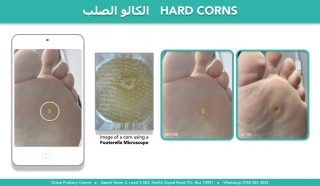
Hard corns are the most common type. They often form on top of or underneath a bony area, such as the side of the little toe where shoes press tightly, or under the ball of the foot (beneath the metatarsal heads).

A hard corn is made of dense keratinised skin, very similar to a toenail, and often appears diamond-shaped. It forms to protect the underlying tissue from ulceration, acting like a natural “plug.”

However, this protective layer can become so compact and hard that it feels like a small stone or diamond under the skin and can be quite painful.

Hard corns also occur under the forefoot, particularly if:

  • There is reduced fatty padding beneath the metatarsal heads.
  • The transverse arch (the small arch that runs across the forefoot) has collapsed.
  • When this arch collapses, the long metatarsal bones press down through the soft tissues, creating high-pressure points. The body reacts by forming hard corns to protect against skin breakdown.


Treatment for Hard Corns

  • Choose better-fitting footwear to reduce pressure on the sides of the toes.
  • Use custom orthotics to lift and support the metatarsal heads, redistributing pressure away from the painful area.
  • It usually takes 4–6 months for the body to stop forming the excess hard skin once pressure is corrected.


Soft Corns

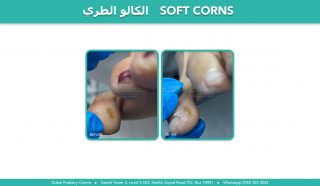
Soft corns develop between the toes, where moisture and friction combine. The skin here becomes macerated (soft and rubbery) due to trapped moisture, leading to a burning or acidic sensation.

This happens when the toes are pressed tightly together, and the corn cannot dry out. The buildup of body fluid in the tissue — part of the body’s defence mechanism — can make the area sore and inflamed.

Treatment for Soft Corns

  • Keep the area dry and ventilated.
  • Use toe separators or spacers to relieve pressure.
  • Apply antifungal or drying sprays if moisture is excessive.


Seed Corns

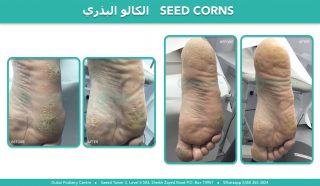
Seed corns are tiny, clustered, and very painful. They appear as small, yellowish dots — like a sprinkle of seeds and are usually not linked to pressure points. Instead, they are related to overactive nerve endings in the skin and can sometimes run in families.

Treatment for Seed Corns

  • Apply urea-based creams or softening lotions to reduce keratin buildup.
  • Wear padded socks and soft, cushioned footwear to reduce sensitivity.


When to See a Podiatrist

If you have recurring or painful corns, professional treatment is important. A podiatrist can safely remove the corn, identify its cause, and create a custom orthotic solution to prevent recurrence.

Left untreated, corns can worsen or lead to ulcers, particularly for people with diabetes or neuropathy.


At Dubai Podiatry Centre, our specialists assess the exact mechanical cause of your corn.

Treatment plans include:

  • Corn removal and relief of pressure areas
  • Custom-made orthotics
  • Footwear advice
  • Moisturising or keratolytic creams


You don’t need to live with foot pain, most corns can be permanently prevented once the underlying cause is treated.

Written by Michelle Champlin, Chief Podiatrist

Dubai Podiatry Centre Experts in Foot Health and Biomechanics


For more information or to book an appointment please call our clinic +971 4 3435390 or WhatsApp +971 50 3553024


كيفية منع عودة مسامير القدم

قد تكون مسامير القدم مزعجة – وأحيانًا مؤلمة – لكنها في معظم الحالات مفيدة وواقية.

لماذا تتكوّن مسامير القدم؟

تتطور مسامير القدم عندما يستشعر الجسم احتكاكًا أو ضغطًا على منطقة معينة من الجلد. ولحماية نفسه من البثور أو الجروح أو التقرحات، يستجيب الجلد بإنتاج الكيراتين السميك.

تخيل يدي رافع الأثقال – تتكوّن طبقة جلد أكثر سماكة في أماكن احتكاك القضيب المعدني لتجنب البثور. المبدأ نفسه ينطبق على القدمين، إذ تصبح البشرة أكثر سماكة في المناطق التي تتعرض لأكبر قدر من الضغط أو الاحتكاك، مما يخلق حاجزًا طبيعيًا يحمي الأنسجة الداخلية.


متى تصبح مسامير القدم مشكلة؟

على الرغم من أن مسامير القدم تعمل كوسيلة حماية، إلا أنها قد تصبح مؤلمة إذا تحمل جزء واحد من القدم ضغطًا مفرطًا. على سبيل المثال:

القدم ذات القوس العالي قد تتكوّن فيها مسامير سميكة في مقدمة القدم.

القدم المسطحة أو المائلة للداخل قد تتكوّن فيها مسامير على جانب إصبع القدم الكبير.

في هذه الحالات، لا يكفي مجرد إزالة المسمار، لأن نقطة الضغط ستظل موجودة، مما يؤدي إلى عودة المسمار بسرعة.

وفي بعض الأحيان، يحدث العكس. فالأشخاص الذين يعانون من اعتلال الأعصاب (ضعف الإحساس في القدمين) قد لا يشعرون بالضغط أو الألم، وبالتالي لا يتكوّن لديهم المسمار الواقي. وهذا قد يؤدي إلى حدوث تقرحات أو جروح لا تلتئم، ما يتطلب رعاية عاجلة من اختصاصي أقدام.

كيفية العناية بمسامير القدم بأمان

الملف اليومي الخفيف: استخدم مبردًا جافًا للقدم لبضع ثوانٍ قبل الاستحمام لتنعيم السطح.

تجنّب كريمات التليين المفرطة: إذا تكوّن المسمار لحماية الأنسجة الداخلية، فإن تليينه المفرط قد يزيد خطر ظهور البثور أو الألم.

علاج السبب الجذري: استشر اختصاصي الأقدام لإجراء تحليل للضغط وطريقة المشي. يمكن أن تساعد النعال أو الدعامات المخصصة في توزيع الضغط على القدم ومنع التحميل الزائد على منطقة واحدة، مما يقلل من تكرار ظهور المسمار.

تحقق من مقاس الحذاء: الأحذية الضيقة أو غير الداعمة تزيد الاحتكاك وتسرّع تكوّن المسمار.


نهج اختصاصي الأقدام

في مركز دبي للبودياتري، لا نكتفي بإزالة المسمار فحسب – بل نبحث عن السبب وراء ظهوره. من خلال تحديد مناطق الضغط العالية وتصحيح الاختلالات الميكانيكية باستخدام الدعامات، نساعد الجلد على العودة إلى حالة أكثر توازنًا وطبيعية.


الخلاصة

مسامير القدم علامة على أن الجسم يحمي نفسه. الهدف ليس القضاء عليها تمامًا، بل منعها من النمو الزائد من خلال توزيع الضغط بشكل متساوٍ وتوفير الدعم المناسب.
مع الخطة العلاجية الصحيحة – التقييم المهني، وتصحيح وضع القدم بالدعامات، وروتين بسيط للعناية في المنزل – يمكن الحفاظ على مسامير القدم مريحة وتحت السيطرة.


للمزيد من المعلومات أو لحجز موعد، يُرجى الاتصال على:
📞 ‎+٩٧١ ٤ ٣٤٣٥٣٩٠
📱 واتساب: ٩٧١٥٠٣٥٥٣٠٢٤


How to Stop Foot Calluses from Coming Back

Having calluses on your feet can be annoying – and sometimes painful – but in most cases, they are actually beneficial and protective.

Why Do Calluses Form?

Calluses develop when the body senses friction or pressure on a specific area of the skin. To protect itself from blisters, wounds, or ulcers, the skin responds by producing thickened keratin.

Think of a weightlifter’s hands — they develop thicker skin where the bar rubs to prevent blisters. The same principle applies to your feet. The skin thickens where pressure or friction is greatest, creating a natural barrier that protects the tissues underneath.

When Calluses Become a Problem

While calluses are protective, they can become painful if one area of the foot takes on too much load. For example:

  • A high-arched foot may develop heavy callus on the ball of the foot.
  • A flat or pronated foot may form thick callus along the side of the big toe.

In these cases, it isn’t enough to simply remove the callus – because if the pressure point remains, the callus will quickly return.

Sometimes, the opposite problem occurs. People with neuropathy (reduced sensation in the feet) may not feel pressure or pain, so their body does not form protective callus. This can lead to ulceration or non-healing wounds, which require urgent podiatric care.


How to Manage Calluses Safely 

  • Light daily filing: Use a dry foot file for a few seconds before your morning shower to smooth the surface.
  • Avoid excessive softening creams: If the callus formed to protect underlying tissue, softening it too much can increase the risk of blistering or soreness.
  • Address the root cause: Visit a podiatrist for a pressure and gait analysis. Custom orthotics or insoles can redistribute pressure across the foot, preventing one area from overloading and reducing callus recurrence.
  • Check footwear fit: Tight or unsupportive shoes can increase friction and accelerate callus formation.


The Podiatrist’s Approach

At the Dubai Podiatry Centre, we don’t just remove callus – we look at why it’s forming. By identifying the high-pressure zones and correcting the underlying biomechanics with orthotics, we help the skin return to a more balanced, natural state.


In Summary

Calluses are a sign your body is protecting itself. The goal isn’t to eliminate them entirely, but to prevent them from overdeveloping by ensuring even foot pressure and proper support. With the right care plan – professional assessment, orthotic realignment, and a simple at-home routine ., calluses can be kept comfortable and under control.


For more information or to book an appointment please call our clinic +971 4 3435390 or WhatsApp +971 50 3553024
Copyright Dubai Podiatry 2026. All rights reserved.

WhatsApp us