This article will explore achilles tendinitis and heel bone pain through three cases of supinated, neutral and pronated feet.
يبحث هذا المقال في التهاب وتر العرقوب والم عظمة الكعب لثلاث حالات أقدام: المرهقة والمحايدة و الملتوية
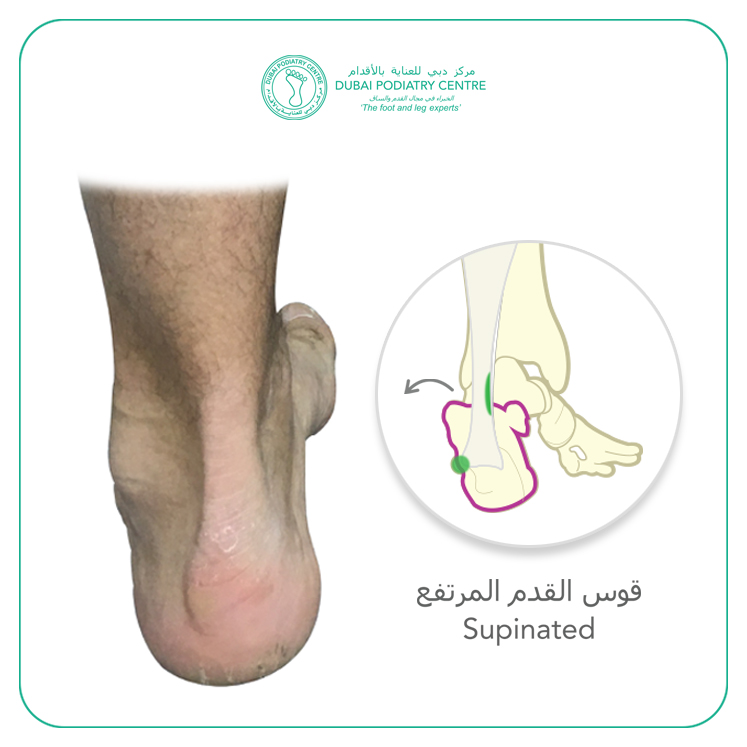 Firstly, a ‘supinated’ foot occurs when your weight rolls onto the outer edges of your foot. In this example, you can see the heel bone clearly leaning outwards which creates tension in the calf muscles and tendon attachments. This is because the calf muscles are undergoing more stress because of the supinated foot. A supinated foot is a structural issue with the ankle and heel bone and can be altered with corrective orthotics.
أوّلًا، تظهر حالة القدم المرهقة عندما يقع وزنك على الحرف الخارجي لقدمك . في هذا المثال، يمكنك بوضوح رؤية عظمة الكعب ملتوية الى الخارج مّما يشكّل ضغطًا على عضلة بطّة الساق وأربطة الوتر. تتحمّل عضلات بطّة الساق جهد أكبر بسبب القدم المرهقة . تُعد هذه الحالة مشكلة بنيويّة مع الكاحل وعظمة الكعب ويُمكن تعديلها عبر تقويمات تصحيحيّة
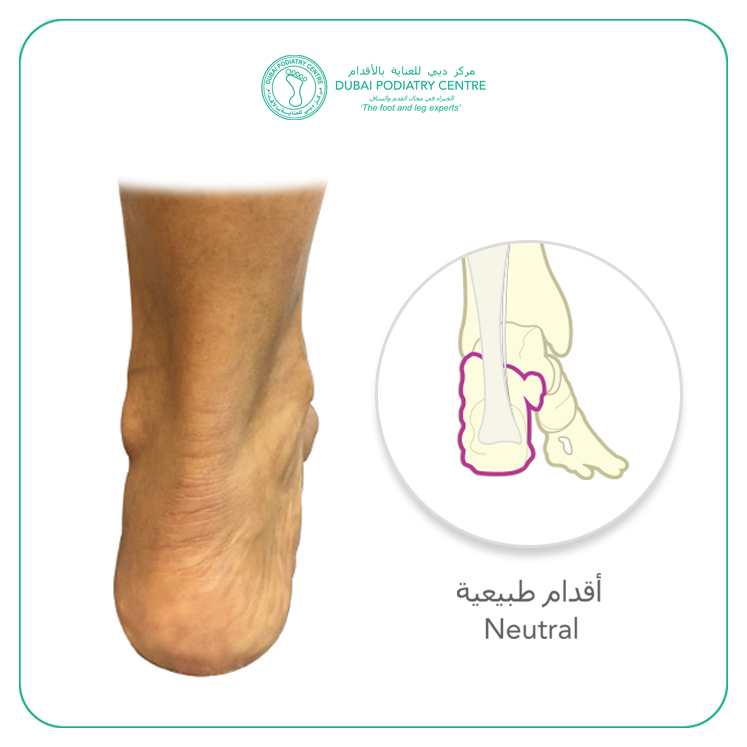 Next is a ‘neutral’ example of a foot without any pain. We use the term ‘neutral’ to describe how the heel bone is straight with no signs of supination or pronation. In this case, the heel bone is vertical as well as the achilles tendon sitting equally with 50-50 pressure and proportionate tensile stress on both sides.
ثانيًا، مثال القدم المحايدة أو تلك التّي لا الم فيها . نستخدم عبارة “محايدة” لوصف استقامة عظمة الكعب وانعدام آثار الإرهاق أو الإلتواء . في هذه الحالة، عظمة الكعب ووتر العرقوب مستقيمان عاموديًا ويتقاسمان الجهد بنسبةٍ متساوية ٥٠-٥٠ مع جهد شدّ متناسب على كلا الطرفين
Furthermore, the achilles tendon is equally attached to the medial and lateral aspects of the heel bone so there should be no problems with the achilles tendon or the insertion in to the heel bone. When running with ‘neutral’ feet the calf muscle contracts to an even amount of tensile stress to the achilles tendon rather than an uneven tension such as a ‘supinated’ foot.
من ناحية أخرى، يتّصل وتر العرقوب بشكلٍ متساوٍ بالمنظري الإنسي والجانبي لعظمة الكعب، وبالتالي لا وجود لمشاكل في وتر العرقوب أو في مغرز عظمة الكعب . عند الركض في حال القدم المحايدة، تنكمش عضلة بطّة الساق بنسبة متساوية من جهد الشدّ لوتر العرقوب بدلًا من الجهد المتفاوت كما في حالة القدم المرهقة
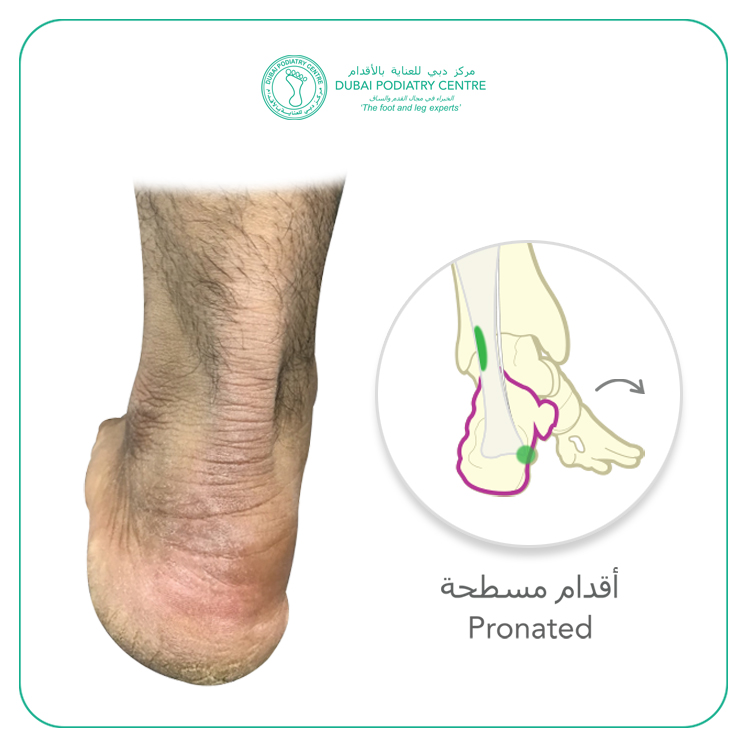 Lastly, the most common type of heel bone pain we see in our clinic is from a ‘pronated’ foot. In this case, the foot slants inwards which causes the heel bone to lean in and the achilles tendon to overstretch. This creates irritation on the inside of the heel bone and can generate an extremely uncomfortable amount of pain as well as soreness in the achilles higher up.
أخيراً، النوع الأكثر شيوعًا لألام عظمة الكعب ونراه بكثرة في عيادتنا هي القدم الملتوية. في هذه الحالة، تنحرف القدم نحو الداخل ممّا يسبّب في انحناء عظمة الكعب وإرهاق وتر العرقوب. كل هذا يخلق حالة تهيّج على الجانب الداخلي لعظمة الكعب ويولّد قدر مزعج من الالم ووجع في أعلى العرقوب
This example shows swelling of the achilles because when the foot begins to lean in to the side the achilles begins to pull on the heel bone and create swelling on the outer casing of the heel bone.
يُظهر هذا المثال تورّم العرقوب بسبب بدء انحناء القدم جانبيًا فيضغط العرقوب على عظمة الكعب ويَخلُق انتفاخًا في الإطار الخارجي لعظمة الكعب
In our treatment plan for achilles tendinitis and heel bone pain, we create corrective orthotics which alters the angle of the heel to a neutrally aligned foot which has equal 50-50 pressure and proportionate tensile stress on both sides of the heel. This removes the originating stress that causes achilles tendinitis and heel bone pain.
في خطّة علاجنا لالتهاب العرقوب والم عظمة الكعب، نصنع تقويم تصحيحي يُعدّل زاوية الكعب لتصبح القدم متراصفة وبضغط متساوٍ ٥٠-٥٠ وجهد شدّ متناسب بين جانبي الكعب. تُزيل هذه الطريقة الجهد الذي يُسبّب التهاب العرقوب والم عظمة الكعب
For more information about achilles tendinitis, heel bone pain and corrective orthotics, contact our clinic.
للمزيد من المعلومات حول التهاب العرقوب والم عظمة الكعب والتقويمات التصحيحيّة، الرجاء التواصل مع عيادتنا
WhatsApp: +971 50 331 4978
واتساب ٠٠٩٧١٥٠٣٣١٤٩٧٨
Call: +971 4 3435390
هاتف ٠٠٩٧١٤٣٤٣٥٣٩٠
If you found this article helpful, then have a look at our other blog posts. For example our more in-depth post about corrective orthotics may be useful. (LINK BLOG POST HERE “How we correct flat feet”). https://dubaipodiatry.com/foot-talk-fridays-correct-flat-feet/
اذا وجدت هذا المقال مفيد، ألقٍ نظرة على ملصقات مدونتنا الأخرى
مثلًا ملصقنا حول التقويمات التصحيحّة بشكلٍ معمّق قد يكون مفيداً. (هنا رابط ملصق المدونة ” كيف نصحّح القدم المسطّحة”)


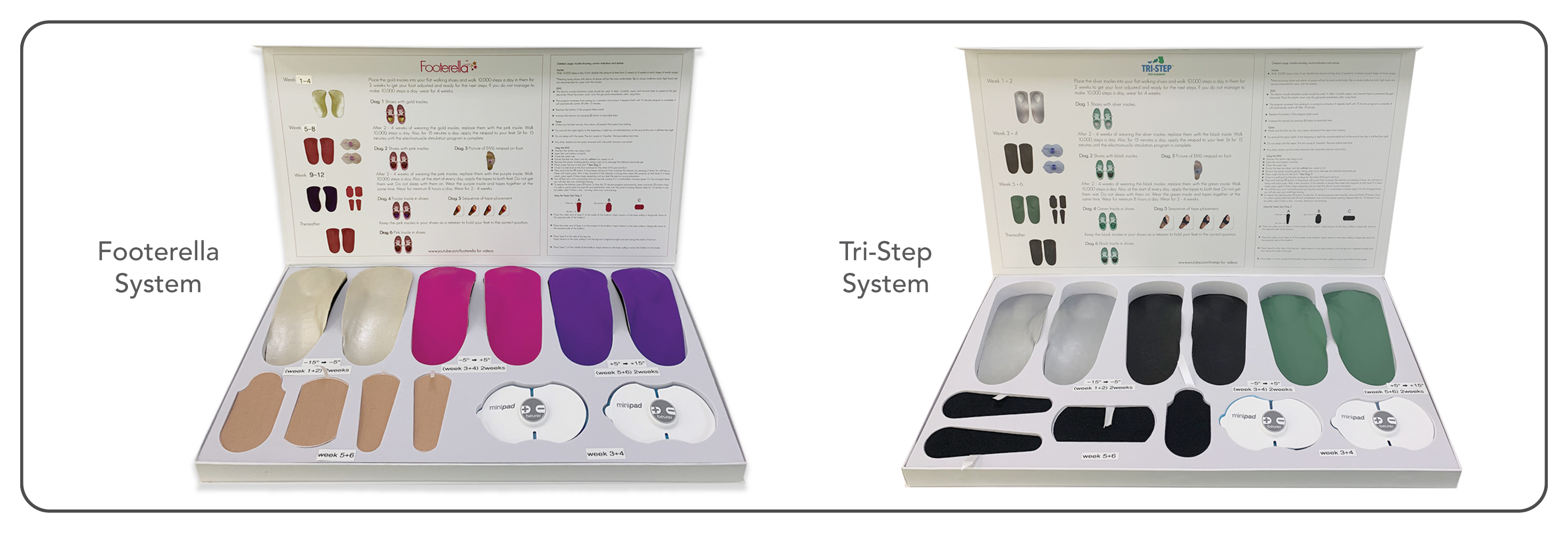 We have two main products to alter this which is the ‘Footerella System’ for women and the ‘Tri-Step System’ for men. Both of the systems have the same products in different sizes such as orthotics, foot binding tapes and electromuscle stimulators.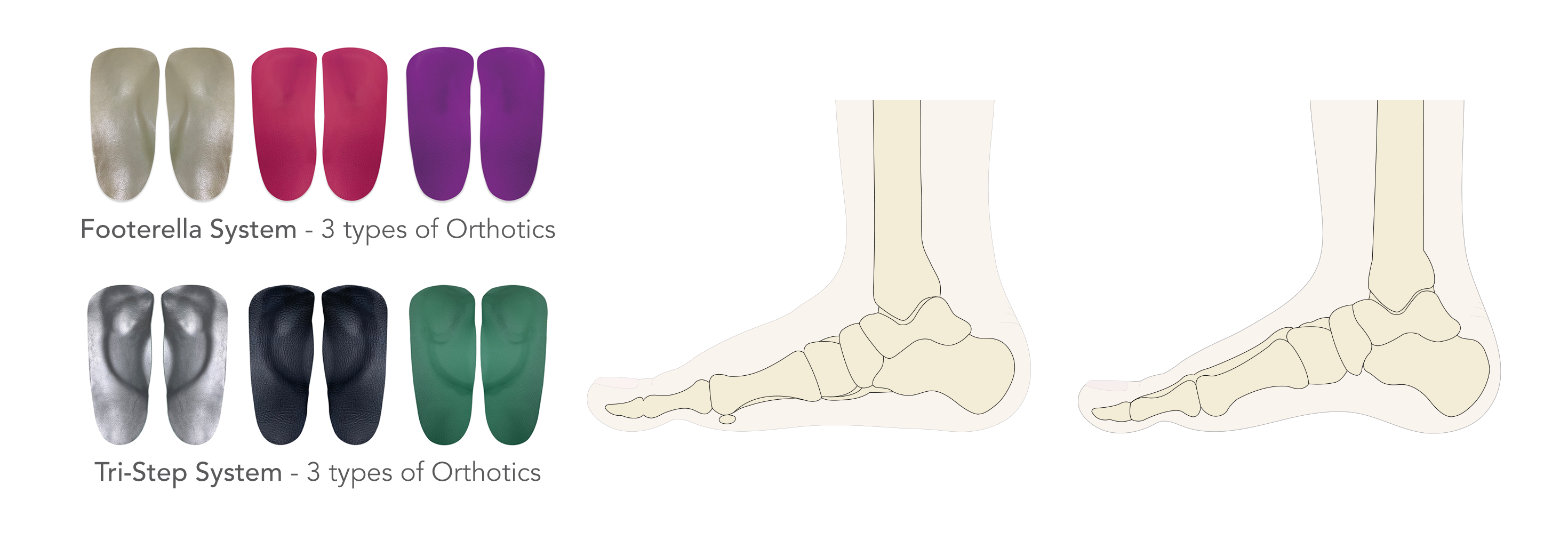
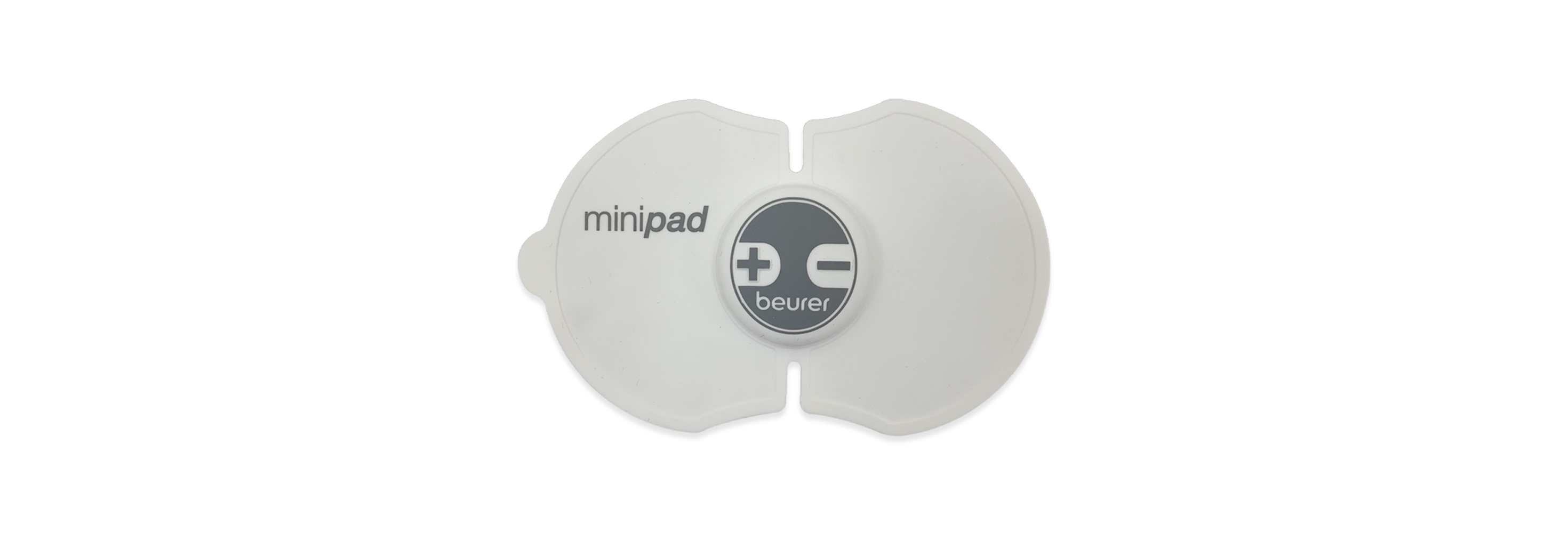 Secondly, the electromuscle stimulators are used to tighten and strengthen the foot muscles. This is perfect for people are that adjusting to wearing orthotics and may feel some minor discomfort or aching feeling in their feet. It is also beneficial to use an electromuscle stimulator if you have been standing or walking for a long time. This device is most popular for people with occupations that require standing for lengthy periods of time such as in the military, cabin crew and teachers.
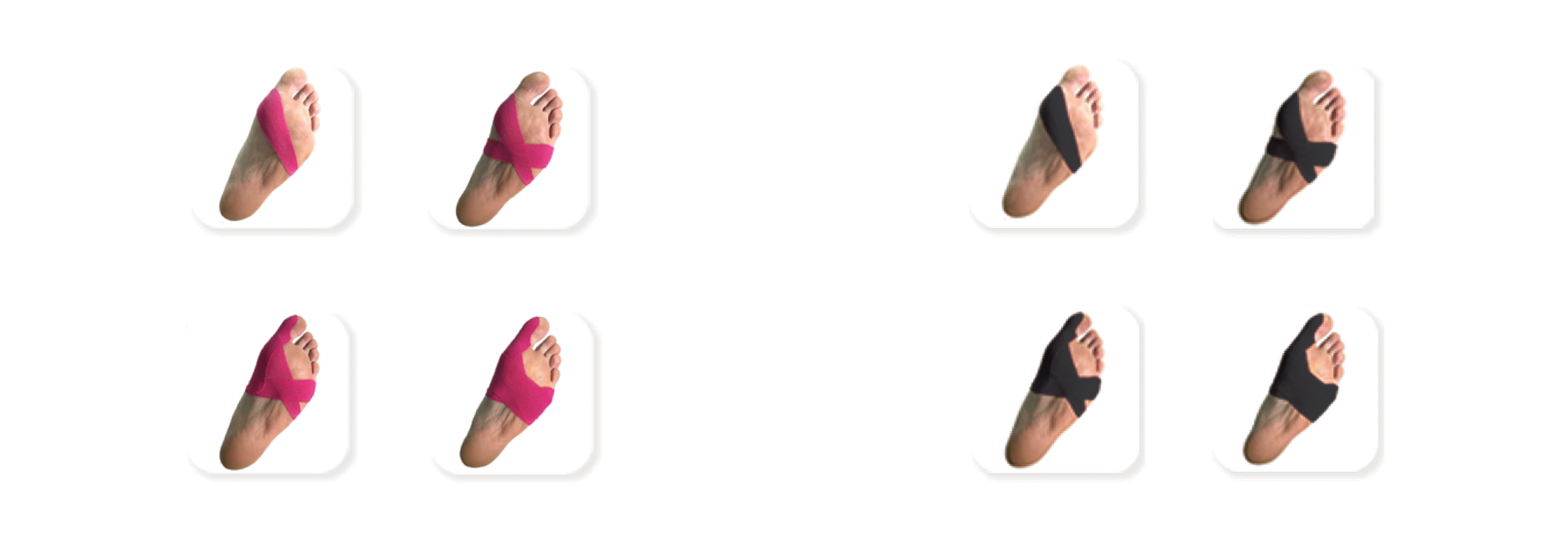 Lastly, the Footerella and Tri-Step system’s have foot binding tapes which helps to support the ligaments in the feet.
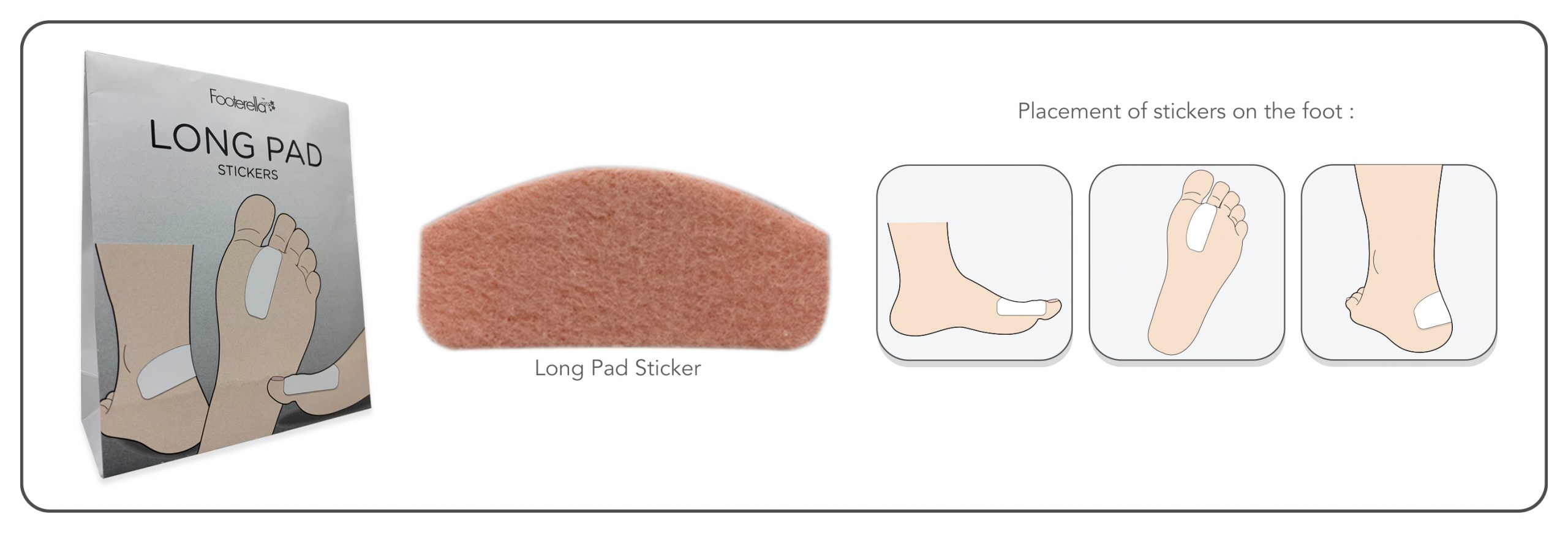
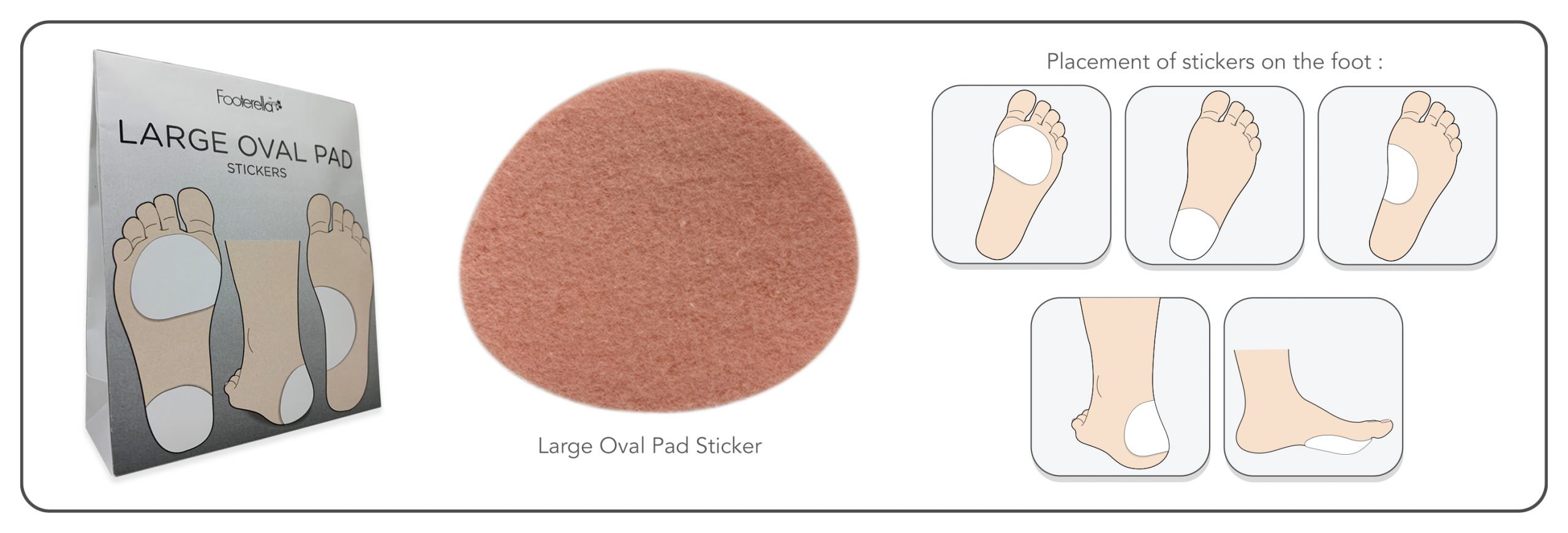
 have launched three different types of lightweight foot pads (toe pad, long pad and the large oval pad) made from fleecy web and hypoallergenic glue. We’re talking you through step-by-step of how to use each of them.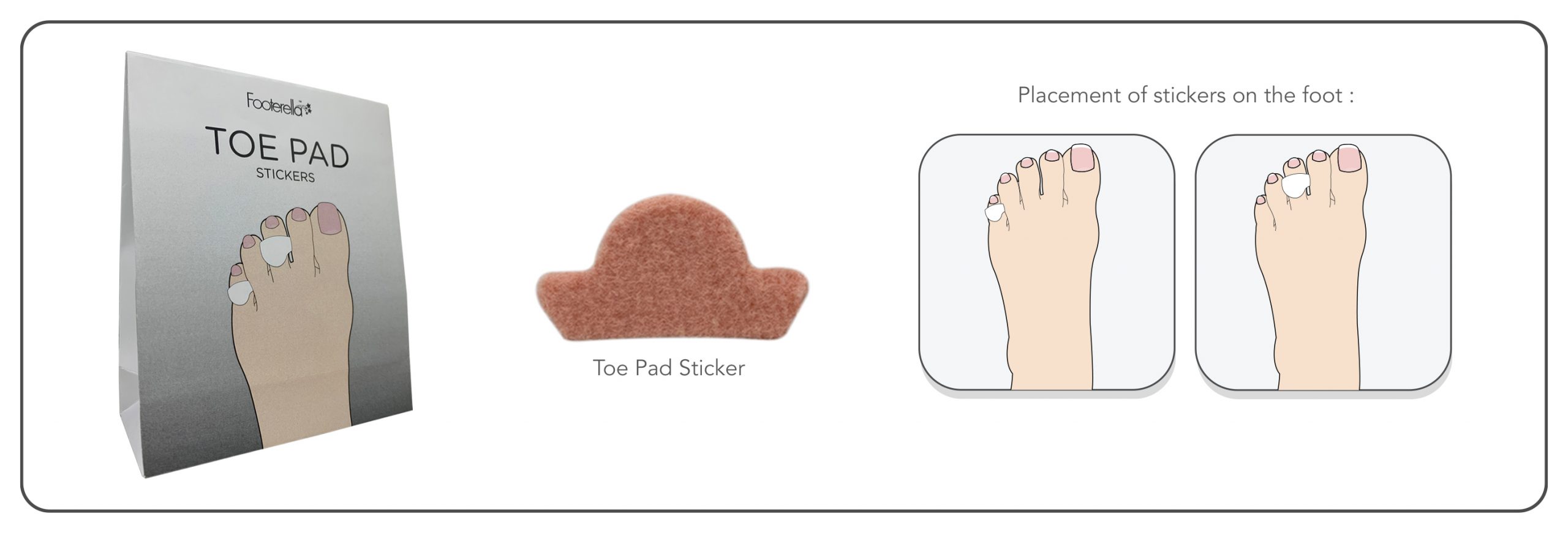
 When people suffer from heel pain it can be extremely debilitating and frustrating due to the inconsistent nature and levels of pain. This can interfere with daily life and cause unnecessary stress.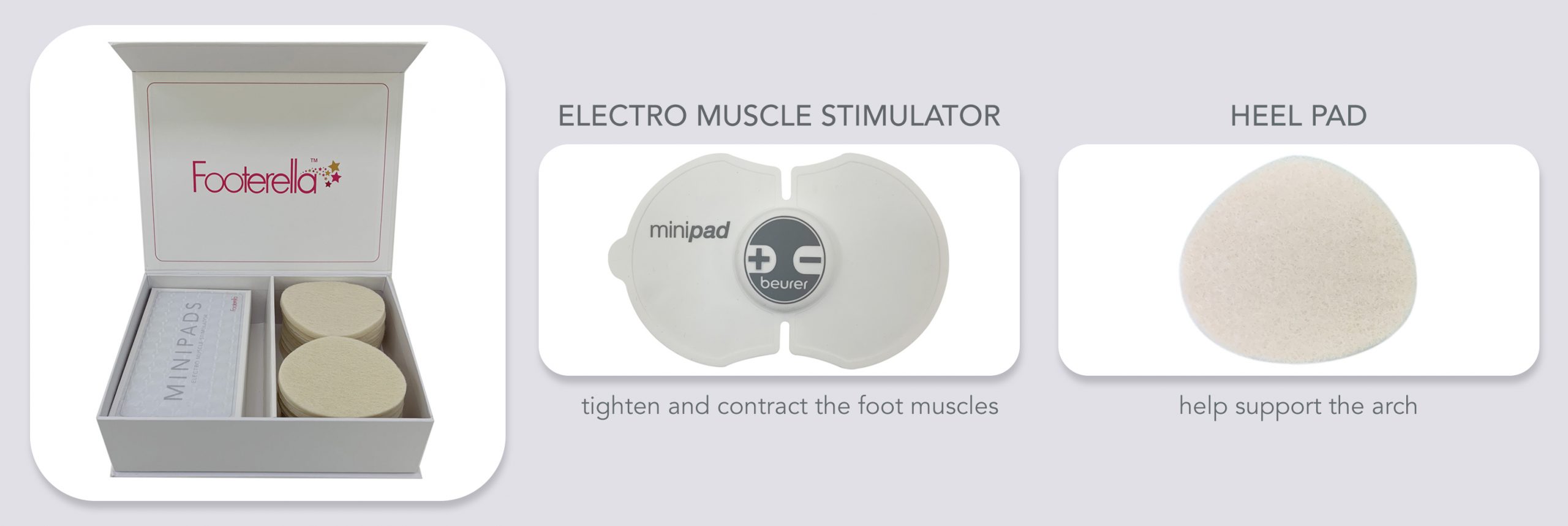
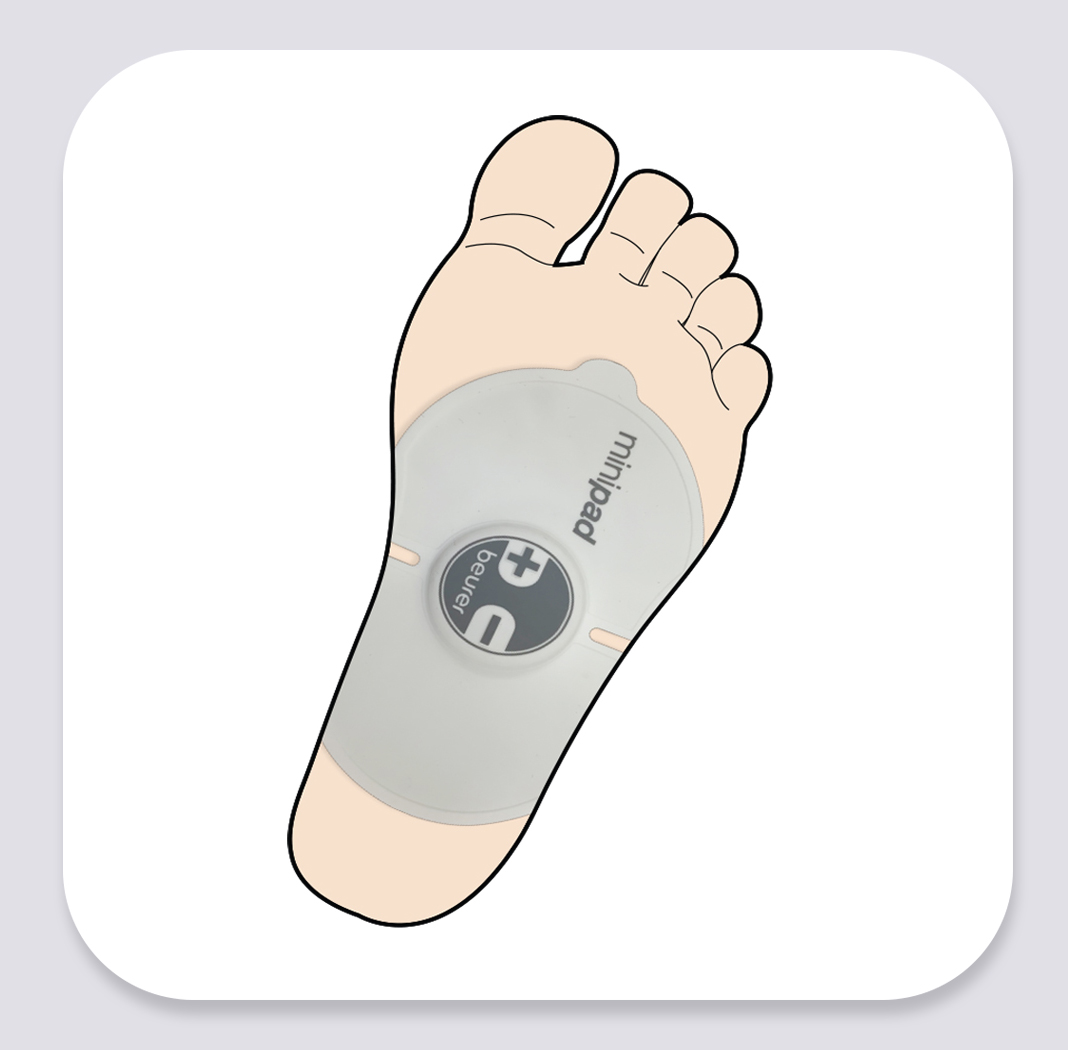 There are a couple of different ways you can use both of these products. For example, the EMS devices can be placed on the arch and across the forefoot on the sole of your foot which helps strengthen the inter-metatarsals. You may leave the EMS device on your foot for around 10-20 minutes to tighten the muscles and relieve the pressure and strain which is gathering in the heel area.
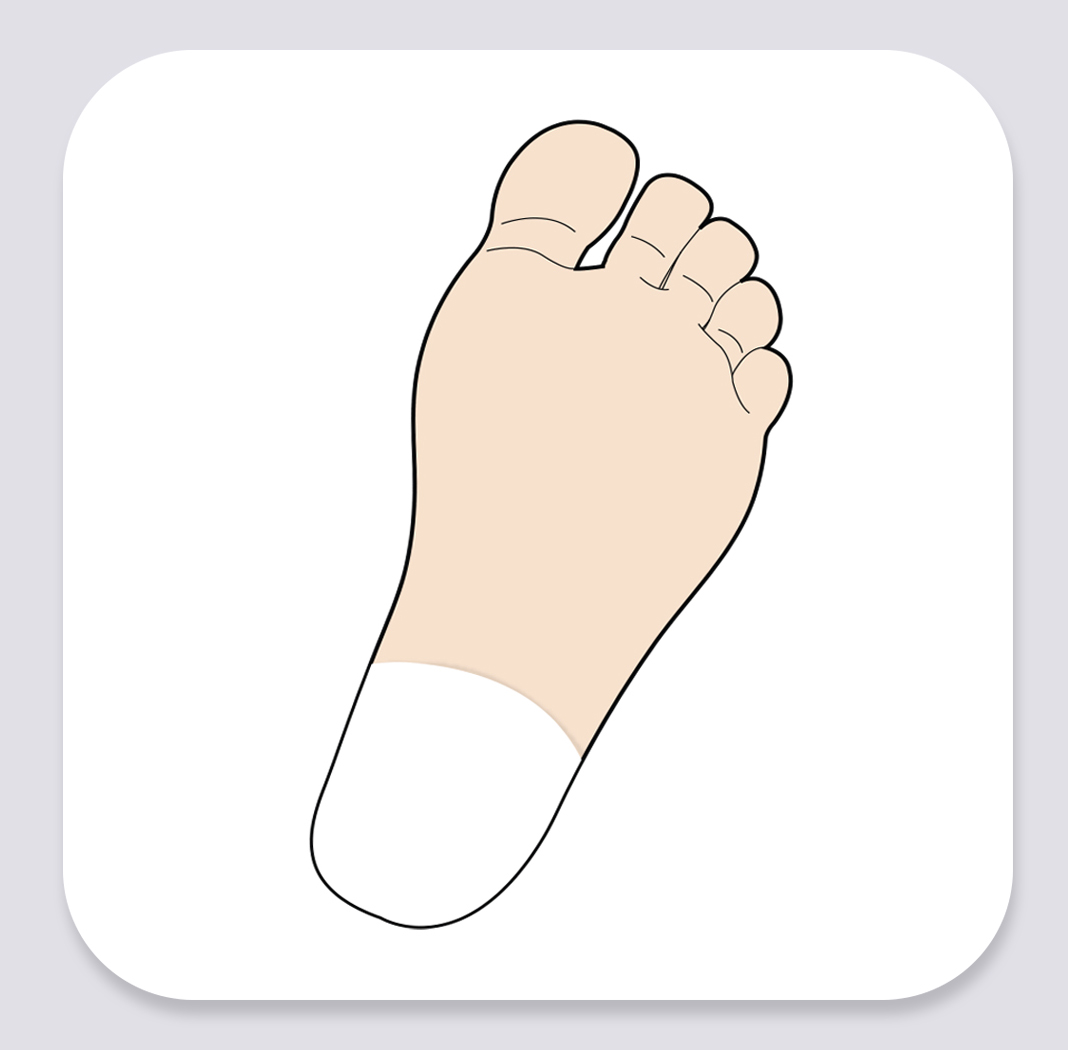 Secondly, the cotton pads can be used directly under the heel to give extra cushioning. Another way which you can place the cotton pad is half of the pad on the arch, the other half pulled up across to reach the top of your foot. This adds support and structure to your arch which eases some of the tension on the heel.











