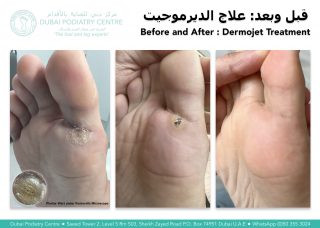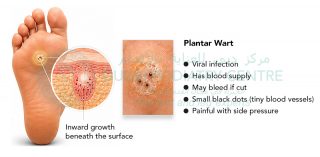
A plantar wart, also known as a verruca, is a viral infection that occurs on the sole of the foot. Unlike warts elsewhere on the body that grow outward as raised bumps, plantar warts grow inward due to the constant pressure of standing and walking. This means they often appear flat on the surface while developing a bulb-like structure deeper within the skin.
Because of this inward growth, plantar warts can be more difficult to treat. Treatments that work well for outward-growing warts on the hands or other parts of the body, such as cryotherapy (liquid nitrogen) or salicylic acid, often have lower success rates on the sole of the foot. This is because the wart is not easily accessible on the surface, making it harder for these treatments to reach the infected tissue effectively.
الثؤلول الأخمصي، المعروف أيضًا باسم الفيروكا (Verruca)، هو عدوى فيروسية تصيب باطن القدم. وعلى عكس الثآليل التي تظهر في مناطق أخرى من الجسم وتنمو إلى الخارج على شكل نتوءات بارزة، فإن الثآليل الأخمصية تنمو إلى الداخل بسبب الضغط المستمر الناتج عن الوقوف والمشي. ولهذا السبب، غالبًا ما تبدو مسطحة على سطح الجلد، بينما تمتد في العمق على شكل كتلة تشبه البصلة داخل الأنسجة.
وبسبب هذا النمو الداخلي، تكون الثآليل الأخمصية أكثر صعوبة في العلاج. فالعلاجات التي قد تكون فعّالة للثآليل التي تنمو إلى الخارج على اليدين أو في أجزاء أخرى من الجسم، مثل العلاج بالتبريد (النيتروجين السائل) أو حمض الساليسيليك، غالبًا ما تحقق معدلات نجاح أقل عند استخدامها لعلاج الثآليل الموجودة في باطن القدم. ويعود ذلك إلى أن الثؤلول لا يكون مكشوفًا بشكل كافٍ على السطح، مما يجعل وصول هذه العلاجات إلى الأنسجة المصابة أكثر صعوبة وأقل فعالية.
So how does a plantar wart develop in the first place?
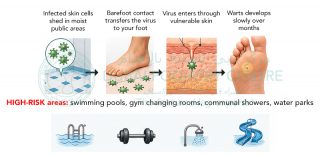 The condition is caused by a virus that is spread through contact with infected skin cells. This typically occurs in high-risk environments where people walk barefoot, such as swimming pools, gym changing rooms, and water parks. An infected skin cell from another person can be shed onto the floor, and if you walk over that area within a short time frame, the virus may transfer to your foot.
However, the virus cannot easily penetrate healthy skin. The outermost layer of the skin, known as the stratum corneum, acts as a protective barrier. This layer is structured like tightly packed scales, similar to fish scales, forming a strong defence against external invasion.
When the feet are dry, this barrier remains tightly closed and highly protective. But when the skin becomes wet or sweaty for prolonged periods, the structure of this layer changes. The “scales” begin to separate slightly, creating microscopic gaps. This makes the skin more porous and vulnerable to viral entry.
At the same time, an infected foot in a moist environment can shed virus-containing skin cells more easily. These infected cells can then be picked up by another person walking over the same surface, particularly in high-traffic, damp areas.
Once the virus enters the skin, it develops slowly. It can take several months, often up to six months or more, before a plantar wart becomes visible. During this time, the virus grows within the deeper layers of the skin before gradually appearing on the surface.
فكيف يتكوّن الثؤلول الأخمصي في المقام الأول؟
تنجم هذه الحالة عن فيروس ينتقل من خلال ملامسة خلايا الجلد المصابة. ويحدث ذلك عادةً في البيئات عالية الخطورة التي يمشي فيها الأشخاص حفاة الأقدام، مثل أحواض السباحة، وغرف تبديل الملابس في الصالات الرياضية، والحدائق المائية. فقد تسقط خلية جلدية مصابة من شخصٍ ما على الأرض، وإذا مررت فوق تلك المنطقة خلال فترة قصيرة، فقد ينتقل الفيروس إلى قدمك.
ومع ذلك، لا يستطيع الفيروس اختراق الجلد السليم بسهولة. فالطبقة الخارجية من الجلد، والمعروفة باسم الطبقة القرنية، تعمل كحاجز واقٍ. وتتكوّن هذه الطبقة من خلايا متراصة بإحكام تشبه حراشف السمك، مما يشكّل خط دفاع قويًا ضد العوامل الخارجية.
عندما تكون القدمان جافتين، يبقى هذا الحاجز محكم الإغلاق ويوفر حماية عالية. ولكن عندما يصبح الجلد رطبًا أو متعرقًا لفترات طويلة، تتغير بنية هذه الطبقة. إذ تبدأ “الحراشف” الجلدية بالانفصال بشكل طفيف، مما يخلق فجوات مجهرية صغيرة. وهذا يجعل الجلد أكثر نفاذية وأكثر عرضة لدخول الفيروسات.
وفي الوقت نفسه، يمكن للقدم المصابة الموجودة في بيئة رطبة أن تطرح خلايا جلدية تحتوي على الفيروس بسهولة أكبر. ويمكن لهذه الخلايا المصابة أن تنتقل إلى شخص آخر يمشي على السطح نفسه، خاصةً في الأماكن الرطبة كثيرة الاستخدام.
وبمجرد دخول الفيروس إلى الجلد، فإنه يتطور ببطء. فقد يستغرق الأمر عدة أشهر، وغالبًا ما يصل إلى ستة أشهر أو أكثر، قبل أن يصبح الثؤلول الأخمصي مرئيًا. وخلال هذه الفترة، ينمو الفيروس داخل الطبقات العميقة من الجلد قبل أن يبدأ بالظهور تدريجيًا على السطح.
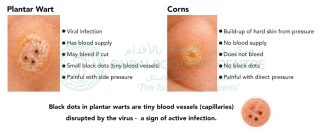 Plantar warts are sometimes confused with corns, but they are very different. A corn is a build-up of hard skin caused by pressure and friction. It can often be reduced without bleeding, although it may feel like walking on a sharp point. A plantar wart, however, is a living viral lesion. If disturbed or cut, it will bleed because it has developed its own blood supply within the skin.
One of the key identifying features of a plantar wart is the presence of small black dots within the lesion. These are not roots, but tiny blood vessels known as capillaries. The virus disrupts and constricts these vessels, causing them to appear dark. Their presence is a sign that the wart is active and established within the tissue.
This is where Dermojet® treatment is particularly effective. Because plantar warts grow deep within the skin, a treatment that can reach and disrupt the infected tissue at its core is essential. Dermojet® delivers a high-pressure microjet that penetrates beneath the surface, targeting the area where the virus is thriving and improving the likelihood of successful resolution.
يتم الخلط أحيانًا بين الثآليل الأخمصية ومسامير القدم، لكنهما حالتان مختلفتان تمامًا. فمسمار القدم هو تراكم للجلد السميك والصلب نتيجة الضغط والاحتكاك المتكرر. وغالبًا ما يمكن تقليصه أو إزالته دون حدوث نزيف، رغم أنه قد يسبب إحساسًا يشبه المشي على جسم حاد. أما الثؤلول الأخمصي فهو آفة فيروسية حية. وعند العبث به أو قصّه، فإنه ينزف لأنه يكون قد كوّن شبكة من الأوعية الدموية الخاصة به داخل الجلد.
ومن أبرز العلامات التي تساعد على التعرف على الثؤلول الأخمصي وجود نقاط سوداء صغيرة داخل الآفة. وهذه النقاط ليست جذورًا كما يعتقد البعض، بل هي أوعية دموية دقيقة تُعرف باسم الشعيرات الدموية. ويؤثر الفيروس في هذه الأوعية ويُضيّقها، مما يجعلها تبدو داكنة اللون. ويُعد وجود هذه النقاط علامة على أن الثؤلول نشط ومتجذر داخل الأنسجة.
وهنا تبرز فعالية علاج ديرموجيت® (Dermojet®) بشكل خاص. فبما أن الثآليل الأخمصية تنمو عميقًا داخل الجلد، فإن الوصول إلى الأنسجة المصابة في مركز الثؤلول وتعطيلها يُعد أمرًا أساسيًا لنجاح العلاج. ويعمل ديرموجيت® من خلال إطلاق نفثة دقيقة عالية الضغط تخترق ما تحت سطح الجلد، لتستهدف المنطقة التي ينشط فيها الفيروس، مما يزيد من احتمالية القضاء على الثؤلول بنجاح.
For more information or to book an appointment please call our clinic +971 4 3435390 or WhatsApp +971 50 3553024
Continue reading our next blog to learn more : How can you avoid catching a plantar wart?



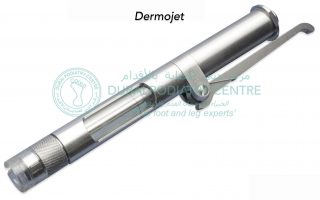 At Dubai Podiatry Centre, our highest success rate for plantar warts comes from our Dermojet treatment.