

How can you avoid catching a Plantar Wart?
The virus that causes plantar warts lives on microscopic skin cells, which means you will never be able to see it. In reality, we come into contact with this virus frequently throughout the day, through shared surfaces and contact with other people. Fortunately, the body is usually very effective at fighting it off.
Unlike viruses such as herpes, which can remain dormant in the body and reactivate during periods of stress, the human papillomavirus (HPV) that causes plantar warts stays local to the skin. It does not live in the spinal column or remain in the body systemically. It only affects the area of skin it enters.
Because exposure is so common, prevention is not about completely avoiding the virus, but about reducing the chances of it entering the skin.
The key factor is protecting the natural barrier of the skin and avoiding direct contact in high-risk environments.
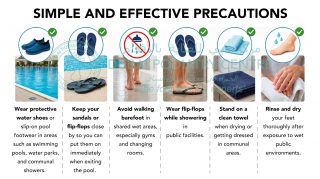
Simple and effective precautions include:
- Wearing protective water shoes or slip-on pool footwear in areas such as swimming pools, water parks, and communal showers
- Keeping your sandals or flip-flops close by so you can put them on immediately when exiting the pool
- Avoiding walking barefoot in shared wet areas, especially gyms and changing rooms
- Wearing flip-flops while showering in public facilities
- Standing on a clean towel when drying or getting dressed in communal areas
- Rinsing and drying your feet thoroughly after exposure to wet public environments
These measures create a protective barrier between your skin and surfaces where the virus may be present.
Another important factor is skin condition. Keeping the feet dry and healthy helps maintain the strength of the outer skin layer, known as the stratum corneum. When this layer is intact, it acts as a strong defence against infection. However, when the skin is wet or overly sweaty for long periods, it becomes more porous and vulnerable to viral entry.
By combining good hygiene, protective footwear, and maintaining healthy skin, you can significantly reduce the risk of developing a plantar wart.
تشمل الاحتياطات البسيطة والفعّالة ما يلي:
- ارتداء أحذية مائية واقية أو أحذية مخصصة للمسابح في أماكن مثل أحواض السباحة، والحدائق المائية، وغرف الاستحمام المشتركة
- إبقاء الصنادل أو الشباشب بالقرب منك لارتدائها فور الخروج من المسبح.
- تجنب المشي حافي القدمين في المناطق الرطبة المشتركة، وخاصة في الصالات الرياضية وغرف تبديل الملابس.
- ارتداء الشباشب أثناء الاستحمام في المرافق العامة.
- الوقوف على منشفة نظيفة عند تجفيف الجسم أو ارتداء الملابس في الأماكن المشتركة.
- غسل القدمين وتجفيفهما جيدًا بعد التواجد في البيئات العامة الرطبة.
تساعد هذه الإجراءات على تكوين حاجز واقٍ بين الجلد والأسطح التي قد يكون الفيروس موجودًا عليها.
ويُعدّ الحفاظ على صحة الجلد عاملًا مهمًا آخر. فالحفاظ على جفاف القدمين وسلامتهما يساعد في تعزيز قوة الطبقة الخارجية من الجلد، المعروفة باسم الطبقة القرنية. وعندما تكون هذه الطبقة سليمة، فإنها تعمل كخط دفاع قوي ضد العدوى. أما عندما يبقى الجلد رطبًا أو متعرقًا بشكل مفرط لفترات طويلة، فإنه يصبح أكثر نفاذية وأكثر عرضة لدخول الفيروسات.
ومن خلال الجمع بين النظافة الجيدة، وارتداء الأحذية الواقية، والحفاظ على صحة الجلد، يمكن تقليل خطر الإصابة بالثآليل الأخمصية بشكل كبير.
For more information or to book an appointment please call our clinic +971 4 3435390 or WhatsApp +971 50 3553024
One comment
Pingback: How do you get a Plantar Wart? – Dubai Podiatry Centre