
fbpx

Please wait...


BLOG

No more posts

Flat feet in children are commonly caused by hereditary ligament laxity (stretchy ligaments), where the ankle joints are soft and roll inward excessively. This inward ankle movement, known as pronation, causes the foot arch to collapse and the feet to appear flat. In many children, an inward ankle tilt of more than 5 degrees is enough to flatten the arch completely.

When left untreated, flat feet can affect a child’s walking pattern, posture, balance, and overall foot development. Excessive pronation may also place additional strain on the ankles, knees, hips, and lower back as the child grows.

يحدث تسطّح القدمين لدى الأطفال غالبًا بسبب ارتخاء الأربطة الوراثي (الأربطة المرنة أو المتمددة بشكل زائد)، حيث تكون مفاصل الكاحل أكثر ليونة وتميل إلى الانحراف نحو الداخل بشكل مفرط. ويُعرف هذا الانحراف الداخلي للكاحل باسم الكبّ الزائد للقدم (Pronation)، وهو يؤدي إلى انهيار قوس القدم وجعل القدم تبدو مسطحة.

وفي كثير من الأطفال، قد يكون ميل الكاحل إلى الداخل بأكثر من 5 درجات كافيًا للتسبب في اختفاء قوس القدم بالكامل.

وعند ترك هذه الحالة دون علاج، يمكن أن تؤثر في طريقة مشي الطفل، ووضعية الجسم، والتوازن، والتطور الطبيعي للقدمين. كما أن الكبّ الزائد للقدم قد يفرض ضغطًا إضافيًا على الكاحلين والركبتين والوركين وأسفل الظهر مع نمو الطفل، مما يزيد من احتمالية حدوث مشكلات في الجهاز العضلي الهيكلي مستقبلًا.


How Corrective Orthotics Help Flat Feet

Corrective orthotics are custom-made medical devices designed specifically for the child’s feet. They are carefully shaped and angled to match the exact degree of foot and ankle misalignment. The purpose of treatment is to gradually guide the ankles back toward a neutral 0° position, allowing healthy arch development during growth.

Unlike standard insoles, corrective orthotics are individually prescribed based on the severity of the child’s pronation. Each stage of correction is designed to improve ankle alignment progressively, typically by around 5 degrees at a time.

For example, if a child’s ankles roll inward by 15 degrees, treatment may involve a gradual correction plan using multiple orthotics to guide the feet step-by-step into proper alignment. Children with more severe flat feet may require additional stages of correction over time.

كيف تساعد التقويمات التصحيحية في علاج تسطّح القدمين؟

التقويمات التصحيحية للقدم (Corrective Orthotics) هي أجهزة طبية تُصنع خصيصًا لتناسب قدمي الطفل. ويتم تصميمها بعناية وفقًا لدرجة انحراف القدم والكاحل لدى كل طفل، بحيث تكون الزوايا والدعامات متوافقة تمامًا مع احتياجاته الفردية.

يهدف العلاج إلى توجيه الكاحلين تدريجيًا نحو الوضعية المحايدة الطبيعية (0°)، مما يتيح لقوس القدم أن يتطور بشكل صحي أثناء مراحل النمو.

وعلى عكس النعال الجاهزة أو التقليدية، يتم وصف التقويمات التصحيحية بشكل فردي بناءً على شدة الكبّ الزائد للقدم (Pronation) لدى الطفل. وتُصمم كل مرحلة من مراحل العلاج لتحسين محاذاة الكاحل بشكل تدريجي، وعادةً بمعدل يقارب 5 درجات في كل مرحلة.

فعلى سبيل المثال، إذا كان كاحلا الطفل يميلان إلى الداخل بمقدار 15 درجة، فقد تتضمن الخطة العلاجية تصحيحًا تدريجيًا باستخدام عدة تقويمات مختلفة تُستخدم على مراحل لتوجيه القدمين خطوة بخطوة نحو المحاذاة الصحيحة. أما الأطفال الذين يعانون من درجات أشد من تسطّح القدمين، فقد يحتاجون إلى مراحل إضافية من التصحيح على مدى فترة أطول.

Why Early Treatment Matters

Children’s bones, joints, and ligaments are still developing, making early intervention extremely important. Correcting foot alignment during childhood can help support normal walking mechanics, improve posture and balance, reduce stress on the joints, and encourage natural arch formation.

Early treatment with custom orthotics may also help prevent long-term foot and lower limb problems associated with excessive pronation and unstable foot posture.

لماذا يُعدّ العلاج المبكر مهمًا؟

تكون عظام الأطفال ومفاصلهم وأربطتهم لا تزال في مرحلة النمو والتطور، مما يجعل التدخل المبكر ذا أهمية كبيرة. فتصحيح محاذاة القدم خلال سنوات الطفولة يمكن أن يساعد على دعم آلية المشي الطبيعية، وتحسين القوام والتوازن، وتقليل الضغط على المفاصل، وتشجيع التكوّن الطبيعي لقوس القدم.

كما أن العلاج المبكر باستخدام التقويمات الطبية المخصصة للقدم قد يساعد في الوقاية من المشكلات طويلة الأمد التي قد تصيب القدمين والأطراف السفلية نتيجة الكبّ الزائد للقدم (Pronation) وعدم استقرار وضعية القدم. وهذا يساهم في تعزيز نمو صحي وسليم للجهاز العضلي الهيكلي مع تقدم الطفل في العمر.


For more information or to book an appointment please call our clinic +971 4 3435390 or WhatsApp +971 50 3553024


Why active kids can play but limp afterwards

It is very common for children between the ages of 10 and 15 years to experience pain in their heels and knees, particularly during periods of rapid growth.

Parents are often confused by this condition. A child may run, sprint and complete a full football or netball match with no obvious issue but within minutes of stopping, they begin to limp and complain of significant pain.

This can sometimes lead others to doubt the severity of the problem. However, this pattern is very typical and has a clear medical explanation.


What is happening during growth?

Children’s bones grow from areas called growth plates, located at the ends of bones. During growth spurts, these plates become highly active.

A simple way to understand this is to imagine a volcano that is active but not erupting. The growth plate is constantly producing new bone, but during a surge of growth hormone, this activity increases rapidly, making the area sensitive, inflamed and vulnerable to stress.


Why the heel and knee are affected

The back of the heel

At the back of the heel sits a growth plate in the heel bone.

The Achilles tendon attaches here. When a child runs or pushes up onto their toes, the calf muscles contract. This creates a strong pulling force on the growth plate.

This condition is known as Sever’s disease.


The front of the knee

At the front of the knee, just below the kneecap, there is another active growth plate.

The quadriceps muscle pulls via the patellar tendon. During running and jumping, this repeatedly stresses the growth plate, especially when lifting the toes or accelerating.

This condition is called Osgood Schlatter disease.


Why the pain appears after activity

One of the most confusing features is that children can often play sport without pain but suffer immediately afterwards.

This happens because during activity, the body is warm and flexible. Blood flow increases and temporarily masks discomfort. Once activity stops, inflammation rises rapidly and the irritated growth plates become painful very quickly.

This is why children may begin limping within minutes of finishing sport.


Why both sides are often affected

Unlike injuries, this condition frequently affects both heels and both knees.

This is because growth and muscle forces occur symmetrically during development.


The role of foot alignment

Children who are growing quickly often have softer ligaments and increased joint flexibility. This can cause the ankles to roll inward and flatten the arches of the foot.

This can increase strain on the heel and knee and make symptoms worse.

A professional assessment can identify whether foot alignment is contributing to the problem.


How to manage the pain

Immediate relief

Apply cold compression within minutes after activity. Ten minutes is usually effective and helps reduce inflammation quickly.

Footwear support

Use cushioned sole shoes or slightly raised heel footwear. Heel lifts or orthotics inside sports shoes or football boots can also help.

These reduce the pulling force on growth plates.


Activity modification

In more severe cases, rest from sport may be required for two to six weeks. This allows the growth plate inflammation to settle.

Continuing through severe pain can lead to excess bone growth and prominent bumps at the heel or knee, causing long term discomfort.


When to seek professional help

A podiatry assessment is recommended if pain persists or worsens, if the child begins limping regularly, if there is visible swelling at the heel or knee, or if performance in sport is affected.

A full foot, ankle and leg assessment can help your child continue activity safely, often with simple and effective interventions.


Final thoughts

Heel and knee pain during growth is common, real and treatable.

Understanding the condition is key.

Just because a child can play through it does not mean there is no problem. With the right support, children can continue to stay active, develop safely and avoid long term issues.


For more information or to book an appointment please call our clinic +971 4 3435390 or WhatsApp +971 50 3553024


It is quite common for children to intoe.

There are three main reasons why they can do it.

In this case the intoeing is coming from the hips.

So the hips are internally rotated and the entire leg is turning in.

This second case is coming only from the feet, so the feet only are turning in.

In the last case is where the ankles are leaning outwards and that is turning the feet.

This is from the ankles, this is from the foot and this is from the hips.

There are a few other reasons why the child can intoe as well but these are the three main types that we see here in the clinic.

Each one of these requires a different type of insole inside the shoe.

The insole inside the shoe in all three cases are very different to each other even if the intoeing all looks similar to an outsider.

So this is why it is very important to come in and have the podiatrist check which type of intoeing the child has.


For more information or to book an appointment please call our clinic +971 4 3435390 or WhatsApp +971 50 3553024


Young children with flat feet.
.الأطفال الصغار بأقدام مسطحة

It is quite normal for babies and little children to have flat feet.
.من الطبيعي جدًا أن يكون لدى الرضع والأطفال الصغار أقدام مسطحة

They have extra fatty padding in the sole of their foot and as they grow a little bit older the fatty padding disperses.
.لديهم بطانة دهنية إضافية في باطن أقدامهم، وعندما يكبرون قليلاً تختفي البطانة الدهنية

However, if you think there is a problematic flat foot you might notice the child is walking with their feet turned outwards.
.ومع ذلك، إذا كنت تعتقد أن هناك مشكلة في القدم المسطحة، فقد تلاحظ أن الطفل يمشي وأقدامه متجهة إلى الخارج

When they are running you might notice their feet turned outwards and the legs are quite wide.
.عندما يركضون، قد تلاحظ أن أقدامهم متجهة إلى الخارج وأرجلهم واسعة جدًا

When they are standing they might have to stand with their feet quite wide apart with their feet turned outwards as well.
.عندما يقفون، قد يضطرون إلى الوقوف وأقدامهم متباعدة تمامًا مع توجيه أقدامهم إلى الخارج أيضًا

That type of flat foot requires treatment.
.هذا النوع من القدم المسطحة يتطلب العلاج

The treatment we would propose to do is put an insole inside the shoes that lifts the arches up and gets the ankles and the legs aligned.
.العلاج الذي نقترح القيام به هو وضع نعل داخل الحذاء يعمل على رفع الأقواس للأعلى ومحاذاة الكاحلين والساقين


For more information or to book an appointment please call our clinic +971 4 3435390 or WhatsApp +971 50 3553024

‎لمزيد من المعلومات أو لحجز موعد يرجى الإتصال بعيادتنا على الرقم : ٠٠٩٧١٤٣٤٣٥٣٩٠ أو التواصل على الواتساب على الرقم  ٠٠٩٧١٥٠٣٥٥٣٠٢٤


These are some of the effects that flat feet can have on a growing child.

When a child is very young, 2 years old, it is quite normal for them to have flat feet.

As the child grows to 4 years old, the arches of the feet normally develop quite nicely and they grow out of flat feet.

If you notice your young child is having difficulty walking, falling down too easily and they become tired, it could be because the ankles are leaning-in. This makes the feet look flat and that is very tiresome for the child.

Without treatment when the child gets to 10 years old you might notice the feet are even more flat, the feet turn outwards and they are beginning to get a slouched posture.


Illustration of a 2-year-old child with feet turned outward and a wide stance, highlighting delayed walking, frequent falls, and balance concerns Rear-view illustration of a 10-year-old child with feet turned outward, with captions noting possible difficulty running, jumping, and sprinting Rear-view illustration of a 16-year-old with outward-facing feet and a slouched posture, highlighting possible difficulty running


Without treatment the child grows to 16 years old and may have feet turned out even more with very flat feet and obvious slouched position when they standing and walking.

Treatment as young as possible involves putting an insole inside the child’s school shoes and sports shoes that help to lift the arches and align the ankles. The child will have better stability and ease when it’s come to running and doing sports.


For more information or to book an appointment please call our clinic +971 4 3435390 or WhatsApp +971 50 3553024


This diagram shows a young child with flat feet. 

يُظهر هذا  الرسم التوضيحي طفلًا صغيرًا بقدمين مسطحتين

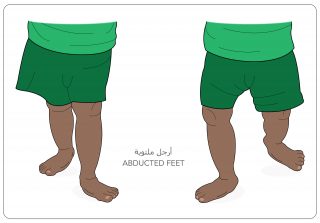
Illustration showing a child’s abducted feet, with toes pointing outward in two standing views

Some flat feet are normal, some flat feet are not normal. 

بعض الأقدام المسطحة  تكون طبيعية، وأخرى غير طبيعية

An example of flat feet that are not normal is shown in this picture.

يظهر  في هذه الصورة مثال عن الأقدام المسطحة غير الطبيعية 

When you see a child walking with abducted feet pointing outwards as you can see here, that type of flat foot means the ankles are falling inwards and they have to walk with their feet abducted.

 عندما ترى طفلاً يمشي بأقدام ملتوية متّجهة للخارج كما ترون هنا، فإن هذا النوع من القدم المسطحة يعني أن الكاحلين يسقطان من جهة الداخل وعلى الأطفال المشي بأقدامهم الملتوية

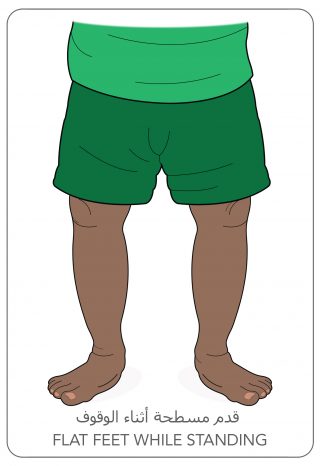
Illustration of a child standing with flat feet, showing the foot arches while standing


This can lead to more falling and difficulty running.

 هذا يمكن أن يؤدي إلى مزيد من الهبوط وصعوبة في الجري

To solve this, we would put something underneath the foot and inside their shoes so that it lifts the arches up and makes their feet go back to being straight.

لحل هذه المشكلة، نضع شيئًا أسفل القدم وداخل أحذيتهم بحيث يرفع الأقواس للأعلى ويجعل أقدامهم تعود إلى الوضع المستقيم


For more information or to book an appointment please call our clinic +971 4 3435390 or WhatsApp +971 50 3553024

لمزيد من المعلومات أو لحجز موعد يرجى الإتصال بعيادتنا على الرقم : ٠٠٩٧١٤٣٤٣٥٣٩٠ أو التواصل على الواتساب على الرقم  ٠٠٩٧١٥٠٣٥٥٣٠٢٤


Copyright Dubai Podiatry 2026. All rights reserved.

WhatsApp us