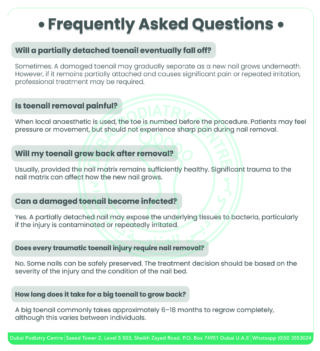


Have You Ever Caught Your Toenail on a Door, Bedpost or Coffee Table?
Toenail injuries are surprisingly common and can be extremely painful.
You might accidentally catch your toenail against the corner of a coffee table, strike it against a bedpost, or pull a door across the top of your toe.
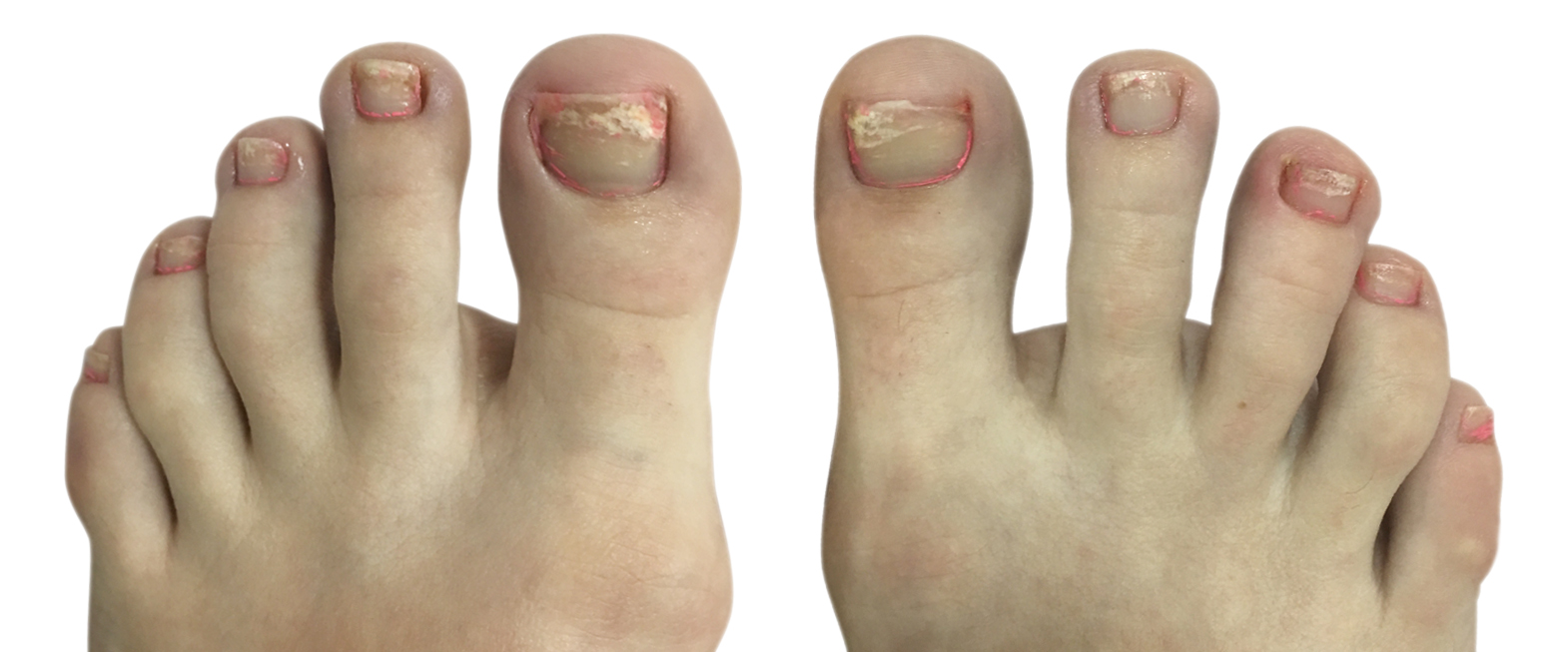
These everyday accidents can cause significant trauma to the toenail, sometimes lifting it partially away from the underlying nail bed while leaving it attached at the root.
This is known as a traumatic partial nail avulsion.
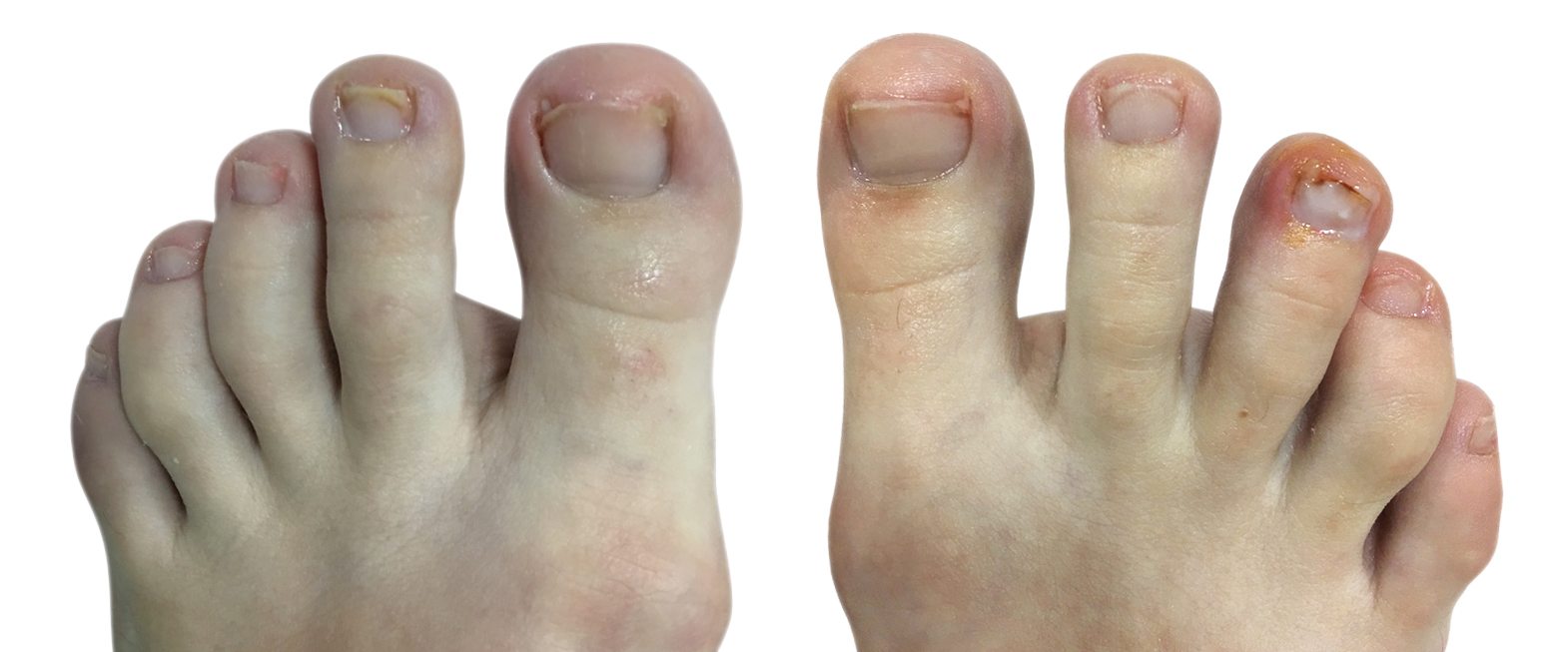
The toenail may become painful, red, swollen and inflamed, and bleeding may occur underneath or around the nail.
Although the nail may still appear to be attached, the damage underneath can be more significant than it first appears.
Why Can a Partially Detached Toenail Become a Problem?
When a toenail is severely damaged, there are several possible outcomes.
Sometimes the nail detaches completely during the initial injury. In other cases, the nail remains partially attached, particularly around the nail root or along one side of the nail.
A partially detached nail can create several problems:
- The damaged nail may continue to move against the sensitive nail bed, causing pain
- Blood, dirt and debris can become trapped beneath the nail
- The lifted nail can catch on socks, shoes or bedding, causing further trauma
- The exposed nail bed may be vulnerable to bacterial contamination and infection
- Continued irritation can interfere with normal healing
It is important to understand that the body does not necessarily develop an infection to reject a damaged nail. However, severely detached nail tissue can act as a source of persistent irritation and may increase the risk of secondary infection.
In some cases, removing the damaged toenail is the most appropriate treatment to allow the underlying tissues to heal.
Not every injured toenail needs to be removed. The decision depends on the extent of detachment, the condition of the nail bed and whether the nail can be safely preserved.
Why Is the Nail Bed So Important?
The nail bed is the delicate tissue underneath the toenail.
A healthy toenail grows from the nail matrix, located beneath the skin at the base of the nail, and normally remains closely attached to the underlying nail bed as it grows forward.
Following trauma, both the nail bed and the nail matrix may be injured.
Damage to these structures can affect the appearance, shape and attachment of the new toenail.
For example, a significant injury may result in a nail that subsequently grows:
- Thicker or more irregularly than before
- With ridges, splits or grooves
- Partially detached from the nail bed
- Distorted or curved
- More slowly than expected
Severe damage to the nail matrix can occasionally result in permanent changes to nail growth.
This is why a professional assessment is particularly important when a toenail has been partially torn away from its root.
How Do We Treat a Traumatic Toenail Injury at Dubai Podiatry Centre?
At Dubai Podiatry Centre, we carefully assess the extent of the injury before deciding whether the damaged toenail should be preserved, partially removed or completely removed.
When nail removal is clinically indicated, the procedure may involve the following stages.
Step 1: Initial Assessment and Cleansing
The podiatrist examines the toe, assessing the nail attachment, bleeding, swelling, inflammation and possible damage to the underlying tissues.
Where appropriate, the foot may be soaked in warm water with a 4% chlorhexidine cleansing preparation for approximately 20–30 minutes as part of our clinic’s cleansing protocol.
The cleansing method is adapted to the injury, particularly if there is an open wound or exposed nail bed.
Step 2: Preparing the Toe for Local Anaesthetic
A topical anaesthetic cream may be applied for approximately 20 minutes before the procedure.
This can help reduce discomfort associated with the subsequent local anaesthetic injection.
Step 3: Local Anaesthetic
A local anaesthetic is administered to numb the affected toe.
This is particularly important when the damaged nail remains attached near the nail root, where the tissues can be extremely sensitive.
Once the anaesthetic has taken effect, the procedure can usually be performed without sharp pain.
Step 4: Removing the Damaged Toenail
If removal is necessary, the podiatrist carefully separates and removes the damaged nail.
Depending on the injury, this may involve removing only the detached section or performing a complete nail avulsion.
The aim is to minimise additional trauma while allowing proper assessment of the tissues underneath.
Step 5: Assessing the Nail Bed and Nail Root
Once the damaged nail has been removed, the podiatrist can inspect the nail bed for injuries that may have been hidden beneath the nail plate.
These may include:
- Nail-bed tears or lacerations
- Areas of bruising or bleeding
- Damage around the nail folds
- Exposed or injured tissue
- Signs of injury to the nail matrix
Some injuries may require additional treatment, such as nail-bed repair or assessment for a fracture.
Step 6: Cleaning and Sterile Dressing
The area is carefully cleaned and an appropriate sterile, non-adherent dressing is applied.
The dressing protects the exposed nail bed from friction, contamination and further trauma during the initial healing period.
Aftercare: Why the First Few Days Matter
Aftercare is an essential part of recovering from a traumatic toenail injury.
At Dubai Podiatry Centre, patients receive instructions on how to care for their toe at home, including the use of sterile dressings and appropriate wound-care products.
Depending on the clinical findings, an antiseptic such as povidone-iodine (Betadine) may be recommended.
Occasionally, a topical antibiotic such as fusidic acid (Fucidin) may be prescribed when clinically indicated. Antibiotic ointments are not routinely necessary for every nail avulsion.
During the first three to five days, we recommend carefully monitoring the toe for signs of healing or complications.
The dressing-change frequency is tailored to the wound, the amount of drainage and the patient’s individual circumstances. Some patients may require more frequent dressing changes initially.
Patients should watch for:
- Increasing redness or swelling
- Pain that becomes worse rather than better
- Yellow or green discharge
- An unpleasant odour
- Persistent or increasing bleeding
- Heat spreading into the surrounding skin
These symptoms may indicate infection or another complication and should be assessed promptly.
Patients with diabetes, poor circulation, reduced sensation or impaired immunity may require closer monitoring.
How Long Does a Toenail Take to Heal?
The exposed nail bed often begins to heal relatively quickly following removal of the damaged nail.
For uncomplicated injuries, the initial wound may heal over approximately one to three weeks, although deeper injuries can take longer.
The healing time depends on the original trauma, the extent of nail-bed damage and the patient’s general health.
It is important to distinguish between healing of the nail bed and regrowth of the toenail.
Although the nail bed may heal within a few weeks, a completely new big toenail commonly takes approximately 12–18 months to grow.
Smaller toenails may regrow more quickly.
Where the nail matrix has sustained significant trauma, the new nail may grow with some permanent irregularity.
Should You Pull Off a Damaged Toenail Yourself?
No. If your toenail is partially detached but remains firmly attached at the root, you should not attempt to pull it off yourself.
The nail root and surrounding tissues are highly sensitive, and pulling the nail away can cause significant pain, bleeding and further damage.
There is also a risk of introducing infection into the exposed nail bed.
Until the toe can be assessed, protect it with a clean, non-adherent dressing, avoid tight footwear and do not pull on the remaining nail.
If there is severe pain, deformity, uncontrolled bleeding, a deep wound or suspicion of a fracture, urgent medical assessment is recommended.
Our Advice at Dubai Podiatry Centre
A traumatic toenail injury should never be dismissed simply because the toenail is still attached.
Sometimes the nail can be preserved and allowed to recover naturally. In other situations, particularly where the nail has been significantly lifted or torn away, professional nail removal may be the most appropriate treatment.
The priority is to protect the nail bed, identify any underlying injury, reduce the risk of complications and provide the best possible conditions for healthy nail regrowth.
If you have injured your toenail and it is painful, bleeding, swollen or partially detached, arrange a professional podiatry assessment rather than waiting for the nail to fall off.
At Dubai Podiatry Centre, we assess traumatic toenail injuries and provide appropriate nail procedures, wound care and follow-up advice.
Dubai Podiatry Centre
Dubai, United Arab Emirates
Website: www.dubaipodiatry.com