

fbpx

Please wait...


BLOG

No more posts

At Dubai Podiatry Centre, we have treated professional footballers for many years, and there is a very recognisable pattern of foot and toenail problems that develops because of the demands of their sport.

We commonly see:

  • thickened and damaged toenails
  • bruised or repeatedly traumatised toenails
  • retracted or curled toes
  • very large calluses along the medial side of the big toe
  • calluses and pressure lesions around the fifth toes
  • areas of thickened skin caused by repeated friction and shearing

More recently, however, we are seeing remarkably similar problems in another group of patients: avid padel players.

These are not necessarily professional athletes. They may simply love padel and play for one, two or even three hours on most days of the week.

Yet their feet can begin to look remarkably similar to those of professional footballers.

Why?

The answer lies in the combination of footwear, speed, sudden stopping and multidirectional movement.

Why Do Professional Footballers Wear Such Tight Shoes?

People are sometimes surprised when we explain that the extremely close fit of a professional football boot is not necessarily a footwear mistake.

It is part of the performance requirement of the sport.

A footballer’s boot needs to feel almost like an extension of the foot. There cannot be excessive movement between the foot and the shoe when the player is sprinting, changing direction, kicking, tackling and stopping suddenly.

It is rather like the relationship between a ballet dancer’s foot and a ballet slipper.

If we simply gave a professional footballer a boot one or two sizes larger to give the toes more room, we might solve one problem but potentially create another.

Imagine a footballer sprinting at high speed and suddenly stopping or changing direction.

If the foot can continue moving even a few millimetres inside the shoe, the body and shoe may change direction before the foot is completely stabilised within it.

That unwanted movement can compromise control and potentially contribute to instability.

For an elite athlete, where ankle and foot injuries can mean significant time away from training and competition, footwear fit therefore involves a careful balance between protecting the toes and stabilising the foot.

The Price the Toes Can Pay

Unfortunately, very close-fitting footwear combined with thousands of repeated high-speed movements can create significant pressure on the toes.

The toenails repeatedly contact the front and upper part of the shoe. Over time, they can become thickened, damaged or distorted.

The toes may retract or curl in response to the restricted space.

At the same time, friction and shearing forces create characteristic areas of hard skin.

We frequently see particularly large calluses on the medial side of the hallux — the big toe — and around the fifth toe on the outside of the foot.

For a professional footballer, some of these changes can almost become occupational wear and tear.

Padel Is Creating a Similar Pattern

Padel has become enormously popular, and we are now seeing foot problems in enthusiastic amateur padel players that are strikingly similar to those we have traditionally associated with professional football.
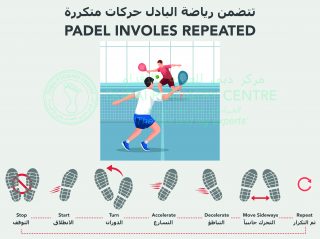


The foot is continually subjected to rapid changes in direction.

Unlike somebody who goes for a straightforward walk or run, a padel player’s foot is repeatedly moving forwards, backwards and laterally.

And when someone plays for one to three hours on most days, those forces accumulate.

The result can be thickened toenails, painful fifth toes, large calluses around the big toes and little toes, and toes that are repeatedly hitting or rubbing against the inside of the shoe.

The Important Difference: We Have More Options with Padel Footwear

This is where padel differs from professional football.

A professional footballer may have very little flexibility regarding how closely the boot needs to fit because performance demands require extremely close contact between the foot and footwear.

With the recreational or avid padel player, however, we usually have more room to intervene.

The obvious answer might appear to be: “Just buy a bigger shoe.”

But it is slightly more complicated than that.

More Toe Room – Without Allowing the Foot to Slide

We want enough room at the front of the padel shoe for the toes to extend naturally and avoid constantly striking the front and sides of the shoe.

In many patients, after properly measuring the foot while wearing the type of sports sock that will actually be used for padel, we may recommend going approximately one shoe size larger than the size they have been wearing.

However, simply creating more empty space inside the shoe is not necessarily the solution.

During rapid stop start and side to side movement, we do not want the foot sliding excessively inside the shoe.

So we need to achieve two things that initially sound contradictory: We want more space for the toes, but we don’t want more movement of the foot.

This is where the sock becomes surprisingly important.

The Sock Can Become Part of the Fit of the Shoe

For some padel players, we recommend a thick, highly cushioned, diabetic-style sports or tennis sock.

The purpose is not because the player has diabetes.

It is because this style of sock can provide considerably more cushioning and volume than a conventional thin sports sock.

This additional volume helps occupy some of the space inside the larger shoe while still allowing appropriate length and room around the toes.

Think of it as filling the shoe with cushioning rather than filling it with toes.

Instead of buying a smaller shoe and squeezing the toes into the available space to achieve that reassuring firm feeling, we can potentially create the same secure sensation using the correct shoe size combined with a thicker cushioned sock.

The toes have more room.

The shoe still feels secure.

And the foot has an additional layer of cushioning against the repeated forces generated during play.

Cushioning Is Particularly Valuable in Padel

A well-chosen cushioned sports sock can also help with shock absorption, friction management and comfort.

This does not mean that calluses will disappear completely.

Callus is partly the body’s protective response to repeated pressure, friction and shearing forces. Someone playing padel intensively may therefore continue to develop some hard skin simply because of the mechanical demands being placed upon the feet.

Our aim is not necessarily to eliminate every callus.

Our aim is to reduce the unnecessary trauma created when the toes are repeatedly being driven into the end or sides of a shoe that is too small.

That distinction is important.

Don’t Choose Your Padel Shoe Size by the Number Alone

Shoe sizing varies considerably between manufacturers and even between different models made by the same brand.

A player should therefore not simply decide: “I normally wear a size 39, so I’ll buy a size 40.”

The foot should be assessed inside the actual shoe.

At Dubai Podiatry Centre, when we assess sports footwear, we consider the length and width of the foot, toe position, the space available at the front of the shoe, the shape of the toe box and, importantly, the sock that will be worn while playing.

The shoe and sock should be considered together as one system.

A Simple Rule for Padel Players

If your padel shoes have to be painfully tight to make your feet feel secure, the answer may not necessarily be an even tighter shoe.

You may need:

more appropriate space for the toes + the correct cushioned sock + secure footwear around the rest of the foot.

That combination can allow the toes to sit more naturally while maintaining the secure feeling required for rapid lateral and stop-start movements.

Look at Your Feet After You Play

Your feet often tell us whether your footwear is working.

If you regularly play padel, look for:

  • thickening or discolouration of the toenails
  • recurring bruising beneath the nails
  • pain at the end of the big or little toes
  • curling or retracting of the toes
  • large calluses along the big toes
  • thickened skin around the fifth toes
  • redness immediately after removing your shoes
  • pain that increases the longer you play

These are not simply cosmetic changes. They can be useful clues about what is happening between your foot, sock and shoe during movement.

Better Space Doesn’t Have to Mean Less Stability

One of the biggest misconceptions in sports footwear is that more room for the toes automatically means a loose shoe.

It shouldn’t.

The goal is to provide appropriate space where the foot needs space and appropriate security where the foot needs stability.

For avid padel players, getting that balance right can make an enormous difference.

You may still develop some callus because padel is a demanding multidirectional sport. But your toenails and toes should not have to be repeatedly battered against the end and sides of your shoes every time you play.

And when someone wants to spend several hours on the padel court every week, comfortable feet are not simply about avoiding pain.

They are part of being able to continue playing the sport you love.

At Dubai Podiatry Centre, we assess the foot, toenails, callus pattern, sports shoe and sock together to understand where pressure and movement are occurring and how footwear can be adjusted without unnecessarily compromising stability.

Footwear requirements vary according to the individual, their sport, playing intensity and any previous foot or ankle problems. A larger shoe should not be chosen automatically where it results in excessive movement or instability inside the footwear.


For more information or to book an appointment please call our clinic +971 4 3435390 or WhatsApp +971 50 3553024


A patient recently attended Dubai Podiatry Centre with an interesting story that led to a much wider discussion about menopause, movement, muscle strength and the importance of keeping our bodies active as we age.

She had completed menopause and described how, during the previous year, she had gained weight and noticed a significant change in her muscle tone and the way her body felt. She felt that she had lost some of the strength, firmness and resilience that she previously had.

More recently, however, she had become very proactive about her health. Under professional guidance, she had been exploring treatments aimed at supporting her health after menopause, while also paying closer attention to her vitamin D and calcium intake. Most importantly from our perspective, she had started walking every morning and was feeling considerably better.

She also mentioned feeling particularly motivated after listening to Mel Robbins’ podcast discussions about longevity and maintaining strength and health as we get older.

This prompted a fascinating conversation in the clinic about something we often discuss with our patients:

When it comes to movement, we really do have to use it or lose it.

Think of Your Fascia Like a Springy Spider’s Web

Fascia is the connective tissue network that runs throughout the body, surrounding and connecting muscles, bones and other structures.

I often describe it to patients as being a little like a three-dimensional spider’s web running throughout the body.

When we are young and active, our bodies tend to have a wonderful natural springiness. We run, skip, jump, change direction, climb stairs and step over obstacles without giving these movements much thought.

As we get older, particularly if our activity levels reduce, we can gradually stop performing many of these movements.

We may still walk, but perhaps we no longer skip.

We may climb stairs, but rarely jump.

We may exercise, but always in straight, predictable movements.

Gradually, we can lose some of our strength, agility, balance and natural rebound.

The answer is not necessarily extreme exercise. It is about continuing to give our bodies a variety of movements.

Walking and Our “Second Heart”

One of the best forms of exercise remains one of the simplest: walking.

The calf muscles are sometimes referred to as our “second heart” because their contractions help pump venous blood from the lower legs back towards the heart.

Every time we walk and activate our calf muscles, we are helping this natural pumping mechanism.

Regular walking is therefore wonderful for maintaining calf muscle activity, circulation, cardiovascular fitness, mobility and general wellbeing.

But walking does not have to be the only movement we practise.

Bring Back a Little Agility

I am delighted to see movements similar to traditional step aerobics becoming popular again.

Step exercises require us to lift our feet, judge the height of a step, transfer our weight, turn, coordinate our legs and maintain our balance.

These are valuable skills.

As we age, maintaining the ability to change direction, step sideways, lift our feet over an obstacle and react to an irregular surface becomes increasingly important.

Simple activities can include:

  • Walking regularly
  • Stepping up and down from a low exercise step
  • Side stepping
  • Gentle direction changes
  • Appropriate strength exercises
  • Balance exercises
  • Practising safely stepping over small obstacles
  • Maintaining the ability to get up and down from the floor

The exercises chosen should, of course, be appropriate for the individual’s health, balance, strength and medical history.

But What Happens When Walking Hurts?

Our patient’s motivation was excellent, but there was another part of the story.

She was experiencing plantar fascia discomfort as well as lower back and shoulder blade pain, particularly on one side.

Her chiropractor had also identified significant asymmetry and felt that her alignment could be contributing to her symptoms when walking.

This is an important point.

We frequently encourage patients to walk more, but if somebody is significantly mechanically misaligned, repeatedly walking with that imbalance can sometimes continue to aggravate certain tissues.

We therefore assessed her using our 3D scanning system.

The scan demonstrated an apparent leg length discrepancy of approximately 3.1 cm, with the left side measuring longer. For somebody approximately 5 feet 4 inches tall, this represented a considerable asymmetry.

Rather than simply treating the painful plantar fascia, we needed to look at what was happening throughout the body.

The Feet Can Affect What Happens Above Them

The feet are the foundation of the body when we stand and walk.

If one side functions differently from the other, compensation can occur through the legs, pelvis and higher into the body.

I sometimes describe this as a Z-shaped compensation pattern.

The body does not necessarily remain neatly vertical when trying to accommodate an imbalance. Soft tissues tighten, joints adapt and the pelvis and upper body may compensate in different directions.

For this patient, we therefore made the left and right orthotics quite differently.

The angles and thicknesses were individually designed to improve her overall alignment rather than simply giving her two identical insoles.

An Immediate Change From 3.1 cm to 1.3 cm

We then repeated her 3D assessment while she was standing on her new orthotics.

The apparent leg length discrepancy reduced immediately from approximately 3.1 cm to 1.3 cm.

That was an excellent initial change.

Importantly, however, our aim was not to make both sides completely equal on the first day.

The body has been compensating for its existing position for a long time. Muscles, fascia and other soft tissues have adapted to that position too.

Changing everything immediately can therefore be too much.

Instead, we make an initial correction and allow the body time to adapt.

Why We Review Again After 6–12 Weeks

We will review this patient again after approximately 6–12 weeks.

During this period, the muscles and soft tissues have time to respond to the altered skeletal alignment.

An apparent leg length discrepancy can sometimes look greater during the initial assessment because the measurement is influenced not only by the bones themselves but also by rotation and compensation occurring throughout the body.

As these compensatory patterns reduce, the apparent discrepancy may also change.

At the review appointment, we can repeat the assessment and adjust the orthotics according to how her body has responded.

This gradual approach allows us to work with the body rather than trying to force an immediate correction.

Healthy Ageing Starts From the Ground Up

One of the most positive things about this patient’s story was her motivation.

She wanted to walk.

She wanted to become stronger.

She wanted to maintain her mobility and enjoy her body as she moved into the next stage of her life.

That is exactly what we want to encourage.

Menopause and ageing can bring changes in muscle mass, bone health and body composition, but becoming older should not mean accepting that we can no longer move freely.

Walk.

Maintain your strength.

Challenge your balance.

Practise changing direction.

Lift your feet.

Use stairs and steps when appropriate.

And, if you used to skip, perhaps don’t completely forget how to skip.

Our bodies are designed for movement.

Use your movement, maintain your strength, and look after the foundations carrying you through life: your feet.


For more information or to book an appointment please call our clinic +971 4 3435390 or WhatsApp +971 50 3553024


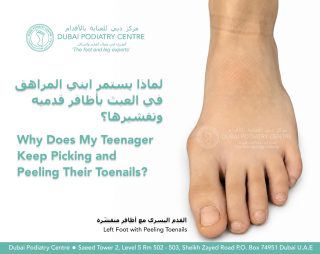
At Dubai Podiatry Centre, we sometimes see teenagers whose toenails look damaged, rough or uneven, but when we examine the nail closely, there is actually nothing wrong with the health of the nail itself.

Recently, a mother brought her teenager to see us because they were repeatedly peeling both their fingernails and toenails. The toenails had been peeled so frequently that they had developed sharp and rough edges, with some edges beginning to irritate the surrounding skin and contribute to ingrown toenails.

However, when we examined the feet, the underlying picture was very reassuring.

The nails were growing extremely well from the nail root and nail bed. The skin underneath was healthy and pink, and the circulation and capillary refill were excellent.

The problem was not that the toenails were unhealthy.

The problem was the repeated picking and peeling of perfectly healthy nails.


Teenager’s left foot with peeling toenails caused by repeated nail picking, assessed at Dubai Podiatry Centre


Why Do Some Teenagers Pick Their Nails Without Realising It?

The teenager’s mother explained that the picking was almost constant, particularly while studying, concentrating or thinking.

Interestingly, the teenager was often not consciously aware that they were doing it.

This is an important distinction. Sometimes repetitive nail picking is less about the nail itself and more about giving the hands something to do while the brain is concentrating.

Some children and teenagers naturally seek movement or tactile stimulation when focusing. Their fingers want to touch, roll, pick or manipulate something while their attention is occupied elsewhere.

If there is nothing else available, the fingernails, skin or toenails can become the target.


Nail Polish Isn’t Necessarily the Answer

Parents understandably ask whether we can put something onto the nail to stop the behaviour.

  • Would a special nail polish help?
  • Would a strengthening lacquer help?
  • Does the nail need a treatment?

If the nail itself is healthy, coating it does not necessarily address the reason the picking is happening.

From a podiatry perspective, our priority is to examine the nail carefully and establish whether there is an underlying nail or skin condition. We can also safely smooth or treat damaged edges and manage an ingrown toenail if repeated peeling has created a sharp nail spike.

But when the nail is healthy and the damage is being caused by repeated picking, it is also important to address the habit itself.

Give the Fingers Something Else to Do

One of the simplest strategies can be to redirect the hands towards something harmless.

A small piece of therapy putty, reusable putty, Blu Tack or Play-Doh can be surprisingly useful.

While studying, reading, watching television or concentrating, the teenager can gently roll and manipulate the putty between their fingers.

The objective isn’t simply to say: “Stop picking your nails.”

Instead, we are giving the fingers an alternative activity.

This can be particularly useful because it is quiet and discreet. The teenager can manipulate a small piece of putty underneath a desk or while reading without disturbing the people around them.

Fidget spinners and other sensory devices can also be helpful for some people. However, they can sometimes become visually or audibly distracting to classmates, siblings or other people nearby. A small piece of putty can provide tactile stimulation much more discreetly.


Keeping Busy Hands Away From Healthy Nails

Some teenagers who enjoy using their hands are wonderful at detailed activities. They may enjoy drawing, crafts, model making, painting miniatures or other projects requiring very delicate hand movements.

Those activities are excellent when there is time to concentrate on the activity itself.

The difficulty comes when the teenager needs their attention elsewhere, particularly during studying.

That is when a very simple tactile object can be useful. The hands can remain gently occupied while the brain concentrates on the information being learned.

Protecting the Toenails While the Habit Changes

While working on reducing the picking habit, it is important to protect the toenails from secondary problems.

Repeatedly peeling a toenail can leave:

  • Sharp or jagged nail edges
  • Very short nails
  • Irritated skin around the nail
  • Nail edges that begin to grow into the surrounding skin
  • Tenderness or inflammation
  • Increased risk of breaking the skin

If an edge has become sharp, painful or ingrown, a podiatrist can examine and manage it appropriately.

It is also important not to assume that every damaged-looking nail is caused by picking. Fungal infections, trauma, skin conditions and other nail disorders can alter the appearance of toenails, so an examination can be helpful when the cause isn’t clear.


When Should Parents Seek Further Advice?

Occasional nail picking can simply be a habit. However, if the behaviour is frequent, difficult for the young person to control, causes bleeding or significant tissue damage, causes distress, or begins to interfere with everyday life, parents may wish to discuss it with their GP, paediatrician or an appropriate behavioural or mental-health professional.

The important thing is not to shame the teenager for doing something they may barely realise they are doing.

Sometimes the first useful question isn’t: “How do we make them stop?”

It is: “What can we give their hands to do instead?”


At Dubai Podiatry Centre, we can assess toenails that have become painful, rough or ingrown as a result of repeated picking and determine whether the nail itself is healthy or whether another nail condition requires treatment.

Dubai Podiatry Centre
Helping to keep growing feet and toenails healthy.


For more information or to book an appointment please call our clinic +971 4 3435390 or WhatsApp +971 50 3553024


Many people assume that when a toenail starts lifting away from the skin underneath, it must be a fungal infection. Surprisingly, this is often not the case.

A detached toenail, known medically as onycholysis, can occur for many different reasons. While fungal infections can sometimes cause nail separation, many patients have repeated fungal tests that come back completely clear. In these cases, the cause is often mechanical rather than infectious.

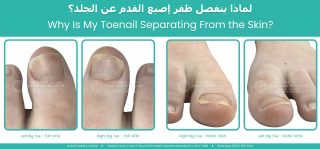
What Does Toenail Separation Look Like?

The nail may begin separating from:

  • The inside (medial) border of the nail
  • The outside (lateral) border of the nail
  • The tip of the nail (distal edge)
  • Multiple borders at the same time


Clinical photographs showing separation of both big toenails from the nail bed (onycholysis), with top and front views illustrating nail detachment caused by repetitive trauma and biomechanical foot abnormalities


In severe cases, the entire nail plate may become detached from the nail bed, leaving the nail attached only at the nail root.

Cause #1 – Repetitive Pressure From Footwear

One of the most common causes of nail separation is repeated pressure from footwear.

This can occur when:

  • Shoes are too short or too narrow
  • The toe repeatedly hits the front of the shoe
  • The toe hyperextends upward and strikes the roof of the shoe

When the toenail is repeatedly compressed, the tissues beneath the nail become irritated and swollen. As the swelling settles, the connection between the nail plate and the nail bed can weaken, causing the nail to lift away from the skin.

A useful clue is the appearance of horizontal ridges across the toenail. These ridges run from side to side and often indicate repetitive trauma from the toe repeatedly striking the shoe.


Cause #2 – Aggressive Cleaning Under The Nail

Many people regularly clean underneath their toenails using nail files, scissors, metal instruments, or other sharp tools.

Unfortunately, this can gradually separate the nail from the skin underneath.

In fact, when podiatrists remove a toenail surgically, one of the techniques involves releasing the nail from the nail bed using specialised instruments. Excessive cleaning under the nail can unintentionally create the same process over time.

The more the nail is lifted and cleaned underneath, the easier it becomes for the separation to progress.

Cause #3 – Abnormal Toe Position and Foot Mechanics

Perhaps the most surprising cause of toenail separation is abnormal toe movement during standing and walking.

This is often the most overlooked cause and, in many cases, the most common.

When the foot collapses inward, the arch flattens, or a bunion develops, the toe is no longer functioning in a neutral position.

The toe may:

  • Rotate inward or outward
  • Drift sideways
  • Move excessively forward
  • Twist during walking

When this happens, the soft tissue beneath the nail is repeatedly pulled and stretched.

Rather than the nail being pushed away by pressure from above, the skin underneath is gradually pulled away from the nail by repetitive micro-trauma.

Over thousands of steps each day, the tissues can slowly detach from the nail plate.

For example:

  • If the ankles lean inward and the big toe rotates, separation commonly develops along the outer border of the big toenail
  • If a bunion causes the toe to drift sideways, tension can develop on one side of the nail bed
  • If the toes spread excessively due to arch collapse, the tissues beneath the nail can be repeatedly stretched and irritated

The result can look very similar to a fungal nail infection, even when no fungus is present.


Why Standing Examination Matters

Many nail problems are missed because the feet are examined only while the patient is sitting.

The position of the toes can change dramatically once a person stands and begins walking.

A proper assessment should include:

  • Standing examination
  • Walking analysis
  • Heel raise testing
  • Observation of toe-off during gait
  • Assessment of foot posture and ankle alignment

Only then can the true cause of the nail separation be identified.


Examining The Shoes

The footwear often provides valuable clues.

We frequently examine:

  • The original insoles
  • Wear patterns inside the shoe
  • Pressure marks from the toes
  • Areas where the toes slide forward

Older shoes are often more useful because they clearly show where pressure has been occurring over time.

One particularly revealing finding is damage to the inner roof of the toe box. In some cases, the fabric lining has been worn away by the toenail repeatedly striking the ceiling of the shoe during walking.

This provides clear evidence that the nail is being traumatised from above.


The Importance Of Finding The Real Cause

Treating a detached toenail successfully requires identifying why the nail is separating in the first place.

If the cause is fungal, antifungal treatment may be required.

However, if the cause is mechanical, treatment should focus on correcting the underlying problem, such as:

  • Footwear modification
  • Orthotic therapy
  • Correction of abnormal foot posture
  • Management of bunions
  • Reduction of excessive toe movement
  • Protection of the nail from repetitive trauma


Without addressing the underlying cause, the nail may continue to separate regardless of how many creams, sprays, or antifungal treatments are used.

At Dubai Podiatry Centre, we assess not only the nail itself but also the biomechanics of the foot and the forces acting on the toe during standing and walking. Understanding these forces is often the key to solving long-standing nail problems that have been mistakenly attributed to fungal infection.


For more information or to book an appointment please call our clinic +971 4 3435390 or WhatsApp +971 50 3553024


Written by Michelle Champlin BSc Pod., M.Ch.S., S.R., Ch., (UK)
It’s that time of year again, the holidays are over and the kids are back at school.
Normally at this time of year, we see more parents with their kids with queries about what school shoe to buy and where to buy from. We love to hear this, as we unfortunately also see and treat the long term consequences in adults from wearing the wrong shoes as children whether too small or hand-me-downs from a sibling with a different wear pattern. Thus getting the right footwear during your child’s growing years is critically important to their long term foot health and is a wonderful example to set.

Firstly, as tempted as you may be to leave your kids at home when shoe shopping, we advise bringing them with you to the shoe store to try on the shoes and preferably be measured by qualified shoe fitters in store. Clarks Shoes has qualified, UK trained shoe fitters in store who are glad to do this for free and without sales pressure.
It only takes a few minutes to determine if a shoe is good or not.

What makes a good child’s shoe?
• Heel Counter: The back of the shoe should be stiff. Press both sides at the back of the heel, make sure it does not collapse when pressure is applied to it.
• Heel Base: broad and wide for stability. Height- no more than 4 cm.
• Length of Shoe: Generally, there should be a thumbs width (half inch/1cm) between the longest toe and end of the shoe.
• Fastening: Buckles, laces, Velcro or straps  should hold the heel securely at the back of the shoe (the foot should NOT be able to slide forward) and the entire foot in the shoe.
• Toe Box: The toe box (area in which the toes sit) should be deep and wide enough to prevent rubbing or constriction. Toes should be able to wiggle inside the toe box. Ask your child to wiggle their toes when assessing the depth and width of this area. Flexible enough to bend with the child’s toes. Not too much and not too stiff either.
• The middle section: Holding the shoe at the front (toe box ) and the back (heel counter) twist gently, a good shoe should never twist easily in the middle.

A shoe should be made from natural materials, such as leather, as they allow the foot to breathe and thus minimise fungal infection, sweat and odour.
Where to buy from?
At Dubai Podiatry Centre, we simply advise various brands that we also buy as parents and are not, and never will be, involved in any commercial pay off with any brand or company. When we suggest various brands, we are doing so impartially and without any benefit or motive other than what is best for your child’s feet. Clarks, Hush Puppies, Start Right, Geox and Rockport are just some of the available brands offering excellent children’s footwear in Dubai.
Ill-fitting shoes can give rise to various foot conditions including blisters, sprains, ingrowing toenails, inflammation of the tendons and even fractures.
Our Free Foot Health Screening Program for Children
Don’t let shoes affect your child’s school day we’re here to help your child run, jump, walk and play with complete freedom. We therefore advise an initial foot review at between 5-7 years old, as your child starts school so that we can screen early for any issues and if needs be, correct early too and avoid any longer term problems.

We carry out a Dubai-wide Foot health Screening Program for Schoolchildren throughout October and November every year. If your child’s school hasn’t signed up yet, let them know about our Program and we can add them €“ these checks are brief, yet fun, free and informative for both parents and kids and cost absolutely nothing.
Alternatively, you can schedule an appointment during October or November for a child’s foot health screen at our Clinic with our experienced UK Podiatrists, much like their first visit to a dentist. Simply give us a call on +971 4 3435390 for an appointment before the end of November!


For more information or to book an appointment please call our clinic +971 4 3435390 or WhatsApp +971 50 3553024


بقلم ميشيل شامبلين

لقد حان ذلك الوقت من العام مرة أخرى، انتهت العطلات وعاد الأطفال إلى المدرسة.

عادة في هذا الوقت من العام، نرى المزيد من الآباء مع أطفالهم يطرحون استفسارات حول الحذاء المدرسي الذي يجب شراؤه ومن أين يمكن الشراء منه. نحن نحب أن نسمع ذلك، لأننا للأسف نرى أيضًا ونعالج العواقب طويلة المدى عند البالغين نتيجة ارتداء الأحذية “الخاطئة” عندما كانوا أطفالًا – سواء كانت صغيرة جدًا أو من صنع أحد الأشقاء بنمط ارتداء مختلف. وبالتالي، فإن الحصول على الأحذية المناسبة خلال سنوات نمو طفلك يعد أمرًا بالغ الأهمية لصحة قدمه على المدى الطويل وهو مثال رائع يجب وضعه.

أولاً، رغم رغبتك في ترك أطفالك في المنزل عند التسوق للأحذية، فإننا ننصح بإحضارهم معك إلى متجر الأحذية لتجربتهم ويفضل أن يتم قياسهم بواسطة متخصصي الأحذية المؤهلين في المتجر. لدى شركة Clarks Shoes فنيو أحذية مؤهلون ومدربون في المملكة المتحدة ويسعدهم القيام بذلك مجانًا وبدون ضغوط مبيعات.

يستغرق الأمر بضع دقائق فقط لتحديد ما إذا كان الحذاء جيدًا أم لا.

ما الذي يجعل حذاء الأطفال جيدًا؟

• عداد الكعب: يجب أن يكون الجزء الخلفي من الحذاء قاسياً. اضغط على كلا الجانبين في الجزء الخلفي من الكعب، وتأكد من عدم انهياره عند الضغط عليه.

• قاعدة الكعب: عريضة وواسعة لتحقيق الثبات. الارتفاع – لا يزيد عن ٤ سم.

• طول الحذاء: بشكل عام، يجب أن يكون هناك عرض إبهام (نصف بوصة/١ سم) بين أطول إصبع قدم ونهاية الحذاء.

• التثبيت: يجب أن تثبت الأبازيم أو الأربطة أو الفيلكرو أو الأشرطة – الكعب بشكل آمن في الجزء الخلفي من الحذاء (يجب ألا تكون القدم قادرة على الانزلاق للأمام) والقدم بأكملها في الحذاء.

• صندوق أصابع القدم: يجب أن يكون صندوق أصابع القدم (المنطقة التي تجلس فيها أصابع القدم) عميقًا وواسعًا بما يكفي لمنع الاحتكاك أو الانقباض. يجب أن تكون أصابع القدم قادرة على الاهتزاز داخل صندوق إصبع القدم. اطلب من طفلك أن يهز أصابع قدميه عند تقييم عمق وعرض هذه المنطقة. مرنة بما يكفي للانحناء مع أصابع قدم الطفل. ليس كثيرا وليس قاسية جدا سواء.

• القسم الأوسط: قم بإمساك الحذاء من الأمام (مربع أصابع القدم) والخلف (مسند الكعب) بلطف، ويجب ألا يلتف الحذاء الجيد بسهولة في المنتصف.

يجب أن يكون الحذاء مصنوعاً من مواد طبيعية، مثل الجلد، لأنها تسمح للقدم بالتنفس وبالتالي تقلل من العدوى الفطرية والعرق والرائحة.

من أين تشتري؟
في مركز دبي لعلاج الأرجل، نقوم ببساطة بتقديم المشورة لمختلف العلامات التجارية التي نشتريها أيضًا كآباء، ولا نشارك ولن نشارك أبدًا في أي مكافآت تجارية مع أي علامة تجارية أو شركة. عندما نقترح علامات تجارية مختلفة، فإننا نفعل ذلك بشكل محايد وبدون أي فائدة أو دافع سوى ما هو أفضل لقدم طفلك. تعد كلاركس، وهاش بابيز، وستارت رايت، وجيوكس، وروكبورت من بين العلامات التجارية المتاحة التي تقدم أحذية ممتازة للأطفال في دبي.

يمكن أن تؤدي الأحذية غير المناسبة إلى العديد من حالات القدم بما في ذلك البثور والالتواء وأظافر القدم الغارزة والتهاب الأوتار وحتى الكسور.

برنامجنا المجاني لفحص صحة القدم للأطفال لا تدع الأحذية تؤثر على يوم طفلك الدراسي – نحن هنا لمساعدة طفلك على الجري والقفز والمشي واللعب بحرية كاملة. لذلك ننصح بإجراء مراجعة أولية للقدم في عمر ما بين ٥ إلى ٧ سنوات، عندما يبدأ طفلك المدرسة حتى نتمكن من الفحص مبكرًا بحثًا عن أي مشكلات، وإذا لزم الأمر، نقوم بتصحيحها مبكرًا أيضًا وتجنب أي مشاكل طويلة المدى.

نقوم بتنفيذ برنامج فحص صحة القدم لأطفال المدارس على مستوى دبي طوال شهري أكتوبر ونوفمبر من كل عام. إذا لم تقم مدرسة طفلك بالتسجيل بعد، فأخبرهم ببرنامجنا وسنتمكن من إضافتهم – “هذه الشيكات مختصرة ولكنها ممتعة ومجانية وغنية بالمعلومات لكل من أولياء الأمور والأطفال ولا تكلف شيئًا على الإطلاق.

وبدلاً من ذلك، يمكنك تحديد موعد خلال شهر أكتوبر أو نوفمبر لإجراء فحص صحة قدم الطفل في عيادتنا مع أطباء الأقدام ذوي الخبرة لدينا في المملكة المتحدة، تمامًا مثل زيارتهم الأولى لطبيب الأسنان. ما عليك سوى الاتصال بنا على الرقم٠٤٣٤٣٥٣٩٠ لتحديد موعد قبل نهاية نوفمبر!


Written by Michelle Champlin BSc Pod., M.Ch.S., S.R., Ch., (UK)
With the summer heat still to hit, runners in our desert climate are still able to get out and about, whether jogging a couple of laps round Safa Park or Yas Marina Circuit, or keeping up with your running after marathon season. One of the most common injuries to interrupt runners’ training however is knee pain. Let’s look at the most frequent causes and how to treat it.

What is Runner’s Knee?
One of the most common running related issues seen in our Clinic is ‘runners knee’ – irritation of the cartilage underneath the patella (kneecap), advises Dubai Podiatry Centre’s Chief Podiatrist Michelle Champlin. About 40% of running injuries are to the knee, with Mrs Champlin tending to see an increase in running injuries with marathon season in Dubai.
You may notice that the knee pain is worse coming down hills or stairs, after long periods sitting, or during / after a long run.
Commonly, runner’s knee pain is due to the kneecap tracking laterally due to over-pronation (the foot and ankle rolling in) and a weak medial quad, hips or glutes. This lateral tracking causes the kneecap cartilage to wear down, be sore when the quad contracts (going down stairs or down hills) and it may fluid.

What can be done to treat Runner’s Knee?
Unfortunately, no running shoe alone or even trying to coach yourself to alter your running style will correct the issue.
The good news is that if you correct the biomechanics of the tracking, the cartilage in the back of the kneecap will self-regenerate and heal within a month or so. Make an appointment with your Podiatrist if you are experiencing even mild knee pain. A Podiatrist specializing in biomechanics is vital, and here at Dubai Podiatry Centre we understand that any runner is looking to minimize their downtime. Just remember to bring your shorts and running shoes with you to your appointment with us!

The most effective way to address the underlying biomechanical anomaly (the over-pronation) is due to a combination of custom corrective orthotics and strengthening your hip and glute muscles (such as side stepping, squats and stretching your hip flexors).

A period of rest also if the pain is moderate or severe is also advisable – better to have a relatively short time off running now than trying to ‘run through’ the injury, which will ultimately only result in enforced, longer time off later. Even if the pain is only mild, reduce your running program, ice post-run and of course go straight to your Podiatrist.

But the correct orthotic is key! When you run, every step magnifies your biomechanical disadvantage. You must also be very sure to see only a qualified health professional, such as a Podiatrist, to carry out a detailed lower limb biomechanical assessment (find out more about that here), and to make your own specific custom running orthotics, if advised, and carry out reviews thereafter to monitor your recovery. Off-the-shelf insoles can sometimes not correct the over-pronation at all (and definitely not precisely address your specific degree of over-pronation), or actually over-correct and give you a ‘new’ problem. Your Podiatrist will assess your gait in motion (not just static load bearing on a foot plate), analyse your hips, legs, ankles and feet, running style, running shoes (and discuss the best running shoes for you) and so on to provide a comprehensive understanding, diagnosis and treatment plan to get you back on the road.

The good news is runner’s knee pain is easy to get under control, as we see and treat this issue almost every single day. It’s just a case of wearing your custom running orthotics and doing a few strengthening and stretching exercises!
Contact Dubai Podiatry Centre on 04 3435390 for a biomechanical assessment if you’re suffering from any form of knee, hip or ankle pain, or even just for a general runner’s MOT!


For more information or to book an appointment please call our clinic +971 4 3435390 or WhatsApp +971 50 3553024


بقلم ميشيل شامبلين

مع استمرار حرارة الصيف، لا يزال بإمكان العدائين في مناخنا الصحراوي الخروج والتجول، سواء كانوا يركضون بضع لفات حول حديقة الصفا أو حلبة مرسى ياس، أو مواكبة موسم الجري بعد الماراثون. ومع ذلك، فإن إحدى الإصابات الأكثر شيوعًا التي تعطل تدريب العدائين هي آلام الركبة. دعونا نلقي نظرة على الأسباب الأكثر شيوعا وكيفية علاجها.

ما هي ركبة العداء؟

واحدة من أكثر المشاكل المرتبطة بالجري شيوعًا في عيادتنا هي “ركبة العدائين” – تهيج الغضروف الموجود أسفل الرضفة (الرضفة)، وفقًا لما تنصح به ميشيل شامبلين، رئيسة أطباء الأقدام في مركز دبي لطب الأقدام. حوالي 40% من إصابات الجري تكون في الركبة، وتميل السيدة شامبلن إلى رؤية زيادة في إصابات الجري مع موسم الماراثون في دبي.

قد تلاحظ أن آلام الركبة تزداد سوءًا عند نزول التلال أو السلالم، أو بعد الجلوس لفترات طويلة، أو أثناء / بعد الجري لفترة طويلة.

عادةً ما يكون ألم ركبة العداء ناتجًا عن تتبع الرضفة جانبيًا بسبب الإفراط في الكب (تدحرج القدم والكاحل) وضعف الرباعية الوسطية أو الوركين أو الألوية. يؤدي هذا التتبع الجانبي إلى تآكل غضروف الركبة، والشعور بالألم عند انقباض الرباعية (نزول الدرج أو نزول التلال) وقد تسيل.

ما الذي يمكن عمله لعلاج ركبة العداء؟

لسوء الحظ، لن يتمكن أي حذاء جري بمفرده أو حتى محاولة تدريب نفسك على تغيير أسلوب الجري الخاص بك من حل المشكلة.

والخبر السار هو أنه إذا قمت بتصحيح الميكانيكا الحيوية للتتبع، فإن الغضروف الموجود في الجزء الخلفي من الرضفة سوف يتجدد ذاتيًا ويشفى في غضون شهر أو نحو ذلك. حدد موعدًا مع طبيب الأقدام الخاص بك إذا كنت تعاني من ألم خفيف في الركبة. يعد وجود طبيب أقدام متخصص في الميكانيكا الحيوية أمرًا حيويًا، وهنا في مركز دبي لعلاج الأقدام، ندرك أن أي عداء يسعى إلى تقليل وقت التوقف عن العمل. فقط تذكر أن تحضر معك السراويل القصيرة وأحذية الجري إلى موعدك معنا!

الطريقة الأكثر فعالية لمعالجة الشذوذ الميكانيكي الحيوي الأساسي (الكب الزائد) ترجع إلى مزيج من أجهزة تقويم العظام التصحيحية المخصصة وتقوية عضلات الورك والأرداف (مثل الخطوات الجانبية والقرفصاء وتمديد عضلات الورك).

يُنصح أيضًا بالحصول على فترة راحة أيضًا إذا كان الألم معتدلاً أو شديدًا – فمن الأفضل أن تحصل على فترة راحة قصيرة نسبيًا من الجري الآن بدلاً من محاولة “الجري خلال” الإصابة، الأمر الذي لن يؤدي في النهاية إلا إلى إجازة أطول وأطول لاحقًا. حتى لو كان الألم خفيفًا، قلل من برنامج الجري الخاص بك، واستخدم الثلج بعد الجري وبالطبع اذهب مباشرة إلى طبيب الأقدام الخاص بك.

لكن تقويم العظام الصحيح هو المفتاح! عندما تقوم بالجري، فإن كل خطوة تقوم بها تزيد من عيوب الميكانيكا الحيوية لديك. يجب عليك أيضًا أن تكون متأكدًا جدًا من رؤية أخصائي صحي مؤهل فقط، مثل طبيب الأقدام، لإجراء تقييم ميكانيكي حيوي مفصل للأطراف السفلية (اكتشف المزيد حول ذلك هنا)، ولصنع أجهزة تقويم العظام المخصصة الخاصة بك، إذا نُصح بذلك. وقم بإجراء المراجعات بعد ذلك لمراقبة تعافيك. في بعض الأحيان لا يمكن للنعال الداخلية الجاهزة أن تصحح الكب الزائد على الإطلاق (وبالتأكيد لا تعالج بدقة درجة الكب المفرط لديك)، أو في الواقع تبالغ في التصحيح وتعطيك مشكلة “جديدة”. سيقوم طبيب الأقدام الخاص بك بتقييم مشيتك أثناء الحركة (وليس فقط حمل الحمل الثابت على لوحة القدم)، وتحليل الوركين والساقين والكاحلين والقدمين، وأسلوب الجري، وأحذية الجري (ومناقشة أفضل أحذية الجري بالنسبة لك) وما إلى ذلك لتوفير فهم شامل وتشخيص وخطة علاجية لإعادتك إلى الطريق الصحيح.

والخبر السار هو أنه من السهل السيطرة على آلام الركبة لدى العداء، حيث أننا نرى هذه المشكلة ونعالجها كل يوم تقريبًا. إنها مجرد حالة ارتداء جهاز تقويم العظام الخاص بك وإجراء بعض تمارين التقوية والتمدد!

اتصل بمركز دبي لعلاج الأرجل على الرقم ٠٤٣٤٣٥٣٩٠ لإجراء تقييم ميكانيكي حيوي إذا كنت تعاني من أي شكل من أشكال آلام الركبة أو الورك أو الكاحل، أو حتى مجرد اختبار

MOT الخاص بالعداء العام


Written by Michelle Champlin BSc Pod., M.Ch.S., S.R., Ch., (UK)
Our feet are critical for most of us to do our jobs every day. Not only might they be squashed into various footwear for our jobs, but they might also be at risk from injury due to our working environment.
Your work may be office based – a lawyer in fashionable stilettoes, a banker in very tapered designer men’s dress shoes, cabin crew in high-heeled court shoes or an engineer in steel toe capped safety boots.
Your working environment might mean you’re standing and walking round building sites all day in sweaty, stiff safety boots, walking for kilometres through airports in high heels, or standing at exhibitions for 12-hour days.
The average person walks the equivalent of five times round the earth in their lifetime, and even when just walking up to two times your body weight travels through your foot and leg. Over the distances travelled and the sometimes extra hazards we face at work, Chief Podiatrist Michelle Champlin of Dubai Podiatry Centre helps us understand how to care for working feet.

Workplace hazards include long periods standing, walking, operating machinery, high heels or tapered shoes, falling objects and slippery surfaces.
Michelle Champlin says that a lot of the work-related injuries she sees in clinic can be prevented by wearing the right foot wear for the job, following a daily footcare routine and seeing a Podiatrist as soon as any injuries or pain occur.
We often hear ‘My feet hurt, I’ve got some blisters because I’m breaking my shoes in’ or ‘I need to wear these stilettoes to work, I can’t wear any other shoes as I need to look smart.’

Mrs. Champlin advises that ‘every day foot pain is not normal and shouldn’t be ignored. See a podiatrist if you’re experiencing any toenail, foot or leg pain that persists.’
Our expert podiatrists can also advise on footwear, including sizing and type of shoes that will help maintain healthy feet whatever your job. After all, incorrect footwear or an accident at work can ultimately lead to days off sick from work and long term foot issues.

Work Related Foot Problems
Jobs that involve standing or walking for long periods tend to be ‘biomechanical’ e.g. affect your foot, ankle or leg posture and involve your muscles, tendons, ligaments or bones. Pain can occur not just in your feet, but your legs, knees, hips, lower back and neck.

Common ailments include:
• Plantar fasciitis
• Hallux valgus (bunions)
• Collapsed transverse arches
• Metatarsalgia
• Metatarsal stress fracture
• Muscle cramps – calfs, lower back

Mrs. Champlin also reports a number of traumas that have occurred at work, including
• Loss of toenails due to heavy objects being dropped on the toe(s)
• Ingrown toenails due to previous toenail injury
• Ankle sprains due to slippery surfaces / machinery accidents

“I have seen many injuries ranging from cabin crew with toenail trauma due to suitcases being dropped on their feet, ankle sprains from falling at work and cuts, lacerations and bruises from standing on sharp objects like nails on building sites. We also see longer term injuries such as corns to the small toes from wearing work footwear that taper too tight at the toe box or plantar fasciitis in those in the armed forces, teachers and nurses


Tips for Working Feet

  • Wear shoes that are appropriate for your job and working environment. “Different jobs have different requirements – nurses and chefs for example may need a well fitting, enclosed shoe with lots of cushioning. Site engineers will require sturdy steel toe capped boots to protect against trauma.”
  • Wear safety footwear as advised by your employer / health & safety guidelines
  • Wear shoes that fit properly, allowing plenty of room in the toe box (1cm from longest toe to end of shoe). Avoid tight fitting tapered shoes or stilettoes
  • For women who must wear smart court style shoes – avoid very high heels and vary heel height daily. Designers including Ferragamo offer very smart low-heeled court shoes suitable for any office and other retail shops offer a variety of width fittings. Speak to your Podiatrist about which brands they recommend for your feet – every person is different and will find different brands comfortable
  • Wear shoes with a strap (such as a mary-jane style) or laces to hold the shoe to your foot and avoid it slipping around
  • Keep a spare pair of shoes at work or in your handbag. Wear a higher heel for meetings for example, and a lower pair for at your desk
  • Alternate footwear daily and and dry them out thoroughly between wears. Spray regularly with antifungal / antibacterial shoe spray or powder to prevent fungal spore build up and infections such as Athlete’s Foot
  • Wear steel toecaps if you work in heavy industry environments
  • Adopt a simple daily foot care regime to keep callous and fungal infections away
  • Speak to your Podiatrist about wearing protective silicone moisturizing, protective toe sleeving, forefoot sleeves or heel sleeves to protect within footwear from corn or bursa-causing friction
  • Make an appointment with the foot experts at Dubai Podiatry Centre on +971 4 3435390 if you experience persistent foot pain or any work related foot injury – we’ll get you fit for work fast


For more information or to book an appointment please call our clinic +971 4 3435390 or WhatsApp +971 50 3553024

أقدام العمل

بقلم ميشيل شامبلين

تعتبر أقدامنا ضرورية بالنسبة لمعظمنا للقيام بوظائفنا كل يوم. قد لا يتم سحقهم في الأحذية المختلفة لوظائفنا فحسب، بل قد يتعرضون أيضًا لخطر الإصابة بسبب بيئة العمل لدينا.

قد يكون عملك قائمًا على المكتب – محاميًا يرتدي أحذية ذات خناجر عصرية، أو مصرفيًا يرتدي أحذية رجالية ذات تصميم مدبب للغاية، أو طاقم مقصورة يرتدي أحذية عالية الكعب، أو مهندسًا يرتدي أحذية السلامة ذات المقدمة الفولاذية.

قد تعني بيئة عملك أنك تقف وتتجول في مواقع البناء طوال اليوم مرتديًا أحذية أمان قاسية ومتعرقة، أو تمشي لمسافة كيلومترات عبر المطارات بكعب عالٍ، أو تقف في المعارض لمدة 12 ساعة يوميًا.

يمشي الشخص العادي ما يعادل خمس مرات حول الأرض في حياته، وحتى عندما يمشي ما يصل إلى ضعف وزن جسمك ينتقل عبر قدمك وساقك. على الرغم من المسافات المقطوعة والمخاطر الإضافية التي نواجهها في بعض الأحيان في العمل، تساعدنا رئيسة أطباء الأقدام ميشيل شامبلين من مركز دبي لعلاج الأقدام على فهم كيفية العناية بالأقدام العاملة

تشمل المخاطر في مكان العمل الوقوف لفترات طويلة، والمشي، وتشغيل الآلات، والأحذية ذات الكعب العالي أو المدببة، وسقوط الأشياء والأسطح الزلقة.

تقول ميشيل شامبلين إن الكثير من الإصابات المرتبطة بالعمل التي تراها في العيادة يمكن الوقاية منها من خلال ارتداء ملابس القدم المناسبة للوظيفة، واتباع روتين يومي للعناية بالقدمين ورؤية طبيب الأقدام بمجرد حدوث أي إصابات أو ألم.

كثيرًا ما نسمع “قدمي تؤلمني، لدي بعض البثور لأنني كسرت حذائي” أو “أحتاج إلى ارتداء هذه الأحذية ذات الكعب العالي للعمل، لا أستطيع ارتداء أي حذاء آخر لأنني بحاجة إلى أن أبدو أنيقًا“.

تنصح السيدة شامبلن بأن “آلام القدم اليومية ليست طبيعية ويجب عدم تجاهلها”. قم بزيارة طبيب الأقدام إذا كنت تعاني من أي ألم مستمر في أظافر القدم أو القدم أو الساق.

يمكن لخبراء أطباء الأقدام لدينا أيضًا تقديم المشورة بشأن الأحذية، بما في ذلك مقاس ونوع الأحذية التي ستساعد في الحفاظ على صحة القدمين مهما كانت وظيفتك. بعد كل شيء، يمكن أن تؤدي الأحذية غير الصحيحة أو وقوع حادث في العمل في النهاية إلى أيام إجازة مرضية من العمل ومشاكل في القدم على المدى الطويل.

مشاكل القدم المرتبطة بالعمل: تميل الوظائف التي تتطلب الوقوف أو المشي لفترات طويلة إلى أن تكون “ميكانيكية حيوية” على سبيل المثال. تؤثر على وضعية القدم أو الكاحل أو الساق وتؤثر على العضلات أو الأوتار أو الأربطة أو العظام. يمكن أن يحدث الألم ليس فقط في قدميك، ولكن أيضًا في ساقيك وركبتيك ووركيك وأسفل الظهر والرقبة

تشمل الأمراض الشائعة ما يلي:

• التهاب اللفافة الأخمصية

• إبهام القدم الأروح (الأورام)

• الأقواس المستعرضة المنهارة

• ألم مشط القدم

• كسر الإجهاد في مشط القدم

• تشنجات العضلات – ربلة الساق، وأسفل الظهر

كما أبلغت السيدة شامبلن عن عدد من الصدمات التي حدثت في العمل، بما في ذلك

• فقدان أظافر القدم بسبب سقوط أشياء ثقيلة على إصبع القدم (أصابع القدم).

• أظافر نام في القدم بسبب إصابة سابقة في أظافر القدم

• التواء الكاحل بسبب الأسطح الزلقة / حوادث الآلات

“لقد رأيت العديد من الإصابات بدءًا من إصابة أفراد طاقم الطائرة بصدمات في أظافر أقدامهم بسبب سقوط الحقائب على أقدامهم، والالتواء في الكاحل بسبب السقوط في العمل والجروح، والتمزقات والكدمات بسبب الوقوف على أشياء حادة مثل المسامير في مواقع البناء. ونرى أيضًا إصابات طويلة الأمد مثل مسامير القدم في أصابع القدم الصغيرة نتيجة ارتداء أحذية العمل التي تتناقص بشكل ضيق عند منطقة أصابع القدم أو التهاب اللفافة الأخمصية لدى العاملين في القوات المسلحة والمعلمين والممرضات

نصائح للأقدام العاملة

• ارتداء الأحذية المناسبة لعملك وبيئة العمل. “لدى الوظائف المختلفة متطلبات مختلفة – قد يحتاج الممرضون والطهاة على سبيل المثال إلى حذاء مغلق وملائم مع الكثير من الوسائد. سيحتاج مهندسو الموقع إلى أحذية متينة ذات غطاء من الصلب للحماية من الصدمات.

• ارتدِ أحذية السلامة وفقًا لإرشادات صاحب العمل/إرشادات الصحة والسلامة.

• ارتداء الأحذية التي تناسب بشكل صحيح، مما يتيح مساحة كبيرة في صندوق إصبع القدم (1 سم من أطول إصبع القدم إلى نهاية الحذاء). تجنب الأحذية الضيقة أو الأحذية ذات الكعب العالي.

• بالنسبة للنساء اللاتي يجب عليهن ارتداء أحذية رياضية أنيقة – تجنبي الكعب العالي للغاية وغيّري ارتفاع الكعب يوميًا. يقدم المصممون، بما في ذلك Ferragamo، أحذية رياضية أنيقة للغاية بكعب منخفض مناسبة لأي مكتب، كما توفر متاجر البيع بالتجزئة الأخرى مجموعة متنوعة من تركيبات العرض. تحدث إلى طبيب الأقدام الخاص بك حول العلامات التجارية التي يوصي بها لقدميك – فكل شخص مختلف عن الآخر وسيجد علامات تجارية مختلفة مريحة.

• ارتدي حذاءً مزودًا بحزام (مثل طراز ماري جين) أو أربطة لتثبيت الحذاء على قدمك وتجنب انزلاقه.

• احتفظ بزوج من الأحذية الاحتياطية في العمل أو في حقيبة يدك. ارتدي كعبًا أعلى في الاجتماعات على سبيل المثال، وزوجًا سفليًا في مكتبك.

• قم بتبديل الأحذية يوميًا وجففها جيدًا بين مرات ارتدائها. قم بالرش بانتظام باستخدام رذاذ أو مسحوق الأحذية المضاد للفطريات / المضاد للبكتيريا لمنع تراكم الجراثيم الفطرية والالتهابات مثل قدم الرياضي.

• قم بارتداء أصابع قدم فولاذية إذا كنت تعمل في بيئات صناعية ثقيلة

• اعتماد نظام يومي بسيط للعناية بالقدمين لإبعاد العدوى القاسية والفطرية

• تحدث إلى طبيب الأقدام الخاص بك حول ارتداء واقي سيليكون مرطب، وأكمام واقية لأصابع القدم، وأكمام مقدمة القدم أو أكمام الكعب لحماية داخل الأحذية من الاحتكاك المسبب للذرة أو الجراب.

حدد موعدًا مع خبراء القدم في مركز دبي للعناية بالاقدام على الرقم ٠٤٣٤٣٥٣٩٠ إذا كنت تعاني من آلام مستمرة في القدم أو أي إصابة في القدم مرتبطة بالعمل – سنجعلك لائقًا للعمل بسرعة.


Written by Michelle Champlin BSc Pod., M.Ch.S., S.R., Ch., (UK)
Traditional ballet shoes can break down and wear out after just one performance. The shoes are handmade of satin and ribbon. The shoe affords some shock absorption by having a stiff cardboard midsole, cotton insole and a stiff cardboard outsole. The tip of the shoe is glued canvas that enables dancing on full pointe. Injuries may occur when the ballet shoes have worn out. Sometimes, the shoe may collapse, causing the dancer’s foot to roll over when en pointe, risking ankle sprain.

Dance surfaces must provide enough shock absorption yet also be firm enough to provide energy return to the dancer to reduce fatigue. Surfaces that are too firm with little or no give (e.g. concrete) may lead to early muscular fatigue. Once this system fails to absorb shock adequately, afflictions of the feet (e.g. stress fractures) may follow. On the other hand, if a dance surface is too soft, this too can lead to early fatigue. In this situation, there is adequate absorption but inadequate energy return to the dancer, thus requiring considerably more effort to perform the desired movements. Early fatigue often leads to injury.

Custom orthotics can also be of benefit, especially to tighten the forefoot, alleviate metatarsalgia, correct ankles rolling in and a range of other biomechanical anomalies. These would be worn in regular footwear, when not dancing. Find out more about ballet dancing related injuries here.

The biomechanics specialist podiatrists at Dubai Podiatry Centre, UK qualified and trained and led by renowned Chief Podiatrist Michelle Champlin, can be contacted on +971 4 3435390.


For more information or to book an appointment please call our clinic +971 4 3435390 or WhatsApp +971 50 3553024


Written by Michelle Champlin BSc Pod., M.Ch.S., S.R., Ch., (UK)
Victoria Beckham, famous not just for her clothes but love of skyscraper high heels, has seemingly abandoned her heels in favour of flats. At her recent New York fashion show, she sported flat Adidas trainers and over recent days has been spotted in various funky flats, including brogues. She told The Telegraph last week that “I just can’t do heels any more. At least not when I’m working.”

Chief Podiatrist Michelle Champlin provides her opinion on what might make a devoted high heel wearer like Victoria Beckham switch to flats. She also gives tips for any woman who wants to wear heels but avoid short and long term foot pain. Victoria Beckham reportedly hates ballerina flats, which actually can also sometimes be damaging to your foot health too.

Mrs Champlin says that “fashion for women is changing, with a move towards more relaxed, athletic styles and this is translating into footwear too. From Missoni to Tods, Church’s and Gucci, lots of designers are offering highly fashionable, wearable low heels, brogues, Oxfords and flats.” Flatter styles, such as brogues or low heeled court shoes, are easier to carry off with the new athleisure style – trousers, relaxed tailoring and unstructured tops.
Ballerina style flats aren’t great for walking any notable distance in or standing in. The thin leather sole, lack of heel and slip on style affect feet in a few ways. The thin leather offers no shock absorption, raising the risk of painful conditions such as plantar fasciitis. The complete lack of heel offers no shock absorption at heel strike, whilst the slip on style encourages the foot and ankle to ‘over-pronate’ (or roll inwards), with toes scrunching up to keep the shoe on the foot. You can also read more about ballet style pumps and your feet in our recent blog article.

What is the perfect heel height then?
Too high or too low? Mrs Champlin explains that the perfect heel height will vary slightly from woman to woman in a recent blog, depending on a few factors. In general, a good heel height is a relatively low heel of about 3-4cms. You can also try varying your heel height daily so that different muscles are worked each day and no imbalances develop in your foot and leg biomechanics from wearing the same style every single day.
The higher the heel height, the more weight is being thrown onto your forefoot. In the highest stilettos, almost 100% of your bodyweight is on the delicate bones of your forefoot. Barefoot, the weight distribution between rear and forefoot is closer to 50-50%.

Whilst some women can tolerate a very high heel every day, most will suffer some form of short or longer term damage. Complications linked to long-term high heel use include bunions, shortened Achilles tendons, metatarsalgia or pump bump.

Mrs Champlin understands though that high heels can be a key part of your outfit, especially on special nights out or to work. Some tips for wearing very high heels can be found in her recent blog on the topic. You can also try to:
• Change out of your high heels to/from special events into comfy shoes, as Brie Larson recently did at the Oscars.
• Speak to your Podiatrist about special padding that might be able to be put inside footwear to cushion the forefoot.

If you are worried about foot, ankle or leg pain contact the team at Dubai Podiatry Centre led by Chief Podiatrist Michelle Champlin, on +971 4 3435390.


For more information or to book an appointment please call our clinic +971 4 3435390 or WhatsApp +971 50 3553024


بقلم رئيسة أطباء الأقدام ميشيل شامبلين.

يبدو أن فيكتوريا بيكهام، المشهورة ليس فقط بملابسها ولكن أيضًا بحبها للأحذية ذات الكعب العالي في ناطحات السحاب، قد تخلت عن الكعب العالي لصالح الأحذية المسطحة. وفي عرض أزياءها الأخير في نيويورك، ارتدت أحذية رياضية مسطحة من أديداس، وشوهدت خلال الأيام الأخيرة وهي ترتدي العديد من الأحذية المسطحة غير التقليدية، بما في ذلك أحذية البروغ. وقالت لصحيفة التلغراف الأسبوع الماضي: “لم أعد أستطيع ارتداء الكعب العالي. على الأقل ليس عندما أعمل.”

تقدم رئيسة أطباء الأقدام ميشيل شامبلين رأيها حول ما قد يجعل مرتدي الكعب العالي مثل فيكتوريا بيكهام يتحول إلى الأحذية المسطحة. كما أنها تقدم نصائح لأي امرأة ترغب في ارتداء الكعب العالي مع تجنب آلام القدم القصيرة والطويلة الأمد. يقال إن فيكتوريا بيكهام تكره أحذية الباليه المسطحة، والتي قد تضر في بعض الأحيان بصحة قدمك أيضًا.

تقول السيدة شامبلين إن “الموضة بالنسبة للنساء تتغير، مع التوجه نحو أنماط رياضية أكثر استرخاءً، وهذا يترجم إلى الأحذية أيضًا. من Missoni إلى Tods وChurch’s وGucci، يقدم الكثير من المصممين أحذية بكعب منخفض وأحذية بروغ وأحذية أوكسفورد وأحذية مسطحة يمكن ارتداؤها بشكل عصري للغاية. من السهل تنفيذ الأنماط المسطحة، مثل أحذية البروغ أو الأحذية ذات الكعب المنخفض، مع النمط الرياضي الجديد – البنطلونات والخياطة المريحة والقمصان غير المنظمة.

أحذية الباليه المسطحة ليست رائعة للمشي لمسافة ملحوظة أو الوقوف فيها. يؤثر النعل الجلدي الرقيق وقلة الكعب والنمط سهل الارتداء على القدمين بعدة طرق. لا يوفر الجلد الرقيق أي امتصاص للصدمات، مما يزيد من خطر الإصابة بحالات مؤلمة مثل التهاب اللفافة الأخمصية. لا يوفر الغياب الكامل للكعب أي امتصاص للصدمات عند ضربة الكعب، في حين أن النمط سهل الارتداء يشجع القدم والكاحل على “البسط الزائد” (أو التدحرج إلى الداخل)، مع فرك أصابع القدم للأعلى لإبقاء الحذاء على القدم. يمكنك أيضًا قراءة المزيد عن أحذية الباليه وقدميك في مقالتنا الأخيرة على المدونة.

ما هو ارتفاع الكعب المثالي إذن؟

عالية جدًا أم منخفضة جدًا؟ توضح السيدة شامبلين أن ارتفاع الكعب المثالي سيختلف قليلاً من امرأة إلى أخرى في مدونة حديثة، اعتمادًا على عدة عوامل. بشكل عام، ارتفاع الكعب الجيد هو كعب منخفض نسبيًا يبلغ حوالي 3-4 سم. يمكنك أيضًا تجربة تغيير ارتفاع كعبك يوميًا حتى تعمل عضلات مختلفة كل يوم ولا تحدث أي اختلالات في الميكانيكا الحيوية لقدمك وساقك من ارتداء نفس النمط كل يوم.

كلما زاد ارتفاع الكعب، زاد الوزن الملقى على مقدمة قدمك. في الأحذية ذات الكعب العالي، يكون حوالي 100% من وزن جسمك على العظام الرقيقة لمقدمة قدمك. حافي القدمين، توزيع الوزن بين الجزء الخلفي ومقدمة القدم أقرب إلى 50-50%.

في حين أن بعض النساء يمكنهن تحمل الكعب العالي كل يوم، فإن معظمهن سيعانين من شكل من أشكال الضرر على المدى القصير أو الطويل. تشمل المضاعفات المرتبطة باستخدام الكعب العالي على المدى الطويل الأورام، أو قصر وتر العرقوب، أو ألم مشط القدم، أو نتوء المضخة.

تدرك السيدة شامبلين أن الكعب العالي يمكن أن يكون جزءًا أساسيًا من ملابسك، خاصة في الليالي الخاصة بالخارج أو للعمل. يمكن العثور على بعض النصائح لارتداء الكعب العالي جدًا في مدونتها الأخيرة حول هذا الموضوع. يمكنك أيضًا محاولة:

• غيّري حذاءك ذي الكعب العالي إلى/من المناسبات الخاصة إلى أحذية مريحة، كما فعلت بري لارسون مؤخراً في حفل توزيع جوائز الأوسكار.

• تحدث إلى طبيب الأقدام الخاص بك حول الحشوة الخاصة التي يمكن وضعها داخل الحذاء لحماية مقدمة القدم.

إذا كنت قلقًا بشأن آلام القدم أو الكاحل أو الساق، تواصل مع فريق مركز دبي للعناية بالأقدام بقيادة رئيس أطباء الأقدام ميشيل شامبلين، على الرقم 043435390


Copyright Dubai Podiatry 2026. All rights reserved.

WhatsApp us