

Why Padel Players Are Developing Footballer’s Feet and How the Right Shoe and Sock Combination Can Help
At Dubai Podiatry Centre, we have treated professional footballers for many years, and there is a very recognisable pattern of foot and toenail problems that develops because of the demands of their sport.
We commonly see:
- thickened and damaged toenails
- bruised or repeatedly traumatised toenails
- retracted or curled toes
- very large calluses along the medial side of the big toe
- calluses and pressure lesions around the fifth toes
- areas of thickened skin caused by repeated friction and shearing
More recently, however, we are seeing remarkably similar problems in another group of patients: avid padel players.
These are not necessarily professional athletes. They may simply love padel and play for one, two or even three hours on most days of the week.
Yet their feet can begin to look remarkably similar to those of professional footballers.
Why?
The answer lies in the combination of footwear, speed, sudden stopping and multidirectional movement.
Why Do Professional Footballers Wear Such Tight Shoes?
People are sometimes surprised when we explain that the extremely close fit of a professional football boot is not necessarily a footwear mistake.
It is part of the performance requirement of the sport.
A footballer’s boot needs to feel almost like an extension of the foot. There cannot be excessive movement between the foot and the shoe when the player is sprinting, changing direction, kicking, tackling and stopping suddenly.
It is rather like the relationship between a ballet dancer’s foot and a ballet slipper.
If we simply gave a professional footballer a boot one or two sizes larger to give the toes more room, we might solve one problem but potentially create another.
Imagine a footballer sprinting at high speed and suddenly stopping or changing direction.
If the foot can continue moving even a few millimetres inside the shoe, the body and shoe may change direction before the foot is completely stabilised within it.
That unwanted movement can compromise control and potentially contribute to instability.
For an elite athlete, where ankle and foot injuries can mean significant time away from training and competition, footwear fit therefore involves a careful balance between protecting the toes and stabilising the foot.
The Price the Toes Can Pay
Unfortunately, very close-fitting footwear combined with thousands of repeated high-speed movements can create significant pressure on the toes.
The toenails repeatedly contact the front and upper part of the shoe. Over time, they can become thickened, damaged or distorted.
The toes may retract or curl in response to the restricted space.
At the same time, friction and shearing forces create characteristic areas of hard skin.
We frequently see particularly large calluses on the medial side of the hallux — the big toe — and around the fifth toe on the outside of the foot.
For a professional footballer, some of these changes can almost become occupational wear and tear.
Padel Is Creating a Similar Pattern
Padel has become enormously popular, and we are now seeing foot problems in enthusiastic amateur padel players that are strikingly similar to those we have traditionally associated with professional football.
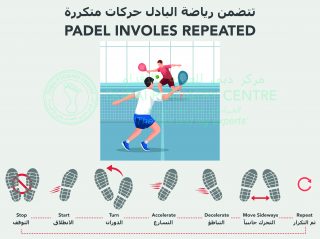
The foot is continually subjected to rapid changes in direction.
Unlike somebody who goes for a straightforward walk or run, a padel player’s foot is repeatedly moving forwards, backwards and laterally.
And when someone plays for one to three hours on most days, those forces accumulate.
The result can be thickened toenails, painful fifth toes, large calluses around the big toes and little toes, and toes that are repeatedly hitting or rubbing against the inside of the shoe.
The Important Difference: We Have More Options with Padel Footwear
This is where padel differs from professional football.
A professional footballer may have very little flexibility regarding how closely the boot needs to fit because performance demands require extremely close contact between the foot and footwear.
With the recreational or avid padel player, however, we usually have more room to intervene.
The obvious answer might appear to be: “Just buy a bigger shoe.”
But it is slightly more complicated than that.
More Toe Room – Without Allowing the Foot to Slide
We want enough room at the front of the padel shoe for the toes to extend naturally and avoid constantly striking the front and sides of the shoe.
In many patients, after properly measuring the foot while wearing the type of sports sock that will actually be used for padel, we may recommend going approximately one shoe size larger than the size they have been wearing.
However, simply creating more empty space inside the shoe is not necessarily the solution.
During rapid stop start and side to side movement, we do not want the foot sliding excessively inside the shoe.
So we need to achieve two things that initially sound contradictory: We want more space for the toes, but we don’t want more movement of the foot.
This is where the sock becomes surprisingly important.
The Sock Can Become Part of the Fit of the Shoe
For some padel players, we recommend a thick, highly cushioned, diabetic-style sports or tennis sock.
The purpose is not because the player has diabetes.
It is because this style of sock can provide considerably more cushioning and volume than a conventional thin sports sock.
This additional volume helps occupy some of the space inside the larger shoe while still allowing appropriate length and room around the toes.
Think of it as filling the shoe with cushioning rather than filling it with toes.
Instead of buying a smaller shoe and squeezing the toes into the available space to achieve that reassuring firm feeling, we can potentially create the same secure sensation using the correct shoe size combined with a thicker cushioned sock.
The toes have more room.
The shoe still feels secure.
And the foot has an additional layer of cushioning against the repeated forces generated during play.
Cushioning Is Particularly Valuable in Padel
A well-chosen cushioned sports sock can also help with shock absorption, friction management and comfort.
This does not mean that calluses will disappear completely.
Callus is partly the body’s protective response to repeated pressure, friction and shearing forces. Someone playing padel intensively may therefore continue to develop some hard skin simply because of the mechanical demands being placed upon the feet.
Our aim is not necessarily to eliminate every callus.
Our aim is to reduce the unnecessary trauma created when the toes are repeatedly being driven into the end or sides of a shoe that is too small.
That distinction is important.
Don’t Choose Your Padel Shoe Size by the Number Alone
Shoe sizing varies considerably between manufacturers and even between different models made by the same brand.
A player should therefore not simply decide: “I normally wear a size 39, so I’ll buy a size 40.”
The foot should be assessed inside the actual shoe.
At Dubai Podiatry Centre, when we assess sports footwear, we consider the length and width of the foot, toe position, the space available at the front of the shoe, the shape of the toe box and, importantly, the sock that will be worn while playing.
The shoe and sock should be considered together as one system.
A Simple Rule for Padel Players
If your padel shoes have to be painfully tight to make your feet feel secure, the answer may not necessarily be an even tighter shoe.
You may need:
more appropriate space for the toes + the correct cushioned sock + secure footwear around the rest of the foot.
That combination can allow the toes to sit more naturally while maintaining the secure feeling required for rapid lateral and stop-start movements.
Look at Your Feet After You Play
Your feet often tell us whether your footwear is working.
If you regularly play padel, look for:
- thickening or discolouration of the toenails
- recurring bruising beneath the nails
- pain at the end of the big or little toes
- curling or retracting of the toes
- large calluses along the big toes
- thickened skin around the fifth toes
- redness immediately after removing your shoes
- pain that increases the longer you play
These are not simply cosmetic changes. They can be useful clues about what is happening between your foot, sock and shoe during movement.
Better Space Doesn’t Have to Mean Less Stability
One of the biggest misconceptions in sports footwear is that more room for the toes automatically means a loose shoe.
It shouldn’t.
The goal is to provide appropriate space where the foot needs space and appropriate security where the foot needs stability.
For avid padel players, getting that balance right can make an enormous difference.
You may still develop some callus because padel is a demanding multidirectional sport. But your toenails and toes should not have to be repeatedly battered against the end and sides of your shoes every time you play.
And when someone wants to spend several hours on the padel court every week, comfortable feet are not simply about avoiding pain.
They are part of being able to continue playing the sport you love.
At Dubai Podiatry Centre, we assess the foot, toenails, callus pattern, sports shoe and sock together to understand where pressure and movement are occurring and how footwear can be adjusted without unnecessarily compromising stability.
Footwear requirements vary according to the individual, their sport, playing intensity and any previous foot or ankle problems. A larger shoe should not be chosen automatically where it results in excessive movement or instability inside the footwear.
For more information or to book an appointment please call our clinic +971 4 3435390 or WhatsApp +971 50 3553024