
fbpx

Please wait...


BLOG

No more posts

Troublesome Ingrown Toenails and Their Permanent Solution

By Michelle Champlin, Chief Podiatrist – Dubai Podiatry Centre


Troublesome ingrown toenails that require professional trimming can lead to infection and a great deal of pain if left untreated. Fortunately, there is a permanent solution available through podiatric care.


Why Ingrown Toenails Develop

In some patients, the toenail itself has structural features that make it prone to ingrowth. For example, when the nail plate is too wide for the width of the toe, much like overcrowded teeth in a small jaw, there simply isn’t enough space for it to fit properly.

A toenail that is flat and fan-shaped, widening towards the tip of the toe, often causes severe ingrown toenails. Similarly, when the nail collapses inward and becomes involuted, the edges dig into the surrounding skin, creating intense pinching and pressure.


When Trimming Isn’t Enough

Although corrective trimming and regular medical pedicures can help, they may not resolve the problem completely. Because the nail continues to grow in the same distorted shape from its root, professional trimming offers only temporary relief. In persistent cases, a minor surgical procedure called a Partial Nail Avulsion provides a long-term solution.


Partial Nail Avulsion Explained

This procedure is performed under local anaesthetic, specifically formulated for use in the toes. Unlike dental anaesthetics, which contain adrenaline to reduce blood flow, podiatrists use plain anaesthetic solutions without vasoconstrictors to preserve circulation. Maintaining blood flow is essential, as restricting it for too long can cause tissue necrosis.

To control bleeding during the short treatment period, a tourniquet is gently applied to the toe, making the area temporarily pale and bloodless. This ensures a clear field for the procedure. The podiatrist then removes the ingrown portion of the nail while leaving the healthy nail intact.
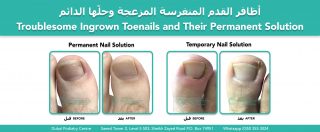
Graphic comparing before-and-after photos of ingrown toenail treatment, showing a permanent nail procedure alongside temporary nail trimming

Preventing Regrowth

If the removed nail section is not treated, it will simply grow back in the same way. To prevent recurrence, the podiatrist applies a chemical called phenol to the exposed nail root and matrix, a process known as phenolization.

Phenol chemically cauterizes the nail root, preventing regrowth while minimizing scarring. Surgical removal of the nail root, by contrast, can result in scarring and, over time, may still allow regrowth.


Healing and Aftercare

Phenolization causes a mild chemical burn, leading to a temporary inflammatory reaction called a phenol flare and some sticky exudate from the healing tissues. This is normal.

The risk of infection is extremely low when post-operative care instructions are followed. Podiatrists provide sterile dressings, antiseptic solutions, and close follow-up to ensure healthy tissue repair.


Scope of Practice and Expertise

Partial and total nail avulsion procedures are considered the gold standard for treating chronic ingrown toenails. Podiatrists perform these procedures routinely and are specifically trained for them within their professional scope of practice.

In the United Arab Emirates, the Department of Health and Ministry of Health explicitly include these procedures within the podiatrist’s scope of practice, ensuring that patients receive safe, regulated, and expert care.


For more information or to book an appointment please call our clinic +971 4 3435390 or WhatsApp +971 50 3553024


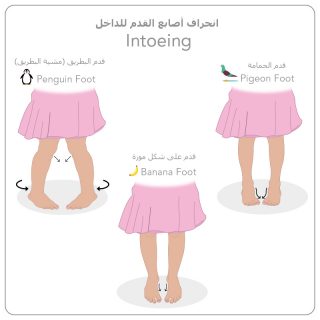
It is quite common for children to intoe.

There are three main reasons why they can do it.

In this case the intoeing is coming from the hips.

So the hips are internally rotated and the entire leg is turning in.

This second case is coming only from the feet, so the feet only are turning in.

In the last case is where the ankles are leaning outwards and that is turning the feet.

This is from the ankles, this is from the foot and this is from the hips.

There are a few other reasons why the child can intoe as well but these are the three main types that we see here in the clinic.

Each one of these requires a different type of insole inside the shoe.

The insole inside the shoe in all three cases are very different to each other even if the intoeing all looks similar to an outsider.

So this is why it is very important to come in and have the podiatrist check which type of intoeing the child has.


For more information or to book an appointment please call our clinic +971 4 3435390 or WhatsApp +971 50 3553024


Do you have a young person in your family that has poor posture, shoulder slouching and feet turning out as they walk?

It could be a result of flat feet. When the feet are flat, the arches collapse, the feet turn outwards, the hips tilt forward and the shoulders roll forward.

In the clinic we would put orthotic insoles inside their shoes, under their feet, helping to lift the arches.

Turning their feet into a straighter position, tilt the pelvis, rib cage, shoulders and raising the chin.

These orthotic insoles go into school shoes and sports shoes to allow for the better posture.


For more information or to book an appointment please call our clinic +971 4 3435390 or WhatsApp +971 50 3553024


Flat feet can cause issues with running and walking in some children
يمكن أن تسبّب القدمين المسطحتين مشاكل في الركض والمشي لدى بعض الأطفال


‏If you notice when the child is running away from you that they are leaning forward and they are wiggling when they are running, it could mean that we need to put something inside their shoes that help their body alignment.

إذا لاحظت أن الطفل يميل إلى الأمام ويتمايل عندما يركض، فقد يعني ذلك أنه قد نحتاج إلى وضع شيء داخل حذائه يساعد على تحسين توازن جسمه


‏When the child is running towards you, you may notice that the feet are turned more outwards. This puts more pressure on the front of the body making it easier to fall.

عندما يركض الطفل، قد تلاحظ أن القدمين تتجهان إلى الخارج أكثر ممّا يشكل ضغطًا أكبر على الجزء الأمامي من الجسم ويزيد احتمال التعرض للسقوط


‏We would put something inside the school shoes and inside the sports shoes that lifts the arches and brings the feet in to a straighter position, putting the bodyweight further back allowing the abdominal muscles to be engaged when they are running.

سنقوم بوضع شيء داخل حذاء المدرسة وحذاء الرياضة ليرفع الأقواس ويجعل القدمين في وضع مستقيم أكثر، مما يسمح بتحميل الوزن إلى الوراء أكثر ولعضلات البطن المشاركة بعملية الركض


‏If you think your child needs something, bring them to the clinic with their school shoes and sports shoes. If there is a requirement we will put it in to their shoes making the child more efficient at running and school.

إذا كنت تعتقد أن طفلك يحتاج إلى شيء كهذا، قم بإحضاره إلى العيادة مع حذائه المدرسي وحذائه الرياضي. إذا كانت هناك حاجة، سنقوم بوضعه داخل حذائه، ليصبح الطفل أكثر فعالية خلال الركض وفي المدرسة


For more information or to book an appointment please call our clinic +971 4 3435390 or WhatsApp +971 50 3553024


This diagram shows a healthy and regular nail that has an intact cuticle. The nail is cut straight across and filed slightly at the edges. This will limit the potential for fungus to get inside the nail and in to the nail root.

يظهر هذا الرسم التوضيحي ظفرًا صحيًّا وطبيعيًّا مع جليدة سليمة. الظفر مقصوص بشكلٍ مستقيم في الأعلى وممتلىء قليلًا عند الأطراف. هذه الطريقة تحد من احتمالية دخول الفطريات في الظفر وفي جذوره


However, if the nail cuticle is removed it leaves the root at risk of developing a fungal infection. Also, if the nail is trimmed down too far at the sides it can lead to a fungal infection which can grow in the nail sulcus. 

إلّا أنّه في حال نزعت هذه الجليدة، تصبح الجذور عُرضة لالتهاب فطري. أيضًا في حال تقليم الظفر بشكل مفرط عند الجوانب، يمكن أن يُحدث ذلك التهاب فطري في تلم الظفر


This is an example of a toe without a nail. The nail sulcus is like a strong type of skin, similar to a special train track which supports the toe nail. If that gets trimmed away the nail can collapse and curl. 

هذا مثال عن اصبع قدم من دون ظفر. يشبه تلم الظفر نوع قاسٍ جدّا من الجلد يشبّه بممر القطار الذي يحمل ظفر إصبع القدم. في حال أُزيل هذا التلم بشكلٍ كامل، قد يهبط الظفر ويلتف


Another example shows a toenail that is cleaned too well because the cuticle has been removed which again can lead to a fungal infection. 

مثال آخر يُظهر ظفر إصبع القدم منظّف بشكلٍ مفرط بحيث نُزعت الجليدة ممّا قد يؤدّي الى التهاب فطري


On the other hand, the cuticles can overgrow and they can be pushed back and the excess trimmed. Although, the actual cuticle itself which we can in this example should never be removed.

في المقلب الآخر، يمكن للجليديات أن تنمو بشكلٍ مفرط وأن تُدفع إلى الوراء وتُقلّم الزوائد. أمّا بالنسبة إلى الجليدة في هذا المثال، فلا يجب إزالتها أبدًا


For more information or to book an appointment please call our clinic +971 4 3435390 or WhatsApp +971 50 3553024
لمزيد من المعلومات أو لحجز موعد يرجى الإتصال بعيادتنا على الرقم : ٠٠٩٧١٤٣٤٣٥٣٩٠ أو التواصل على الواتساب على الرقم  ٠٠٩٧١٥٠٣٥٥٣٠٢٤


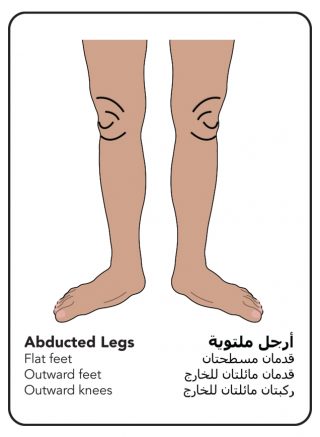
This diagram shows some of the changes that happen in the legs because of flat feet.

يُظهر هذا الرسم التوضيحي بعض التغيرات التي تحدث للساقين بسبب القدمين المسطحتين 


Illustration labelled “Abducted Legs” showing flat feet turned outward and knees angled outward, with English and Arabic labels


In this first example, the arches drop down so the person will find it difficult to walk with their feet straight. So, they abduct their feet and roll off of the inside of their feet which is why the knees are facing outwards. 

في المثال الأوّل، تهبط أقواس القدم ليصبح من الصعب على الفرد المشي بطريقة مستقيمة. لهذا السبب، يبعدون أقدامهم ويديرونها تجاه الداخل ممّا يجعل الركبتين مواجهتين للخارج


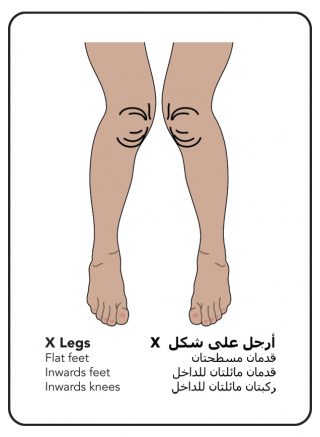
Illustration labelled “X Legs” showing knees angled inward and feet turned inward, with English and Arabic labels


If they try and walk with their feet straight this diagram shows what will happen, the knees end up pointing towards each other and we call it ‘X legs’ because the legs tend to look like the English letter ‘X’.

في حال قاموا بالمحاولة والمشي بطريقة مستقيمة، نرى من خلال هذا الرسم التوضيحي أنّه سينتهي الأمر باتجاه الركبتين نحو بعضهما البعض. هذا ما يُسمّى بالأرجل X، إذ إنّها تبدو مشابهة للحرف X في اللّغة الإنجليزية


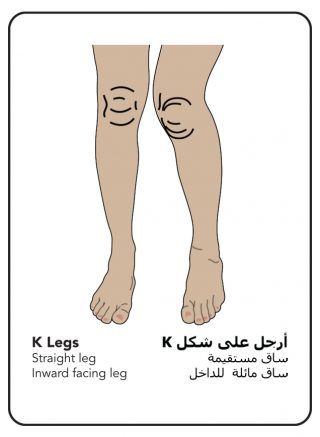
Illustration labelled “K Legs” showing one straight leg and one leg angled inward, with English and Arabic labels


When we have one leg that is straight and the foot arch is up and the other foot arch is collapsed, that knee will face towards the other one. We call that a ‘K leg’ because it looks like the English letter ‘K.’

عندما تكون ساق واحدة مستقيمة والقوسٍ عالٍ بينما قوس القدم الأخرى هابط،  تكون الركبتين متواجهتين. نُسمّي ذلك بالساق K، إذ إنّها تبدو مشابهة للحرف k في اللّغة الإنجليزية


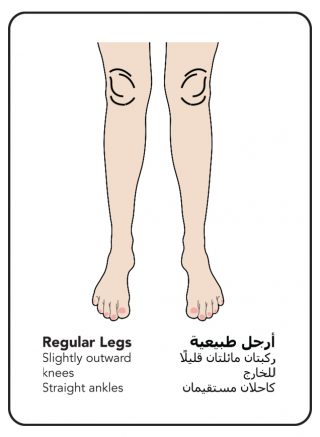
Illustration labelled “Regular Legs” showing knees angled slightly outward and straight ankles, with English and Arabic labels


In this example, the leg is straight and the arches are up with the knees facing away slightly. This is what we call the ‘normal position’.

في هذا المثال، الساق مستقيمة والأقواس مرتفعة مع ركبتين متباعدتين قليلًا. هذا ما يُعرف بالوضعية الطبيعيّة


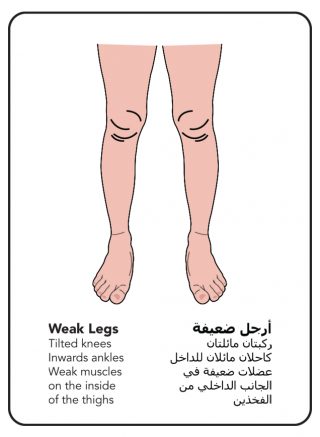
Illustration labelled “Weak Legs” showing tilted knees, inward-angled ankles and weak inner thigh muscles, with English and Arabic labels


In the next case, this person has weak muscles in their legs from lack of exercise as well as flat feet and that is why the knees have dropped down to the side slightly.

في الحالة التالية، لدى هذا الشخص عضلات أرجل ضعيفة ناتجة عن قلّة التمارين وتسطّح القدمين. لهذا السبب هبطت الركبتين قليلًا نحو الطرف 


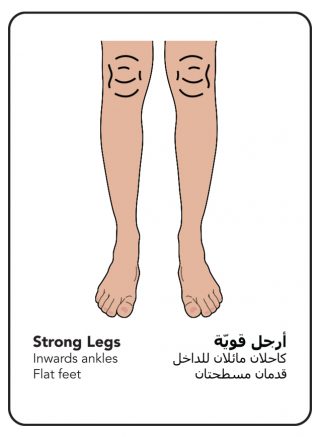
Illustration labelled “Strong Legs” showing flat feet and inward-angled ankles, with English and Arabic labels


For the last case, this is an athlete that has flat feet. They are still able to perform and their thigh muscles are strong and that is why they are able to maintain the position of their knees.

أمّا بالنّسبة للحالة الأخيرة، يتمتّع هذا الرياضيّ بقدمين مسطحتين. لا يزال بإمكانه ممارسة الرياضة بسبب قوّة عضلات الفخذ التّي تحافظ على هذه الوضعية للركبتين 


For more information or to book an appointment please call our clinic +971 4 3435390 or WhatsApp +971 50 3553024
لمزيد من المعلومات أو لحجز موعد يرجى الإتصال بعيادتنا على الرقم : ٠٠٩٧١٤٣٤٣٥٣٩٠ أو التواصل على الواتساب على الرقم  ٠٠٩٧١٥٠٣٥٥٣٠٢٤


If you want to learn more about intoeing you can read more here 


Can Nail Polish Cause Toenail Fungus? What to Know About White Toenail Changes

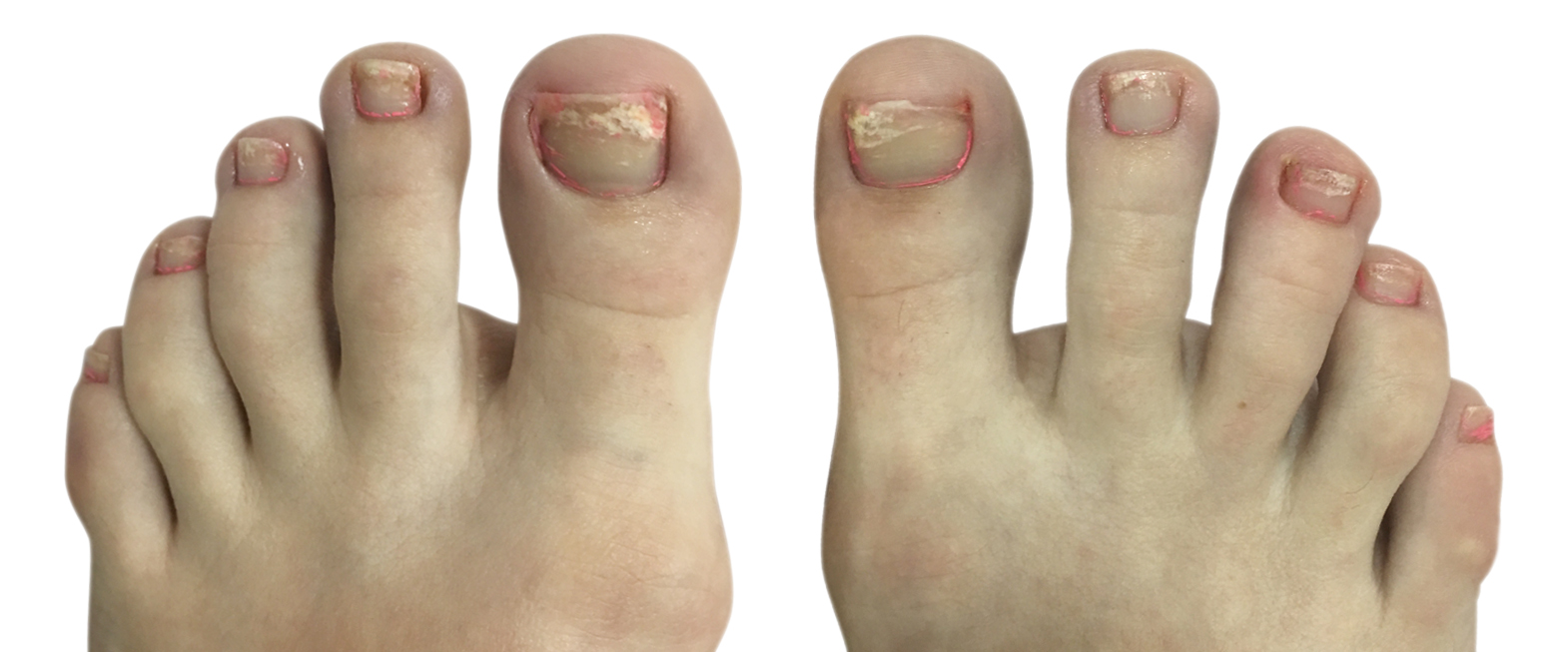
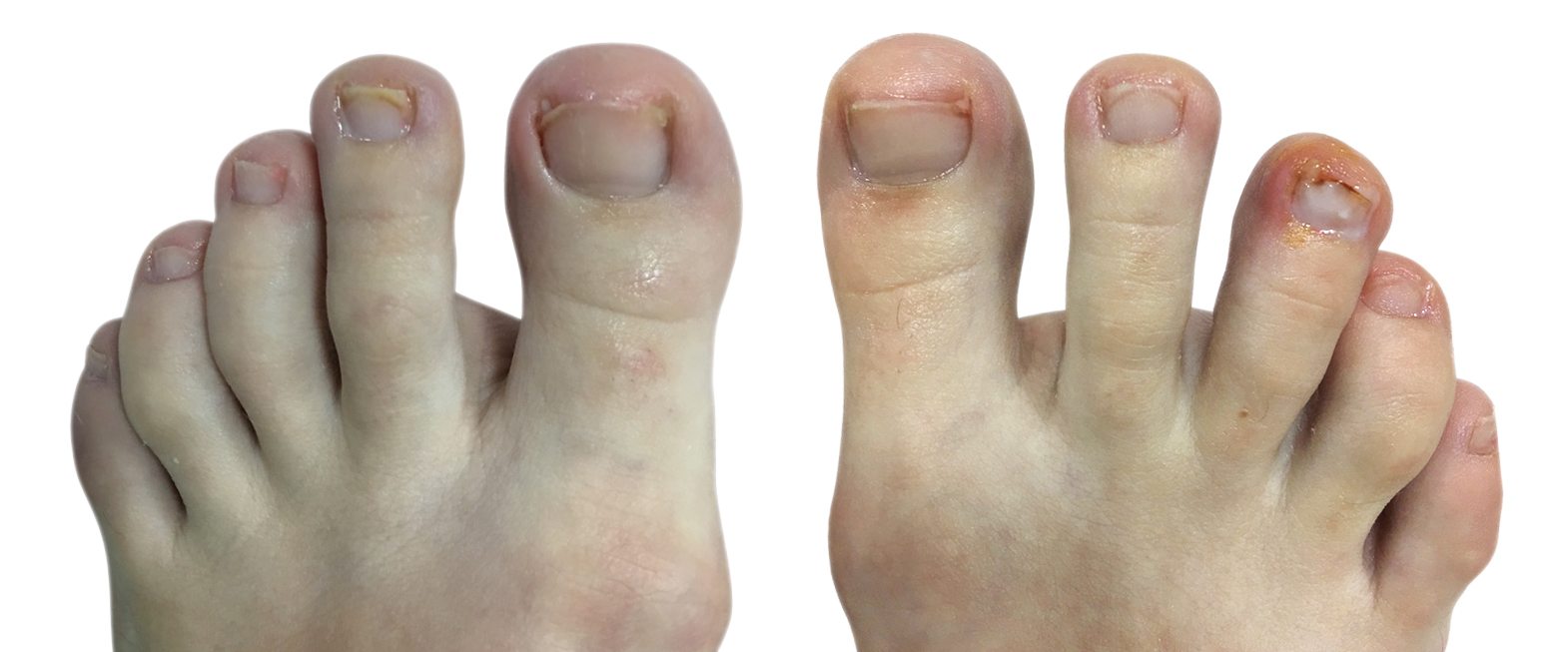
Nail polish can make your toenails look neat, but wearing it for long periods may hide changes in the nail. If you notice white patches, cracking, thickening or crumbling after removing polish, avoid covering the area again until you know what is causing it.

White or chalky marks can be a sign of a fungal nail infection, also known as toenail fungus or onychomycosis. However, nail damage, staining and other conditions can look similar, so it’s best not to self-diagnose.

What should you do if you notice changes?

Remove the polish and arrange an assessment with a podiatrist. They can examine the nail and, if needed, take a sample to help confirm whether fungus is present. Depending on the findings, they may carefully reduce loose or damaged nail and recommend a suitable treatment, such as an antifungal nail lacquer.

Toenails grow slowly, so treating a fungal nail infection takes patience and consistent care. Professional nail care may improve the nail’s appearance, but clearing an infection and seeing healthy nail grow back usually takes time.

If you notice a change in your toenail, don’t simply cover it with more polish. A podiatrist can help identify the cause and guide you towards the right care.


Copyright Dubai Podiatry 2026. All rights reserved.

WhatsApp us