
fbpx

Please wait...


BLOG

No more posts

How to Stop Foot Calluses from Coming Back

Having calluses on your feet can be annoying – and sometimes painful – but in most cases, they are actually beneficial and protective.

Why Do Calluses Form?

Calluses develop when the body senses friction or pressure on a specific area of the skin. To protect itself from blisters, wounds, or ulcers, the skin responds by producing thickened keratin.

Think of a weightlifter’s hands — they develop thicker skin where the bar rubs to prevent blisters. The same principle applies to your feet. The skin thickens where pressure or friction is greatest, creating a natural barrier that protects the tissues underneath.
 

Close-up views of dry, thickened skin and calluses on the soles of the feet

When Calluses Become a Problem

While calluses are protective, they can become painful if one area of the foot takes on too much load. For example:

  • A high-arched foot may develop heavy callus on the ball of the foot.
  • A flat or pronated foot may form thick callus along the side of the big toe.

In these cases, it isn’t enough to simply remove the callus – because if the pressure point remains, the callus will quickly return.

Sometimes, the opposite problem occurs. People with neuropathy (reduced sensation in the feet) may not feel pressure or pain, so their body does not form protective callus. This can lead to ulceration or non-healing wounds, which require urgent podiatric care.
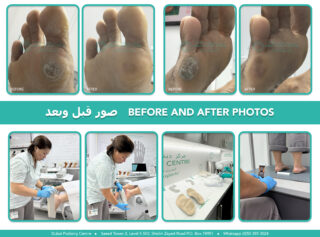
after-podiatry-dubai.jpg	Before-and-after photos of foot calluses alongside podiatry treatment, custom orthotics and foot pressure assessment at Dubai Podiatry Centre


How to Manage Calluses Safely 

  • Light daily filing: Use a dry foot file for a few seconds before your morning shower to smooth the surface.
  • Avoid excessive softening creams: If the callus formed to protect underlying tissue, softening it too much can increase the risk of blistering or soreness.
  • Address the root cause: Visit a podiatrist for a pressure and gait analysis. Custom orthotics or insoles can redistribute pressure across the foot, preventing one area from overloading and reducing callus recurrence.
  • Check footwear fit: Tight or unsupportive shoes can increase friction and accelerate callus formation.


The Podiatrist’s Approach

At the Dubai Podiatry Centre, we don’t just remove callus – we look at why it’s forming. By identifying the high-pressure zones and correcting the underlying biomechanics with orthotics, we help the skin return to a more balanced, natural state.


In Summary

Calluses are a sign your body is protecting itself. The goal isn’t to eliminate them entirely, but to prevent them from overdeveloping by ensuring even foot pressure and proper support. With the right care plan – professional assessment, orthotic realignment, and a simple at-home routine ., calluses can be kept comfortable and under control.
 

For more information or to book an appointment please call our clinic +971 4 3435390 or WhatsApp +971 50 3553024


‏

For flat feet we want to lift the foot arch and make the ankle straight

للأقدام المسطحة، نريد رفع قوس القدم وجعل الكاحل مستقيماً

‏We do that with a series of corrective orthotics to realign the ankles from leaning in back to straight again

نقوم بذلك عبر سلسلة من التقويمات التصحيحية لإعادة محاذاة الكاحلين ومنعهما من الانحناء للداخل ليعودا الى الوضع المستقيم مجددًا 

‏Also, we would ask you to do a lot of walking with your ankles and feet in the new position so the muscles are working differently

أيضًا ، نطلب منك المشي كثيرًا بكاحليك وقدميك في الوضعية الجديدة حتى تعمل العضلات بشكل مختلف 

‏We would ask you to do some electro muscle stimulation for your feet at home to tighten the 19 foot muscles

نطلب منك القيام ببعض التحفيز الكهربائي لقدميك في المنزل لشد عضلات القدم التسعة عشر

‏Then, we would also ask you to put some stickers and binding on your forefoot to pull the bones together to get the ligaments to contract in to the new shape

بعد ذلك، نطلب منك أيضًا وضع بعض الملصقات والأربطة على مقدمة قدمك لسحب العظام معًا لتنقبض الأربطة بشكلها الجديد 

‏Finally, we would ask you to do all your walking and foot exercises which are important to get your feet as strong as your hands

أخيرًا ، نطلب منك القيام بكل تمارين القدم والمشي التي تعتبر مهمة لجعل قدميك قوية كما يديك


‏For more information or to book an appointment please call our clinic +971 4 3435390 or WhatsApp +971 50 3553024 

لمزيد من المعلومات أو لحجز موعد يرجى الإتصال بعيادتنا على الرقم : ٠٠٩٧١٤٣٤٣٥٣٩٠ أو التواصل على الواتساب على الرقم  ٠٠٩٧١٥٠٣٥٥٣٠٢٤


This diagram shows a healthy and regular nail that has an intact cuticle. The nail is cut straight across and filed slightly at the edges. This will limit the potential for fungus to get inside the nail and in to the nail root.

يظهر هذا الرسم التوضيحي ظفرًا صحيًّا وطبيعيًّا مع جليدة سليمة. الظفر مقصوص بشكلٍ مستقيم في الأعلى وممتلىء قليلًا عند الأطراف. هذه الطريقة تحد من احتمالية دخول الفطريات في الظفر وفي جذوره


However, if the nail cuticle is removed it leaves the root at risk of developing a fungal infection. Also, if the nail is trimmed down too far at the sides it can lead to a fungal infection which can grow in the nail sulcus. 

إلّا أنّه في حال نزعت هذه الجليدة، تصبح الجذور عُرضة لالتهاب فطري. أيضًا في حال تقليم الظفر بشكل مفرط عند الجوانب، يمكن أن يُحدث ذلك التهاب فطري في تلم الظفر


This is an example of a toe without a nail. The nail sulcus is like a strong type of skin, similar to a special train track which supports the toe nail. If that gets trimmed away the nail can collapse and curl. 

هذا مثال عن اصبع قدم من دون ظفر. يشبه تلم الظفر نوع قاسٍ جدّا من الجلد يشبّه بممر القطار الذي يحمل ظفر إصبع القدم. في حال أُزيل هذا التلم بشكلٍ كامل، قد يهبط الظفر ويلتف


Another example shows a toenail that is cleaned too well because the cuticle has been removed which again can lead to a fungal infection. 

مثال آخر يُظهر ظفر إصبع القدم منظّف بشكلٍ مفرط بحيث نُزعت الجليدة ممّا قد يؤدّي الى التهاب فطري


On the other hand, the cuticles can overgrow and they can be pushed back and the excess trimmed. Although, the actual cuticle itself which we can in this example should never be removed.

في المقلب الآخر، يمكن للجليديات أن تنمو بشكلٍ مفرط وأن تُدفع إلى الوراء وتُقلّم الزوائد. أمّا بالنسبة إلى الجليدة في هذا المثال، فلا يجب إزالتها أبدًا


For more information or to book an appointment please call our clinic +971 4 3435390 or WhatsApp +971 50 3553024

لمزيد من المعلومات أو لحجز موعد يرجى الإتصال بعيادتنا على الرقم : ٠٠٩٧١٤٣٤٣٥٣٩٠ أو التواصل على الواتساب على الرقم  ٠٠٩٧١٥٠٣٥٥٣٠٢٤


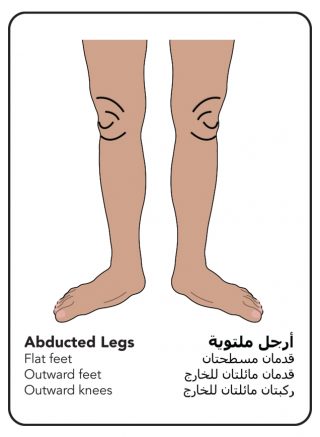
This diagram shows some of the changes that happen in the legs because of flat feet.

يُظهر هذا الرسم التوضيحي بعض التغيرات التي تحدث للساقين بسبب القدمين المسطحتين 


Illustration labelled “Abducted Legs” showing flat feet turned outward and knees angled outward, with English and Arabic labels


In this first example, the arches drop down so the person will find it difficult to walk with their feet straight. So, they abduct their feet and roll off of the inside of their feet which is why the knees are facing outwards. 

في المثال الأوّل، تهبط أقواس القدم ليصبح من الصعب على الفرد المشي بطريقة مستقيمة. لهذا السبب، يبعدون أقدامهم ويديرونها تجاه الداخل ممّا يجعل الركبتين مواجهتين للخارج


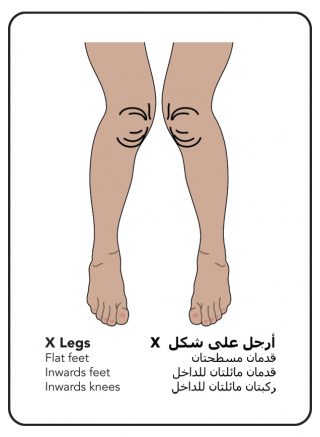
Illustration labelled “X Legs” showing knees angled inward and feet turned inward, with English and Arabic labels


If they try and walk with their feet straight this diagram shows what will happen, the knees end up pointing towards each other and we call it ‘X legs’ because the legs tend to look like the English letter ‘X’.

في حال قاموا بالمحاولة والمشي بطريقة مستقيمة، نرى من خلال هذا الرسم التوضيحي أنّه سينتهي الأمر باتجاه الركبتين نحو بعضهما البعض. هذا ما يُسمّى بالأرجل X، إذ إنّها تبدو مشابهة للحرف X في اللّغة الإنجليزية


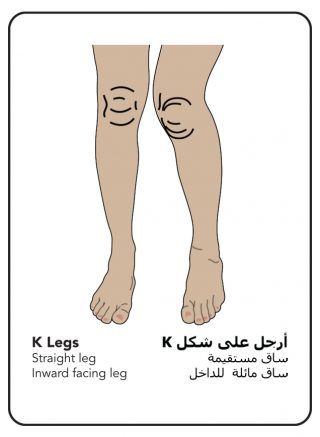
Illustration labelled “K Legs” showing one straight leg and one leg angled inward, with English and Arabic labels


When we have one leg that is straight and the foot arch is up and the other foot arch is collapsed, that knee will face towards the other one. We call that a ‘K leg’ because it looks like the English letter ‘K.’

عندما تكون ساق واحدة مستقيمة والقوسٍ عالٍ بينما قوس القدم الأخرى هابط،  تكون الركبتين متواجهتين. نُسمّي ذلك بالساق K، إذ إنّها تبدو مشابهة للحرف k في اللّغة الإنجليزية


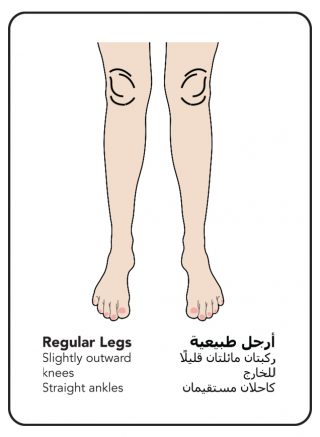
Illustration labelled “Regular Legs” showing knees angled slightly outward and straight ankles, with English and Arabic labels


In this example, the leg is straight and the arches are up with the knees facing away slightly. This is what we call the ‘normal position’.

في هذا المثال، الساق مستقيمة والأقواس مرتفعة مع ركبتين متباعدتين قليلًا. هذا ما يُعرف بالوضعية الطبيعيّة


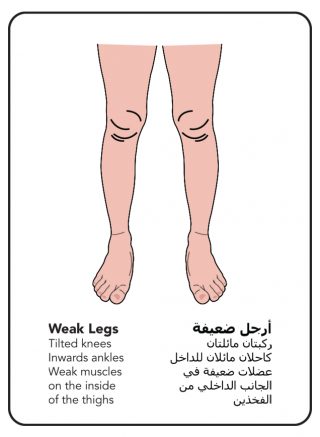
Illustration labelled “Weak Legs” showing tilted knees, inward-angled ankles and weak inner thigh muscles, with English and Arabic labels


In the next case, this person has weak muscles in their legs from lack of exercise as well as flat feet and that is why the knees have dropped down to the side slightly.

في الحالة التالية، لدى هذا الشخص عضلات أرجل ضعيفة ناتجة عن قلّة التمارين وتسطّح القدمين. لهذا السبب هبطت الركبتين قليلًا نحو الطرف 


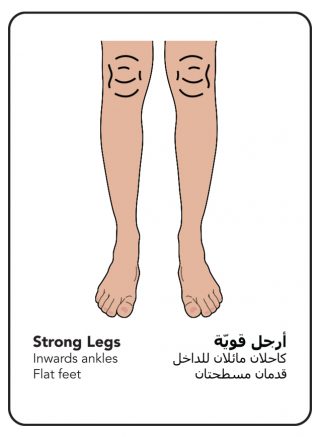
Illustration labelled “Strong Legs” showing flat feet and inward-angled ankles, with English and Arabic labels


For the last case, this is an athlete that has flat feet. They are still able to perform and their thigh muscles are strong and that is why they are able to maintain the position of their knees.

أمّا بالنّسبة للحالة الأخيرة، يتمتّع هذا الرياضيّ بقدمين مسطحتين. لا يزال بإمكانه ممارسة الرياضة بسبب قوّة عضلات الفخذ التّي تحافظ على هذه الوضعية للركبتين 


For more information or to book an appointment please call our clinic +971 4 3435390 or WhatsApp +971 50 3553024

لمزيد من المعلومات أو لحجز موعد يرجى الإتصال بعيادتنا على الرقم : ٠٠٩٧١٤٣٤٣٥٣٩٠ أو التواصل على الواتساب على الرقم  ٠٠٩٧١٥٠٣٥٥٣٠٢٤


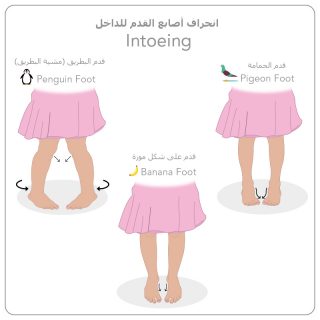
If you want to learn more about intoeing you can read more here 


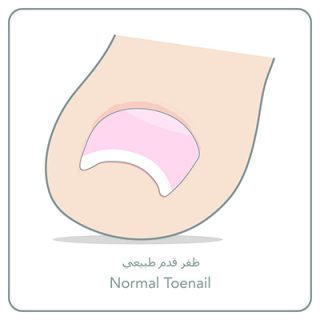
In another diagram, these are common examples of the different types of toenails we see in our clinic. 

في هذا الرسم التوضيحي، هذه هي الأمثلة الشائعة عن الأنواع المختلفة من أظافر القدم التي نراها في عيادتنا


Illustration of a normally shaped toenail with an even curve and suitable width for the toe


Firstly, this is the regular nail where the width is just right and it sits at the correct curvature on to the toe.

أوّلًا، هذا هو الظفر الطبيعي حيث يكون العرض متناسقًا ويتواجد الظفر عند الإنحناء الصحيح على إصبع القدم 


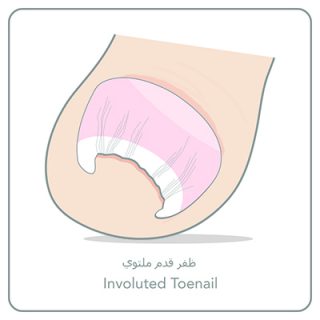
Illustration of a toenail with sides that curve inward and pinch the surrounding skin


Then, this other example of an involuted toenail is in the beginning stages of ‘pinching’. In the other diagram shows the advanced stage of the involuted toenail where it has pinched so much it has separated through the middle channel.

ثمّ هذا المثال الآخر لظفر القدم الملتوي في المرحلة الأولى من”الضغط”. في الرسم التوضيحي الآخر تظهر المرحلة المتقدّمة من ظفر القدم الملتوي حيث ضغط كثيرًا وانفصل عبر القناة الوسطى


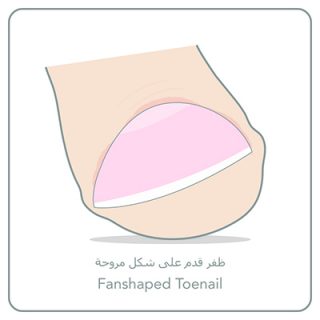
Illustration of a fan-shaped toenail that is wider at the tip than the toe


Next, there is an example of a fan-shaped nail is where the nail is far too wide for the actual toe. When one of these sides collapses it separates and causes a channel of separation which is shown in this other diagram. 

بعد ذلك، هذا المثال عن الظفر على شكل مروحة حيث يكون الظفر عريضًا جدًّا بالنسبة لإصبع القدم الفعلي

عندما يهبط أحد جانبي الظفر، ينفصل الظفر ويسبب ظهور قناة فاصلة تظهر في هذا الرسم التوضيحي


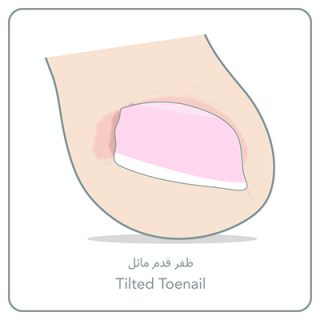
Illustration of a toenail tilted across the toe, with mild redness along one side


Finally, the last example of a tilted toenail starts off slight inflammation on this side due to the toe being tilted inwards. It can also eventually lead to separation of the nail plate here. 

أخيرًا، المثل الأخير عن ظفر القدم الملتوي ، يبدأ بالتهاب طفيف من هذه الجهة بسبب ميل إصبع القدم الى الداخل. ويمكن أن يؤدّي أيضًا في النهاية الى فصل الصفيحة الظفرية هنا


Whenever there is a separation of a nail plate from the skin it can lead to a fungal infection in that warm, moist environment.

انفصال الصفيحة الظفرية عن الجلد، يمكن أن يؤدي الى حدوث عدوى فطرية في تلك البيئة الدافئة والرطبة


For more information or to book an appointment please call our clinic +971 4 3435390 or WhatsApp +971 50 3553024 

للمزيد من المعلومات أو لحجز موعد يرجى الإتصال بعيادتنا على الرقم  ٠٠٩٧١٤٣٤٣٥٣٩٠ أو التواصل عبر الواتساب على الرقم  ٠٠٩٧١٥٠٣٥٥٣٠٢٤    


If you want to know more about different kinds of nails you can read here


Can Nail Polish Cause Toenail Fungus? What to Know About White Toenail Changes

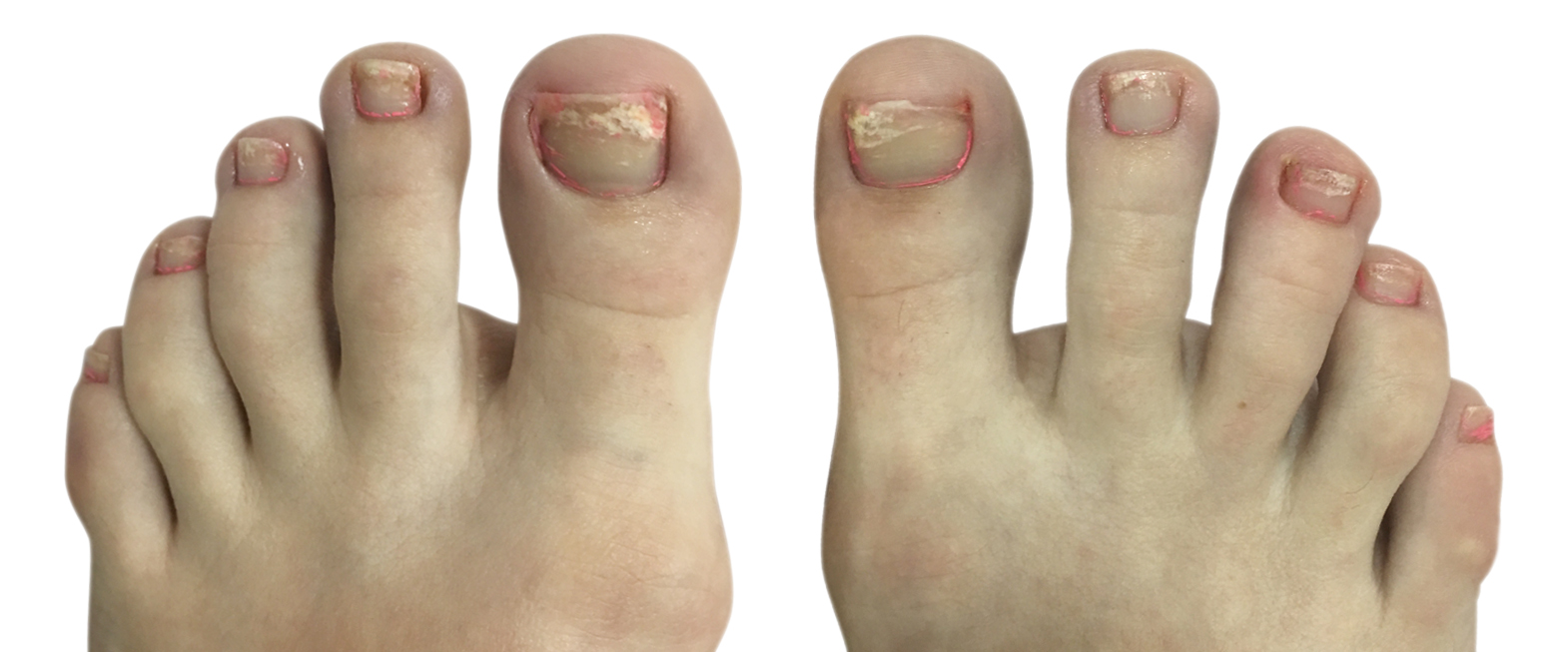
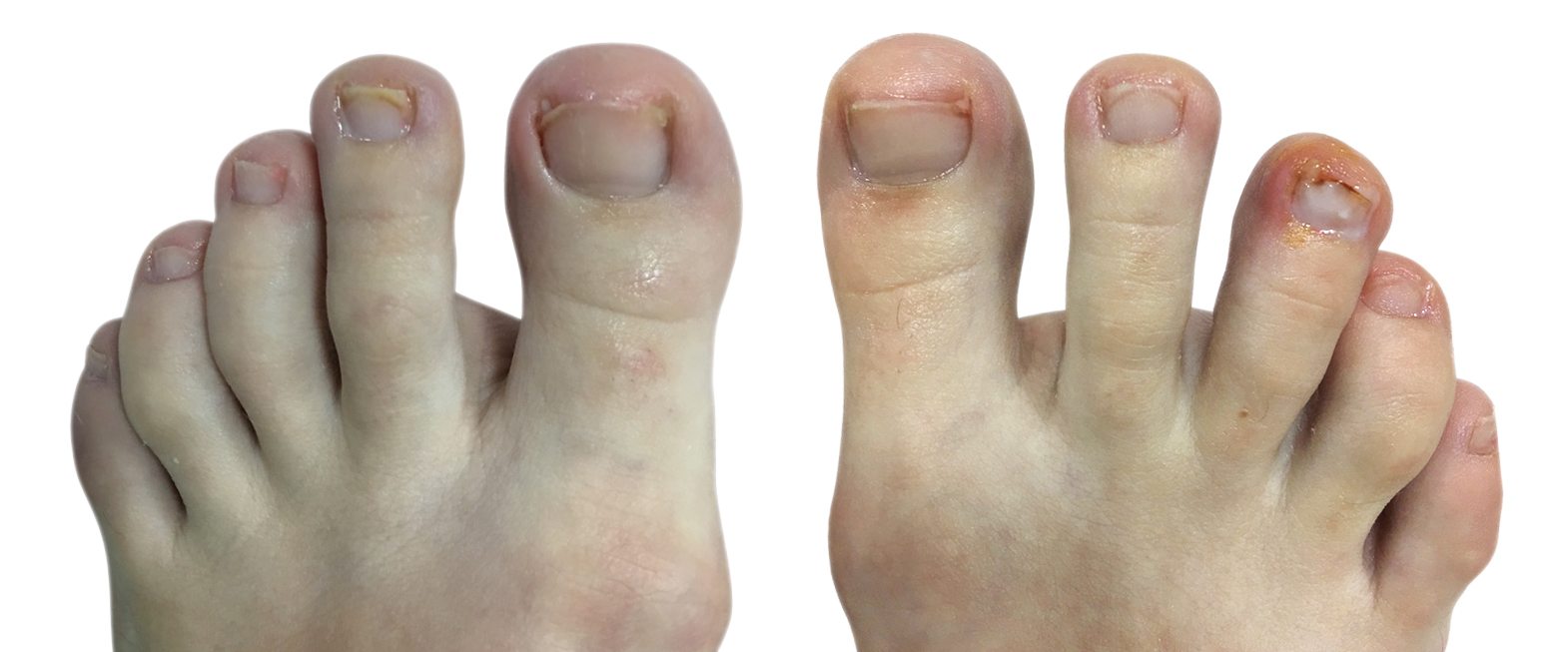
Nail polish can make your toenails look neat, but wearing it for long periods may hide changes in the nail. If you notice white patches, cracking, thickening or crumbling after removing polish, avoid covering the area again until you know what is causing it.

White or chalky marks can be a sign of a fungal nail infection, also known as toenail fungus or onychomycosis. However, nail damage, staining and other conditions can look similar, so it’s best not to self-diagnose.

What should you do if you notice changes?

Remove the polish and arrange an assessment with a podiatrist. They can examine the nail and, if needed, take a sample to help confirm whether fungus is present. Depending on the findings, they may carefully reduce loose or damaged nail and recommend a suitable treatment, such as an antifungal nail lacquer.

Toenails grow slowly, so treating a fungal nail infection takes patience and consistent care. Professional nail care may improve the nail’s appearance, but clearing an infection and seeing healthy nail grow back usually takes time.

If you notice a change in your toenail, don’t simply cover it with more polish. A podiatrist can help identify the cause and guide you towards the right care.


Copyright Dubai Podiatry 2026. All rights reserved.

WhatsApp us