
fbpx

Please wait...


BLOG

No more posts

Most people think of toenails as purely cosmetic, but in reality, toenails serve an important protective function.

A good way to understand this is to think of a bicycle helmet or a hard hat. Just as a helmet protects your skull from impact, your toenail protects the small bone at the end of your toe, known as the distal phalanx.

This bone is surprisingly fragile and is located in a high-risk area of the body. The toes are frequently exposed to trauma, including objects falling, stubbing, sports injuries, or repeated pressure from footwear. The toenail acts as a rigid protective shield, absorbing and dispersing force away from the bone underneath.

The shape of the toenail is crucial. Rather than transmitting force directly downward, its curved structure helps spread impact sideways into the surrounding fibro fatty padding at the sides and underneath the toe. This load distribution significantly reduces the risk of fractures and crush injuries to the distal phalanx.
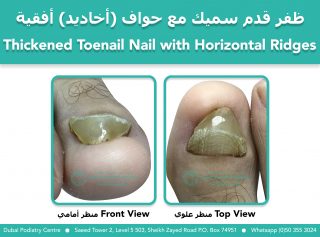
 

Close-up views of a thickened toenail with horizontal ridges, shown from the front and above


Why Do Toenails Become Thickened or Ridged?

Toenails are highly responsive to trauma. When the nail root, also known as the matrix, senses repeated stress or impact, it adapts by producing thicker nail material as a protective response.

Mild Repetitive Trauma

  • Horizontal ridges or lines across the nail
  • Gradual thickening over time
  • Often caused by tight shoes, sports footwear, or work shoes

Single Significant Trauma

If you stub your toe hard or hit it against a wall, you may notice a horizontal ridge appearing several months later. This ridge represents a short period where the nail temporarily grew thicker to protect itself. Once the trauma stops, nail growth usually returns to normal.


When Thickened Toenails Signal a Footwear Problem

If one toenail, especially the big toenail or fifth toenail, becomes thick while the others remain normal, this often points to daily repetitive trauma rather than infection.

Common causes include:

  • Shoes that are too tight or too narrow in the toe box
  • Almond shaped or pointed shoes worn by people with square or broad forefeet
  • Ill fitting work or safety shoes

With correct footwear, toenail thickness often begins to normalise. However, because toenails grow slowly, it can take around six months before you visibly see healthier nail growth from the root.


Sports, Slippage, and Toenail Damage

Even well fitting shoes can cause nail trauma if the foot slides forward inside the shoe.

This is common in:

  • Tennis
  • Padel
  • Squash
  • Badminton
  • Downhill walking or hiking

Repeated forward movement increases pressure on the nail, sometimes leading to bruising beneath it. In more severe cases, blood may collect under the nail, known as a subungual haematoma.

If the trauma is strong enough, the nail may shed naturally after two to three months as a new nail grows underneath. Treatment is usually unnecessary unless the nail becomes painful, there are signs of infection, or the old nail fails to detach properly.

In these cases, a podiatrist can safely assist with nail removal and aftercare.

Tip. Cushioned sports or hiking socks with extra padding in the toe box can significantly reduce impact and prevent nail damage.


Curved and Involuted Toenails

Some toenails thicken not because of footwear, but because of their shape.

A healthy toenail resembles an upside down dinner plate.
Problem nails may resemble an upside down dinner bowl, curving excessively at the sides.

When a nail is too wide for the toe, it embeds into the surrounding skin, growth in length becomes restricted, and the nail thickens instead. Increased thickness causes more curvature, and more curvature causes more pressure. This vicious cycle often results in a very thick, involuted toenail.

In these cases, nail bracing alone is often ineffective unless the nail is aggressively thinned. The most reliable solution is a medial and lateral partial nail avulsion with phenolisation, often followed by a total nail avulsion. This allows a new, flatter nail of the correct width to grow back.


Toenail Trauma from Toe Hyperextension

Another overlooked cause of toenail thickening or separation is hyperextension of the toe.

When walking or running, the heel strikes the ground and the big toe lifts excessively upward. The nail repeatedly hits the roof of the shoe. This can happen even when shoe size is correct.

While taping or splinting may limit movement, it often leads to tendon strain or tendonitis because the muscle force remains strong.

In most cases, the safest approach is to allow natural toe movement and protect the nail with thick cushioned socks, particularly in the toe box.

Diabetic socks, hiking socks, and specialist padded sports socks are often very effective.


When to See a Podiatrist

You should seek professional assessment if a toenail continues to thicken despite correct footwear, one nail looks significantly different from the others, the nail is painful, curved, or repeatedly bruising, or a nail has detached or is not shedding normally.

Early assessment can prevent long term nail deformity and unnecessary procedures.


For more information or to book an appointment please call our clinic +971 4 3435390 or WhatsApp +971 50 3553024


Troublesome Ingrown Toenails and Their Permanent Solution

By Michelle Champlin, Chief Podiatrist – Dubai Podiatry Centre


Troublesome ingrown toenails that require professional trimming can lead to infection and a great deal of pain if left untreated. Fortunately, there is a permanent solution available through podiatric care.


Why Ingrown Toenails Develop

In some patients, the toenail itself has structural features that make it prone to ingrowth. For example, when the nail plate is too wide for the width of the toe, much like overcrowded teeth in a small jaw, there simply isn’t enough space for it to fit properly.

A toenail that is flat and fan-shaped, widening towards the tip of the toe, often causes severe ingrown toenails. Similarly, when the nail collapses inward and becomes involuted, the edges dig into the surrounding skin, creating intense pinching and pressure.


When Trimming Isn’t Enough

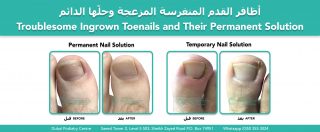
Although corrective trimming and regular medical pedicures can help, they may not resolve the problem completely. Because the nail continues to grow in the same distorted shape from its root, professional trimming offers only temporary relief. In persistent cases, a minor surgical procedure called a Partial Nail Avulsion provides a long-term solution.


Partial Nail Avulsion Explained

This procedure is performed under local anaesthetic, specifically formulated for use in the toes. Unlike dental anaesthetics, which contain adrenaline to reduce blood flow, podiatrists use plain anaesthetic solutions without vasoconstrictors to preserve circulation. Maintaining blood flow is essential, as restricting it for too long can cause tissue necrosis.

To control bleeding during the short treatment period, a tourniquet is gently applied to the toe, making the area temporarily pale and bloodless. This ensures a clear field for the procedure. The podiatrist then removes the ingrown portion of the nail while leaving the healthy nail intact.

Graphic comparing before-and-after photos of ingrown toenail treatment, showing a permanent nail procedure alongside temporary nail trimming

Preventing Regrowth

If the removed nail section is not treated, it will simply grow back in the same way. To prevent recurrence, the podiatrist applies a chemical called phenol to the exposed nail root and matrix, a process known as phenolization.

Phenol chemically cauterizes the nail root, preventing regrowth while minimizing scarring. Surgical removal of the nail root, by contrast, can result in scarring and, over time, may still allow regrowth.


Healing and Aftercare

Phenolization causes a mild chemical burn, leading to a temporary inflammatory reaction called a phenol flare and some sticky exudate from the healing tissues. This is normal.

The risk of infection is extremely low when post-operative care instructions are followed. Podiatrists provide sterile dressings, antiseptic solutions, and close follow-up to ensure healthy tissue repair.


Scope of Practice and Expertise

Partial and total nail avulsion procedures are considered the gold standard for treating chronic ingrown toenails. Podiatrists perform these procedures routinely and are specifically trained for them within their professional scope of practice.

In the United Arab Emirates, the Department of Health and Ministry of Health explicitly include these procedures within the podiatrist’s scope of practice, ensuring that patients receive safe, regulated, and expert care.


For more information or to book an appointment please call our clinic +971 4 3435390 or WhatsApp +971 50 3553024


It is quite common for children to intoe.

There are three main reasons why they can do it.

In this case the intoeing is coming from the hips.

So the hips are internally rotated and the entire leg is turning in.

This second case is coming only from the feet, so the feet only are turning in.

In the last case is where the ankles are leaning outwards and that is turning the feet.

This is from the ankles, this is from the foot and this is from the hips.

There are a few other reasons why the child can intoe as well but these are the three main types that we see here in the clinic.

Each one of these requires a different type of insole inside the shoe.

The insole inside the shoe in all three cases are very different to each other even if the intoeing all looks similar to an outsider.

So this is why it is very important to come in and have the podiatrist check which type of intoeing the child has.


For more information or to book an appointment please call our clinic +971 4 3435390 or WhatsApp +971 50 3553024


Flat feet can cause changes with the legs in some cases.

In this first example, the ankles have leaned in and the arches have collapsed down.

This in turn makes it every difficult for the person to walk with straight feet.

So, they’ have moved their feet outwards and this is called abduction.

This also makes the knees point outwards and can creates issues with the hips.

In this next example, the arches have collapsed, the ankles are leaning in and it brings the knees in together. We call this ‘X’ legs.

In this one, one leg is straight, the other foot has a collapsed arch and an ankle leaning in.

This brings the knee in to touch the other.

So one leg is straight and the other is not, we call this a ‘K’ leg.

In all of these cases it is very import to put something under the feet, lift the arches and tilt the ankles back to straight.

This helps the ankle, knee and hip alignment back in to the perfect position.


قد تسبب القدم المسطحة تغيرات في الساقين في بعض الحالات.

في المثال الأول، يميل الكاحلان إلى الداخل ويهبط قوسا القدم.

وهذا يجعل المشي مع توجيه القدمين إلى الأمام أمرًا صعبًا للغاية.

لذلك، يوجّه الشخص قدميه إلى الخارج، ويُسمّى ذلك «إبعاد القدمين».

وقد يؤدي هذا أيضًا إلى توجيه الركبتين إلى الخارج، مما قد يسبب مشكلات في الوركين.

في المثال التالي، يهبط قوسا القدمين ويميل الكاحلان إلى الداخل، فتتقارب الركبتان. ويُسمّى ذلك «الساقين على شكل X».

في هذا المثال، إحدى الساقين مستقيمة، بينما قوس القدم الأخرى منخفض والكاحل يميل إلى الداخل.

وهذا يجعل إحدى الركبتين تقترب من الأخرى.

أي إن إحدى الساقين مستقيمة والأخرى ليست كذلك، ويُسمّى هذا «الساق على شكل K».

في جميع هذه الحالات، من المهم وضع دعامة تحت القدمين لرفع قوسي القدمين وإعادة الكاحلين إلى وضع مستقيم.

يساعد ذلك على تحسين محاذاة الكاحلين والركبتين والوركين وإعادتها إلى وضعية سليمة.

For more information or to book an appointment please call our clinic +971 4 3435390 or WhatsApp +971 50 3553024


Young children with flat feet.
.الأطفال الصغار بأقدام مسطحة

It is quite normal for babies and little children to have flat feet.
.من الطبيعي جدًا أن يكون لدى الرضع والأطفال الصغار أقدام مسطحة

They have extra fatty padding in the sole of their foot and as they grow a little bit older the fatty padding disperses.
.لديهم بطانة دهنية إضافية في باطن أقدامهم، وعندما يكبرون قليلاً تختفي البطانة الدهنية

However, if you think there is a problematic flat foot you might notice the child is walking with their feet turned outwards.
.ومع ذلك، إذا كنت تعتقد أن هناك مشكلة في القدم المسطحة، فقد تلاحظ أن الطفل يمشي وأقدامه متجهة إلى الخارج

When they are running you might notice their feet turned outwards and the legs are quite wide.
.عندما يركضون، قد تلاحظ أن أقدامهم متجهة إلى الخارج وأرجلهم واسعة جدًا

When they are standing they might have to stand with their feet quite wide apart with their feet turned outwards as well.
.عندما يقفون، قد يضطرون إلى الوقوف وأقدامهم متباعدة تمامًا مع توجيه أقدامهم إلى الخارج أيضًا

That type of flat foot requires treatment.
.هذا النوع من القدم المسطحة يتطلب العلاج

The treatment we would propose to do is put an insole inside the shoes that lifts the arches up and gets the ankles and the legs aligned.
.العلاج الذي نقترح القيام به هو وضع نعل داخل الحذاء يعمل على رفع الأقواس للأعلى ومحاذاة الكاحلين والساقين


For more information or to book an appointment please call our clinic +971 4 3435390 or WhatsApp +971 50 3553024

‎لمزيد من المعلومات أو لحجز موعد يرجى الإتصال بعيادتنا على الرقم : ٠٠٩٧١٤٣٤٣٥٣٩٠ أو التواصل على الواتساب على الرقم  ٠٠٩٧١٥٠٣٥٥٣٠٢٤


These are some of the effects that flat feet can have on a growing child.

When a child is very young, 2 years old, it is quite normal for them to have flat feet.

As the child grows to 4 years old, the arches of the feet normally develop quite nicely and they grow out of flat feet.

If you notice your young child is having difficulty walking, falling down too easily and they become tired, it could be because the ankles are leaning-in. This makes the feet look flat and that is very tiresome for the child.

Without treatment when the child gets to 10 years old you might notice the feet are even more flat, the feet turn outwards and they are beginning to get a slouched posture.


Illustration of a 2-year-old child with feet turned outward and a wide stance, highlighting delayed walking, frequent falls, and balance concerns Rear-view illustration of a 10-year-old child with feet turned outward, with captions noting possible difficulty running, jumping, and sprinting Rear-view illustration of a 16-year-old with outward-facing feet and a slouched posture, highlighting possible difficulty running


Without treatment the child grows to 16 years old and may have feet turned out even more with very flat feet and obvious slouched position when they standing and walking.

Treatment as young as possible involves putting an insole inside the child’s school shoes and sports shoes that help to lift the arches and align the ankles. The child will have better stability and ease when it’s come to running and doing sports.


For more information or to book an appointment please call our clinic +971 4 3435390 or WhatsApp +971 50 3553024


Do you have a young person in your family that has poor posture, shoulder slouching and feet turning out as they walk?

It could be a result of flat feet. When the feet are flat, the arches collapse, the feet turn outwards, the hips tilt forward and the shoulders roll forward.

In the clinic we would put orthotic insoles inside their shoes, under their feet, helping to lift the arches.

Turning their feet into a straighter position, tilt the pelvis, rib cage, shoulders and raising the chin.

These orthotic insoles go into school shoes and sports shoes to allow for the better posture.


For more information or to book an appointment please call our clinic +971 4 3435390 or WhatsApp +971 50 3553024


Flat feet can cause issues with running and walking in some children
يمكن أن تسبّب القدمين المسطحتين مشاكل في الركض والمشي لدى بعض الأطفال


‏If you notice when the child is running away from you that they are leaning forward and they are wiggling when they are running, it could mean that we need to put something inside their shoes that help their body alignment.

إذا لاحظت أن الطفل يميل إلى الأمام ويتمايل عندما يركض، فقد يعني ذلك أنه قد نحتاج إلى وضع شيء داخل حذائه يساعد على تحسين توازن جسمه


‏When the child is running towards you, you may notice that the feet are turned more outwards. This puts more pressure on the front of the body making it easier to fall.

عندما يركض الطفل، قد تلاحظ أن القدمين تتجهان إلى الخارج أكثر ممّا يشكل ضغطًا أكبر على الجزء الأمامي من الجسم ويزيد احتمال التعرض للسقوط


‏We would put something inside the school shoes and inside the sports shoes that lifts the arches and brings the feet in to a straighter position, putting the bodyweight further back allowing the abdominal muscles to be engaged when they are running.

سنقوم بوضع شيء داخل حذاء المدرسة وحذاء الرياضة ليرفع الأقواس ويجعل القدمين في وضع مستقيم أكثر، مما يسمح بتحميل الوزن إلى الوراء أكثر ولعضلات البطن المشاركة بعملية الركض


‏If you think your child needs something, bring them to the clinic with their school shoes and sports shoes. If there is a requirement we will put it in to their shoes making the child more efficient at running and school.

إذا كنت تعتقد أن طفلك يحتاج إلى شيء كهذا، قم بإحضاره إلى العيادة مع حذائه المدرسي وحذائه الرياضي. إذا كانت هناك حاجة، سنقوم بوضعه داخل حذائه، ليصبح الطفل أكثر فعالية خلال الركض وفي المدرسة


For more information or to book an appointment please call our clinic +971 4 3435390 or WhatsApp +971 50 3553024


‏For children with flat feet we were discussing putting something inside their sports shoes and school shoes that helps to align their feet and ankles.

بالنسبة للأطفال ذوي الأقدام المسطحة، نوصي بوضع شيء داخل أحذيتهم الرياضية والمدرسية ليساعد على  محاذاة القدمين والكاحلين

‏This is what we would put inside this girls shoes. It lifts the arch and tilts the ankle back to straight again.

هذا هو ما سنقوم بوضعه داخل حذاء الفتاة. يرفع القوس ويعيد الكاحل إلى الوضع المستقيم

‏And inside the school shoes we have coloured matched it so you don’t see anything inside the school shoes.

أمّا بالنسبة إلى أحذية المدرسة، فقد قمنا بتنسيق اللون لضمان عدم ظهورها من داخل الحذاء

‏And when we remove it you can see again that we are lifting the arch and tilting the foot so we can get the ankle and foot back to a straight position.

عندما نقوم بإزالته، ترى كيف قمنا برفع القوس وإمالة القدم، مما ساعد في إعادة الكاحل والقدم إلى وضع مستقيم.

‏This helps to grow greater confidence and faster running without the chance of falling down.

يساعد ذلك على إعادة الثقة وإمكانية الركض بسرعة أكبر دون خطر السقوط


For more information or to book an appointment please call our clinic +971 4 3435390 or WhatsApp +971 50 3553024


Young children with flat feet tend to fall down quite easily and have difficulty running quickly

غالبًا ما يقع الأطفال ذوي الاقدام المسطحة بسهولة أو يصعب عليهم الركض بسرعة

‏The reason for that is when the arches are flat the ankles lean in and the child finds it very difficult to run and walk in that position.

وهذا لأن الأقواس مستقيمة فيميل الكاحلين ويصبح من الصعب على الطفل الركض أو المشي في هذه الوضعية

‏So, they find a better way to run with their feet pointed outwards.

لذا يصبح من الأسهل لهم الركض وأقدامهم موّجهة للخارج

‏When that happens it tends to tilt the upper body forward so in turn they can fall forward quite easily.

عند الركض بهذه الطريقة، يميل الجزء العلوي من الجسد إلى الأمام فيزداد احتمال الوقوع

‏So, we would put something inside their school and sports shoes that lifts the arches and tilts the ankles back to straight giving the child better confidence when running.

لذلك نقوم بوضع شيء داخل الحذاء المدرسي و الرياضي ليرفع الأقواس ويعيد الكاحلين للوضع المستقيم وبالتالي إعادة الثقة للطفل خلال الركض


For more information or to book an appointment please call our clinic +971 4 3435390 or WhatsApp +971 50 3553024


Copyright Dubai Podiatry 2026. All rights reserved.

WhatsApp us