fbpx

Please wait...


BLOG

No more posts

Many people are surprised to learn that fungal toenail infections often begin with a fungal skin infection between the toes, commonly known as athlete’s foot (tinea pedis).


The fungi responsible for athlete’s foot are commonly found in our environment and can also exist naturally on the skin without causing problems. However, when conditions become warm, dark, and moist, the fungal organisms can multiply rapidly. This is especially common between the fourth and fifth toes, where the skin surfaces are often pressed tightly together inside shoes.


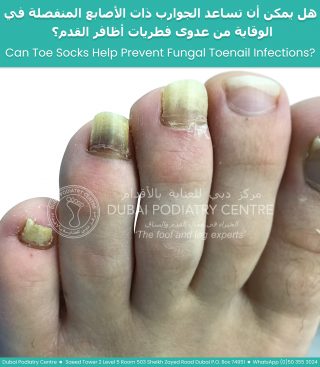
Multiple toes affected by fungal toenail infection (onychomycosis) showing yellow, thickened, and discolored toenails. Clinical image used to discuss whether toe socks can help prevent fungal toenail infections and improve foot hygieneWhen the toes are squeezed together for long periods, moisture becomes trapped and air circulation is reduced. This creates the perfect environment for fungal spores to grow and spread. Over time, the infection may remain confined to the skin between the toes, or it may spread into the neighbouring toenails, particularly the fourth and fifth toenails, resulting in fungal nail infection (onychomycosis).


One simple but highly effective preventative measure is the use of cotton toe socks.


Unlike conventional socks, toe socks individually separate each toe with a layer of fabric. This creates a physical barrier between the toes, helping to reduce skin-to-skin contact and minimise the warm, moist conditions that fungi thrive in.

The benefits of toe socks include:

  • Improved air circulation between the toes
  • Reduced moisture accumulation
  • Less skin friction and irritation
  • A physical barrier that helps limit the spread of fungal spores
  • Reduced recurrence of athlete’s foot
  • Lower risk of fungal infection spreading into the toenails


Cotton toe socks are particularly beneficial for individuals who suffer from recurring athlete’s foot, fungal toenail infections, excessive sweating, or who spend long periods wearing enclosed footwear.


While toe socks are not a treatment for an established fungal infection, they can be an excellent part of a long-term prevention strategy. Combined with good foot hygiene, proper shoe disinfection, and prompt treatment of any athlete’s foot infection, toe socks can help create a healthier environment for the feet and reduce the likelihood of future fungal problems.


At Dubai Podiatry Centre, we frequently recommend toe socks as part of a comprehensive foot care programme for patients prone to athlete’s foot and fungal toenail infections. Sometimes the simplest changes can make a significant difference in maintaining healthy feet.


Link for : Toe Socks


For more information or to book an appointment please call our clinic +971 4 3435390 or WhatsApp +971 50 3553024


The virus that causes plantar warts lives on microscopic skin cells, which means you will never be able to see it. In reality, we come into contact with this virus frequently throughout the day, through shared surfaces and contact with other people. Fortunately, the body is usually very effective at fighting it off.

Unlike viruses such as herpes, which can remain dormant in the body and reactivate during periods of stress, the human papillomavirus (HPV) that causes plantar warts stays local to the skin. It does not live in the spinal column or remain in the body systemically. It only affects the area of skin it enters.

Because exposure is so common, prevention is not about completely avoiding the virus, but about reducing the chances of it entering the skin.

The key factor is protecting the natural barrier of the skin and avoiding direct contact in high-risk environments.

الفيروس المسبب للثآليل الأخمصية يعيش على خلايا جلدية مجهرية لا يمكن رؤيتها بالعين المجردة. وفي الواقع، نتعرض لهذا الفيروس بشكل متكرر خلال اليوم من خلال الأسطح المشتركة والتواصل مع الآخرين. ولحسن الحظ، يكون الجسم في معظم الحالات قادرًا على مقاومته والتخلص منه بفعالية.

وعلى عكس بعض الفيروسات مثل فيروس الهربس، الذي يمكن أن يبقى كامنًا في الجسم ويُعاد تنشيطه خلال فترات التوتر أو الإجهاد، فإن فيروس الورم الحليمي البشري (HPV) المسبب للثآليل الأخمصية يبقى موضعيًا في الجلد. فهو لا يعيش في العمود الفقري ولا يبقى داخل الجسم بشكل جهازي، وإنما يؤثر فقط على المنطقة الجلدية التي دخل من خلالها.

ونظرًا لأن التعرض لهذا الفيروس شائع جدًا، فإن الوقاية لا تعتمد على تجنب الفيروس بشكل كامل، بل على تقليل فرص دخوله إلى الجلد.

ويُعد الحفاظ على الحاجز الطبيعي الواقي للجلد وتجنب التلامس المباشر في البيئات عالية الخطورة من أهم العوامل للوقاية من الإصابة.

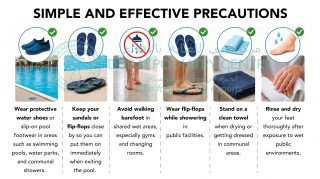
Infographic titled “Simple and Effective Precautions” showing ways to prevent plantar warts, including wearing water shoes in public wet areas, keeping flip-flops nearby, avoiding walking barefoot, wearing flip-flops in public showers, standing on a clean towel in communal areas, and rinsing and drying feet thoroughly.


Simple and effective precautions include:

  • Wearing protective water shoes or slip-on pool footwear in areas such as swimming pools, water parks, and communal showers
  • Keeping your sandals or flip-flops close by so you can put them on immediately when exiting the pool
  • Avoiding walking barefoot in shared wet areas, especially gyms and changing rooms
  • Wearing flip-flops while showering in public facilities
  • Standing on a clean towel when drying or getting dressed in communal areas
  • Rinsing and drying your feet thoroughly after exposure to wet public environments

These measures create a protective barrier between your skin and surfaces where the virus may be present.

Another important factor is skin condition. Keeping the feet dry and healthy helps maintain the strength of the outer skin layer, known as the stratum corneum. When this layer is intact, it acts as a strong defence against infection. However, when the skin is wet or overly sweaty for long periods, it becomes more porous and vulnerable to viral entry.

By combining good hygiene, protective footwear, and maintaining healthy skin, you can significantly reduce the risk of developing a plantar wart.

تشمل الاحتياطات البسيطة والفعّالة ما يلي:

  • ارتداء أحذية مائية واقية أو أحذية مخصصة للمسابح في أماكن مثل أحواض السباحة، والحدائق المائية، وغرف الاستحمام المشتركة
  • إبقاء الصنادل أو الشباشب بالقرب منك لارتدائها فور الخروج من المسبح.
  • تجنب المشي حافي القدمين في المناطق الرطبة المشتركة، وخاصة في الصالات الرياضية وغرف تبديل الملابس.
  • ارتداء الشباشب أثناء الاستحمام في المرافق العامة.
  • الوقوف على منشفة نظيفة عند تجفيف الجسم أو ارتداء الملابس في الأماكن المشتركة.
  • غسل القدمين وتجفيفهما جيدًا بعد التواجد في البيئات العامة الرطبة.

تساعد هذه الإجراءات على تكوين حاجز واقٍ بين الجلد والأسطح التي قد يكون الفيروس موجودًا عليها.

ويُعدّ الحفاظ على صحة الجلد عاملًا مهمًا آخر. فالحفاظ على جفاف القدمين وسلامتهما يساعد في تعزيز قوة الطبقة الخارجية من الجلد، المعروفة باسم الطبقة القرنية. وعندما تكون هذه الطبقة سليمة، فإنها تعمل كخط دفاع قوي ضد العدوى. أما عندما يبقى الجلد رطبًا أو متعرقًا بشكل مفرط لفترات طويلة، فإنه يصبح أكثر نفاذية وأكثر عرضة لدخول الفيروسات.

ومن خلال الجمع بين النظافة الجيدة، وارتداء الأحذية الواقية، والحفاظ على صحة الجلد، يمكن تقليل خطر الإصابة بالثآليل الأخمصية بشكل كبير.

For more information or to book an appointment please call our clinic +971 4 3435390 or WhatsApp +971 50 3553024


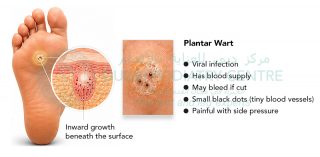
Illustration of a plantar wart on the sole of a foot, showing inward growth beneath the skin and a close-up with small black dots (blood vessels). Text highlights that it is a viral infection, may bleed if cut, and is painful with pressure.

A plantar wart, also known as a verruca, is a viral infection that occurs on the sole of the foot. Unlike warts elsewhere on the body that grow outward as raised bumps, plantar warts grow inward due to the constant pressure of standing and walking. This means they often appear flat on the surface while developing a bulb-like structure deeper within the skin.

Because of this inward growth, plantar warts can be more difficult to treat. Treatments that work well for outward-growing warts on the hands or other parts of the body, such as cryotherapy (liquid nitrogen) or salicylic acid, often have lower success rates on the sole of the foot. This is because the wart is not easily accessible on the surface, making it harder for these treatments to reach the infected tissue effectively.

الثؤلول الأخمصي، المعروف أيضًا باسم الفيروكا (Verruca)، هو عدوى فيروسية تصيب باطن القدم. وعلى عكس الثآليل التي تظهر في مناطق أخرى من الجسم وتنمو إلى الخارج على شكل نتوءات بارزة، فإن الثآليل الأخمصية تنمو إلى الداخل بسبب الضغط المستمر الناتج عن الوقوف والمشي. ولهذا السبب، غالبًا ما تبدو مسطحة على سطح الجلد، بينما تمتد في العمق على شكل كتلة تشبه البصلة داخل الأنسجة.

وبسبب هذا النمو الداخلي، تكون الثآليل الأخمصية أكثر صعوبة في العلاج. فالعلاجات التي قد تكون فعّالة للثآليل التي تنمو إلى الخارج على اليدين أو في أجزاء أخرى من الجسم، مثل العلاج بالتبريد (النيتروجين السائل) أو حمض الساليسيليك، غالبًا ما تحقق معدلات نجاح أقل عند استخدامها لعلاج الثآليل الموجودة في باطن القدم. ويعود ذلك إلى أن الثؤلول لا يكون مكشوفًا بشكل كافٍ على السطح، مما يجعل وصول هذه العلاجات إلى الأنسجة المصابة أكثر صعوبة وأقل فعالية.


So how does a plantar wart develop in the first place?
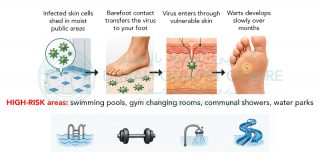
Infographic showing how plantar warts develop: infected skin cells spread in moist public areas, barefoot contact transfers the virus, it enters through small breaks in the skin, and a wart forms over months. High-risk areas listed include swimming pools, gym changing rooms, communal showers, and water parks, with related icons.The condition is caused by a virus that is spread through contact with infected skin cells. This typically occurs in high-risk environments where people walk barefoot, such as swimming pools, gym changing rooms, and water parks. An infected skin cell from another person can be shed onto the floor, and if you walk over that area within a short time frame, the virus may transfer to your foot.

However, the virus cannot easily penetrate healthy skin. The outermost layer of the skin, known as the stratum corneum, acts as a protective barrier. This layer is structured like tightly packed scales, similar to fish scales, forming a strong defence against external invasion.

When the feet are dry, this barrier remains tightly closed and highly protective. But when the skin becomes wet or sweaty for prolonged periods, the structure of this layer changes. The “scales” begin to separate slightly, creating microscopic gaps. This makes the skin more porous and vulnerable to viral entry.

At the same time, an infected foot in a moist environment can shed virus-containing skin cells more easily. These infected cells can then be picked up by another person walking over the same surface, particularly in high-traffic, damp areas.

Once the virus enters the skin, it develops slowly. It can take several months, often up to six months or more, before a plantar wart becomes visible. During this time, the virus grows within the deeper layers of the skin before gradually appearing on the surface.

فكيف يتكوّن الثؤلول الأخمصي في المقام الأول؟

تنجم هذه الحالة عن فيروس ينتقل من خلال ملامسة خلايا الجلد المصابة. ويحدث ذلك عادةً في البيئات عالية الخطورة التي يمشي فيها الأشخاص حفاة الأقدام، مثل أحواض السباحة، وغرف تبديل الملابس في الصالات الرياضية، والحدائق المائية. فقد تسقط خلية جلدية مصابة من شخصٍ ما على الأرض، وإذا مررت فوق تلك المنطقة خلال فترة قصيرة، فقد ينتقل الفيروس إلى قدمك.

ومع ذلك، لا يستطيع الفيروس اختراق الجلد السليم بسهولة. فالطبقة الخارجية من الجلد، والمعروفة باسم الطبقة القرنية، تعمل كحاجز واقٍ. وتتكوّن هذه الطبقة من خلايا متراصة بإحكام تشبه حراشف السمك، مما يشكّل خط دفاع قويًا ضد العوامل الخارجية.

عندما تكون القدمان جافتين، يبقى هذا الحاجز محكم الإغلاق ويوفر حماية عالية. ولكن عندما يصبح الجلد رطبًا أو متعرقًا لفترات طويلة، تتغير بنية هذه الطبقة. إذ تبدأ “الحراشف” الجلدية بالانفصال بشكل طفيف، مما يخلق فجوات مجهرية صغيرة. وهذا يجعل الجلد أكثر نفاذية وأكثر عرضة لدخول الفيروسات.

وفي الوقت نفسه، يمكن للقدم المصابة الموجودة في بيئة رطبة أن تطرح خلايا جلدية تحتوي على الفيروس بسهولة أكبر. ويمكن لهذه الخلايا المصابة أن تنتقل إلى شخص آخر يمشي على السطح نفسه، خاصةً في الأماكن الرطبة كثيرة الاستخدام.

وبمجرد دخول الفيروس إلى الجلد، فإنه يتطور ببطء. فقد يستغرق الأمر عدة أشهر، وغالبًا ما يصل إلى ستة أشهر أو أكثر، قبل أن يصبح الثؤلول الأخمصي مرئيًا. وخلال هذه الفترة، ينمو الفيروس داخل الطبقات العميقة من الجلد قبل أن يبدأ بالظهور تدريجيًا على السطح.
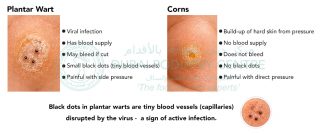
Comparison infographic of a plantar wart and a corn. The plantar wart shows small black dots (blood vessels), is a viral infection with blood supply, may bleed, and is painful with side pressure. The corn is a build-up of hard skin from pressure, has no blood supply, does not bleed, has no black dots, and is painful with direct pressure. A note explains that black dots in plantar warts are tiny blood vessels indicating active infection.Plantar warts are sometimes confused with corns, but they are very different. A corn is a build-up of hard skin caused by pressure and friction. It can often be reduced without bleeding, although it may feel like walking on a sharp point. A plantar wart, however, is a living viral lesion. If disturbed or cut, it will bleed because it has developed its own blood supply within the skin.

One of the key identifying features of a plantar wart is the presence of small black dots within the lesion. These are not roots, but tiny blood vessels known as capillaries. The virus disrupts and constricts these vessels, causing them to appear dark. Their presence is a sign that the wart is active and established within the tissue.

This is where Dermojet® treatment is particularly effective. Because plantar warts grow deep within the skin, a treatment that can reach and disrupt the infected tissue at its core is essential. Dermojet® delivers a high-pressure microjet that penetrates beneath the surface, targeting the area where the virus is thriving and improving the likelihood of successful resolution.

يتم الخلط أحيانًا بين الثآليل الأخمصية ومسامير القدم، لكنهما حالتان مختلفتان تمامًا. فمسمار القدم هو تراكم للجلد السميك والصلب نتيجة الضغط والاحتكاك المتكرر. وغالبًا ما يمكن تقليصه أو إزالته دون حدوث نزيف، رغم أنه قد يسبب إحساسًا يشبه المشي على جسم حاد. أما الثؤلول الأخمصي فهو آفة فيروسية حية. وعند العبث به أو قصّه، فإنه ينزف لأنه يكون قد كوّن شبكة من الأوعية الدموية الخاصة به داخل الجلد.

ومن أبرز العلامات التي تساعد على التعرف على الثؤلول الأخمصي وجود نقاط سوداء صغيرة داخل الآفة. وهذه النقاط ليست جذورًا كما يعتقد البعض، بل هي أوعية دموية دقيقة تُعرف باسم الشعيرات الدموية. ويؤثر الفيروس في هذه الأوعية ويُضيّقها، مما يجعلها تبدو داكنة اللون. ويُعد وجود هذه النقاط علامة على أن الثؤلول نشط ومتجذر داخل الأنسجة.

وهنا تبرز فعالية علاج ديرموجيت® (Dermojet®) بشكل خاص. فبما أن الثآليل الأخمصية تنمو عميقًا داخل الجلد، فإن الوصول إلى الأنسجة المصابة في مركز الثؤلول وتعطيلها يُعد أمرًا أساسيًا لنجاح العلاج. ويعمل ديرموجيت® من خلال إطلاق نفثة دقيقة عالية الضغط تخترق ما تحت سطح الجلد، لتستهدف المنطقة التي ينشط فيها الفيروس، مما يزيد من احتمالية القضاء على الثؤلول بنجاح.


For more information or to book an appointment please call our clinic +971 4 3435390 or WhatsApp +971 50 3553024


Continue reading our next blog to learn more : How can you avoid catching a plantar wart?


Thank goodness for corns on your feet – and here’s why.

It may sound strange, but a corn is actually a sign that your body is trying to protect you.

The body’s first job is always to protect the skin, the tissues underneath, and even the bone. When there is too much pressure or friction on one area of the foot, the body responds by building up a layer of hard skin. If that pressure continues, the hard skin thickens further and becomes a callus. If the pressure becomes even more concentrated over a small area, the body can then form a dense plug of keratin, which we call a corn.

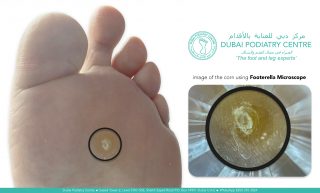
A corn is made of almost pure keratin, similar to the material in a fingernail or toenail, but formed as a small plug. It often has the shape of an upside-down diamond, pointing inward, which is why it can become so painful to walk on.

Although corns are uncomfortable, they are actually part of the body’s natural defence system. They act like a protective plug, helping to prevent deeper tissue damage and protecting the area from excessive pressure that could otherwise lead to skin breakdown.


Image showing the bottom of a foot with a small corn circled, alongside a magnified view of the corn under a microscope

This is especially important because when the body cannot produce this protective hard skin response, it may be a sign of an underlying problem. Some people do not develop enough protective hyperkeratinisation, which is the medical term for thickened hard skin. Others may have neuropathy, where sensation is reduced, so the body does not properly detect the ongoing pressure or friction. In these cases, the skin may break down instead of defending itself, which is one reason why neuropathic ulcers and diabetic wounds can develop on the feet.

So in many ways, hard skin, callus, and corns are not the enemy. They are the body’s attempt to shield itself.

Calluses work in the same way elsewhere in the body. For example, weightlifters and athletes often develop calluses on their hands. These are not a bad thing. They are protective. If you peel them away aggressively, the skin underneath may become sore, raw, or even bleed. The same principle applies to the feet.

The problem is that simply removing a corn or callus does not solve the cause. As fast as it is removed, it often returns within days or weeks unless the underlying pressure is properly addressed.

That is why corns keep coming back.

To prevent a corn long term, the pressure has to be redistributed. This may involve:

  • relieving pressure from a dropped metatarsal bone beneath the foot
  • correcting foot function with orthotics
  • lifting and redistributing load away from overloaded areas
  • wearing wider footwear so the toes are not being squeezed
  • avoiding shoes that are too narrow across the forefoot or small toes

For example, a corn under the foot may be caused by excess pressure from a prominent bone. A corn on the side or top of a toe is often caused by tight footwear rubbing repeatedly against the skin.

So yes, a corn may be painful, but it is also your body’s way of defending itself. The alternative can be much worse.

If you have a corn, the answer is not just to keep having it removed every month. The real solution is to find out why it is there in the first place and correct the underlying cause.

Corns are not the cureless problem. Repeated pressure is.

If you have a painful corn, visit a podiatrist to identify the cause and treat it properly. Addressing the underlying issue is the long-term cure.


For more information or to book an appointment please call our clinic +971 4 3435390 or WhatsApp +971 50 3553024


#Corns #FootCorns #Callus #Calluses #HardSkin #Hyperkeratosis #FootConditions


Young children with flat feet.
.الأطفال الصغار بأقدام مسطحة

It is quite normal for babies and little children to have flat feet.
.من الطبيعي جدًا أن يكون لدى الرضع والأطفال الصغار أقدام مسطحة

They have extra fatty padding in the sole of their foot and as they grow a little bit older the fatty padding disperses.
.لديهم بطانة دهنية إضافية في باطن أقدامهم، وعندما يكبرون قليلاً تختفي البطانة الدهنية

However, if you think there is a problematic flat foot you might notice the child is walking with their feet turned outwards.
.ومع ذلك، إذا كنت تعتقد أن هناك مشكلة في القدم المسطحة، فقد تلاحظ أن الطفل يمشي وأقدامه متجهة إلى الخارج

When they are running you might notice their feet turned outwards and the legs are quite wide.
.عندما يركضون، قد تلاحظ أن أقدامهم متجهة إلى الخارج وأرجلهم واسعة جدًا

When they are standing they might have to stand with their feet quite wide apart with their feet turned outwards as well.
.عندما يقفون، قد يضطرون إلى الوقوف وأقدامهم متباعدة تمامًا مع توجيه أقدامهم إلى الخارج أيضًا

That type of flat foot requires treatment.
.هذا النوع من القدم المسطحة يتطلب العلاج

The treatment we would propose to do is put an insole inside the shoes that lifts the arches up and gets the ankles and the legs aligned.
.العلاج الذي نقترح القيام به هو وضع نعل داخل الحذاء يعمل على رفع الأقواس للأعلى ومحاذاة الكاحلين والساقين


For more information or to book an appointment please call our clinic +971 4 3435390 or WhatsApp +971 50 3553024

‎لمزيد من المعلومات أو لحجز موعد يرجى الإتصال بعيادتنا على الرقم : ٠٠٩٧١٤٣٤٣٥٣٩٠ أو التواصل على الواتساب على الرقم  ٠٠٩٧١٥٠٣٥٥٣٠٢٤


These are some of the effects that flat feet can have on a growing child.

When a child is very young, 2 years old, it is quite normal for them to have flat feet.

As the child grows to 4 years old, the arches of the feet normally develop quite nicely and they grow out of flat feet.

If you notice your young child is having difficulty walking, falling down too easily and they become tired, it could be because the ankles are leaning-in. This makes the feet look flat and that is very tiresome for the child.

Without treatment when the child gets to 10 years old you might notice the feet are even more flat, the feet turn outwards and they are beginning to get a slouched posture.


Illustration of a 2-year-old child with feet turned outward and a wide stance, highlighting delayed walking, frequent falls, and balance concerns Rear-view illustration of a 10-year-old child with feet turned outward, with captions noting possible difficulty running, jumping, and sprinting Rear-view illustration of a 16-year-old with outward-facing feet and a slouched posture, highlighting possible difficulty running


Without treatment the child grows to 16 years old and may have feet turned out even more with very flat feet and obvious slouched position when they standing and walking.

Treatment as young as possible involves putting an insole inside the child’s school shoes and sports shoes that help to lift the arches and align the ankles. The child will have better stability and ease when it’s come to running and doing sports.


For more information or to book an appointment please call our clinic +971 4 3435390 or WhatsApp +971 50 3553024


‏For children with flat feet we were discussing putting something inside their sports shoes and school shoes that helps to align their feet and ankles.

بالنسبة للأطفال ذوي الأقدام المسطحة، نوصي بوضع شيء داخل أحذيتهم الرياضية والمدرسية ليساعد على  محاذاة القدمين والكاحلين

‏This is what we would put inside this girls shoes. It lifts the arch and tilts the ankle back to straight again.

هذا هو ما سنقوم بوضعه داخل حذاء الفتاة. يرفع القوس ويعيد الكاحل إلى الوضع المستقيم

‏And inside the school shoes we have coloured matched it so you don’t see anything inside the school shoes.

أمّا بالنسبة إلى أحذية المدرسة، فقد قمنا بتنسيق اللون لضمان عدم ظهورها من داخل الحذاء

‏And when we remove it you can see again that we are lifting the arch and tilting the foot so we can get the ankle and foot back to a straight position.

عندما نقوم بإزالته، ترى كيف قمنا برفع القوس وإمالة القدم، مما ساعد في إعادة الكاحل والقدم إلى وضع مستقيم.

‏This helps to grow greater confidence and faster running without the chance of falling down.

يساعد ذلك على إعادة الثقة وإمكانية الركض بسرعة أكبر دون خطر السقوط


For more information or to book an appointment please call our clinic +971 4 3435390 or WhatsApp +971 50 3553024


Young children with flat feet tend to fall down quite easily and have difficulty running quickly

غالبًا ما يقع الأطفال ذوي الاقدام المسطحة بسهولة أو يصعب عليهم الركض بسرعة

‏The reason for that is when the arches are flat the ankles lean in and the child finds it very difficult to run and walk in that position.

وهذا لأن الأقواس مستقيمة فيميل الكاحلين ويصبح من الصعب على الطفل الركض أو المشي في هذه الوضعية

‏So, they find a better way to run with their feet pointed outwards.

لذا يصبح من الأسهل لهم الركض وأقدامهم موّجهة للخارج

‏When that happens it tends to tilt the upper body forward so in turn they can fall forward quite easily.

عند الركض بهذه الطريقة، يميل الجزء العلوي من الجسد إلى الأمام فيزداد احتمال الوقوع

‏So, we would put something inside their school and sports shoes that lifts the arches and tilts the ankles back to straight giving the child better confidence when running.

لذلك نقوم بوضع شيء داخل الحذاء المدرسي و الرياضي ليرفع الأقواس ويعيد الكاحلين للوضع المستقيم وبالتالي إعادة الثقة للطفل خلال الركض


For more information or to book an appointment please call our clinic +971 4 3435390 or WhatsApp +971 50 3553024


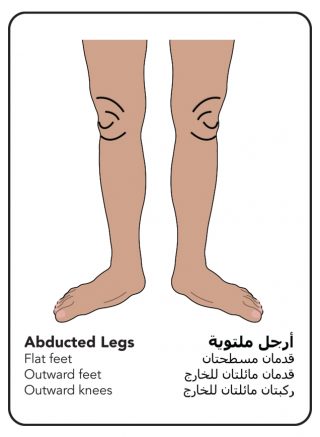
This diagram shows some of the changes that happen in the legs because of flat feet.

يُظهر هذا الرسم التوضيحي بعض التغيرات التي تحدث للساقين بسبب القدمين المسطحتين 


Illustration labelled “Abducted Legs” showing flat feet turned outward and knees angled outward, with English and Arabic labels


In this first example, the arches drop down so the person will find it difficult to walk with their feet straight. So, they abduct their feet and roll off of the inside of their feet which is why the knees are facing outwards. 

في المثال الأوّل، تهبط أقواس القدم ليصبح من الصعب على الفرد المشي بطريقة مستقيمة. لهذا السبب، يبعدون أقدامهم ويديرونها تجاه الداخل ممّا يجعل الركبتين مواجهتين للخارج


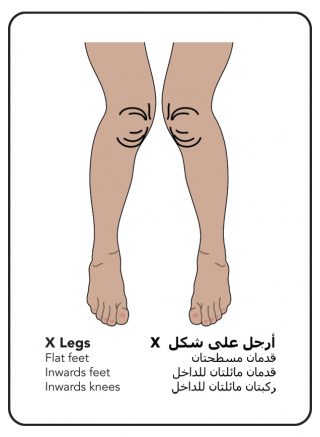
Illustration labelled “X Legs” showing knees angled inward and feet turned inward, with English and Arabic labels


If they try and walk with their feet straight this diagram shows what will happen, the knees end up pointing towards each other and we call it ‘X legs’ because the legs tend to look like the English letter ‘X’.

في حال قاموا بالمحاولة والمشي بطريقة مستقيمة، نرى من خلال هذا الرسم التوضيحي أنّه سينتهي الأمر باتجاه الركبتين نحو بعضهما البعض. هذا ما يُسمّى بالأرجل X، إذ إنّها تبدو مشابهة للحرف X في اللّغة الإنجليزية


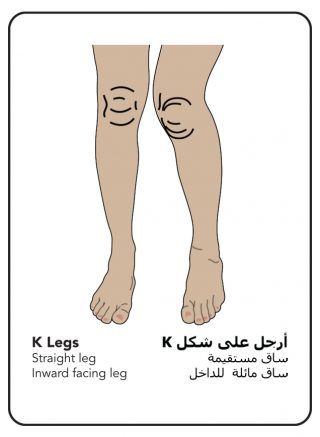
Illustration labelled “K Legs” showing one straight leg and one leg angled inward, with English and Arabic labels


When we have one leg that is straight and the foot arch is up and the other foot arch is collapsed, that knee will face towards the other one. We call that a ‘K leg’ because it looks like the English letter ‘K.’

عندما تكون ساق واحدة مستقيمة والقوسٍ عالٍ بينما قوس القدم الأخرى هابط،  تكون الركبتين متواجهتين. نُسمّي ذلك بالساق K، إذ إنّها تبدو مشابهة للحرف k في اللّغة الإنجليزية


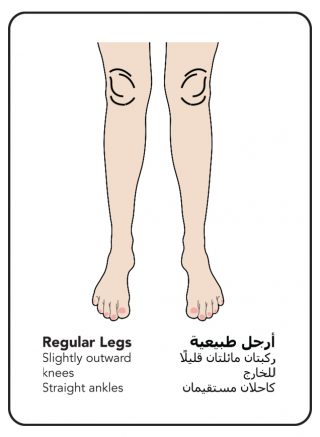
Illustration labelled “Regular Legs” showing knees angled slightly outward and straight ankles, with English and Arabic labels


In this example, the leg is straight and the arches are up with the knees facing away slightly. This is what we call the ‘normal position’.

في هذا المثال، الساق مستقيمة والأقواس مرتفعة مع ركبتين متباعدتين قليلًا. هذا ما يُعرف بالوضعية الطبيعيّة


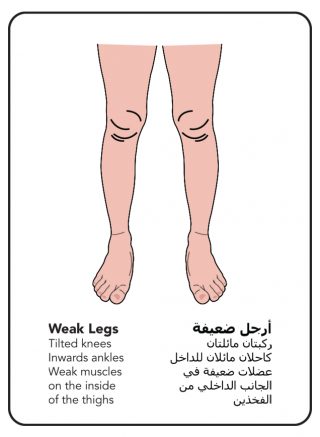
Illustration labelled “Weak Legs” showing tilted knees, inward-angled ankles and weak inner thigh muscles, with English and Arabic labels


In the next case, this person has weak muscles in their legs from lack of exercise as well as flat feet and that is why the knees have dropped down to the side slightly.

في الحالة التالية، لدى هذا الشخص عضلات أرجل ضعيفة ناتجة عن قلّة التمارين وتسطّح القدمين. لهذا السبب هبطت الركبتين قليلًا نحو الطرف 


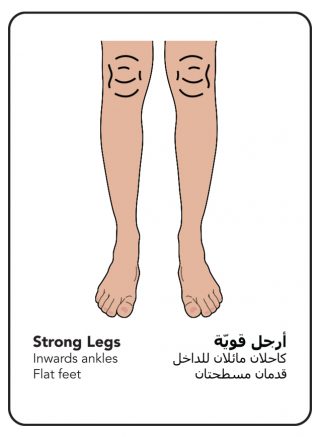
Illustration labelled “Strong Legs” showing flat feet and inward-angled ankles, with English and Arabic labels


For the last case, this is an athlete that has flat feet. They are still able to perform and their thigh muscles are strong and that is why they are able to maintain the position of their knees.

أمّا بالنّسبة للحالة الأخيرة، يتمتّع هذا الرياضيّ بقدمين مسطحتين. لا يزال بإمكانه ممارسة الرياضة بسبب قوّة عضلات الفخذ التّي تحافظ على هذه الوضعية للركبتين 


For more information or to book an appointment please call our clinic +971 4 3435390 or WhatsApp +971 50 3553024

لمزيد من المعلومات أو لحجز موعد يرجى الإتصال بعيادتنا على الرقم : ٠٠٩٧١٤٣٤٣٥٣٩٠ أو التواصل على الواتساب على الرقم  ٠٠٩٧١٥٠٣٥٥٣٠٢٤


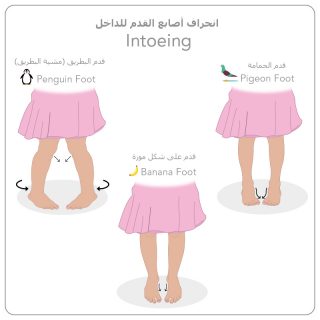
If you want to learn more about intoeing you can read more here 


Can Nail Polish Cause Toenail Fungus? What to Know About White Toenail Changes

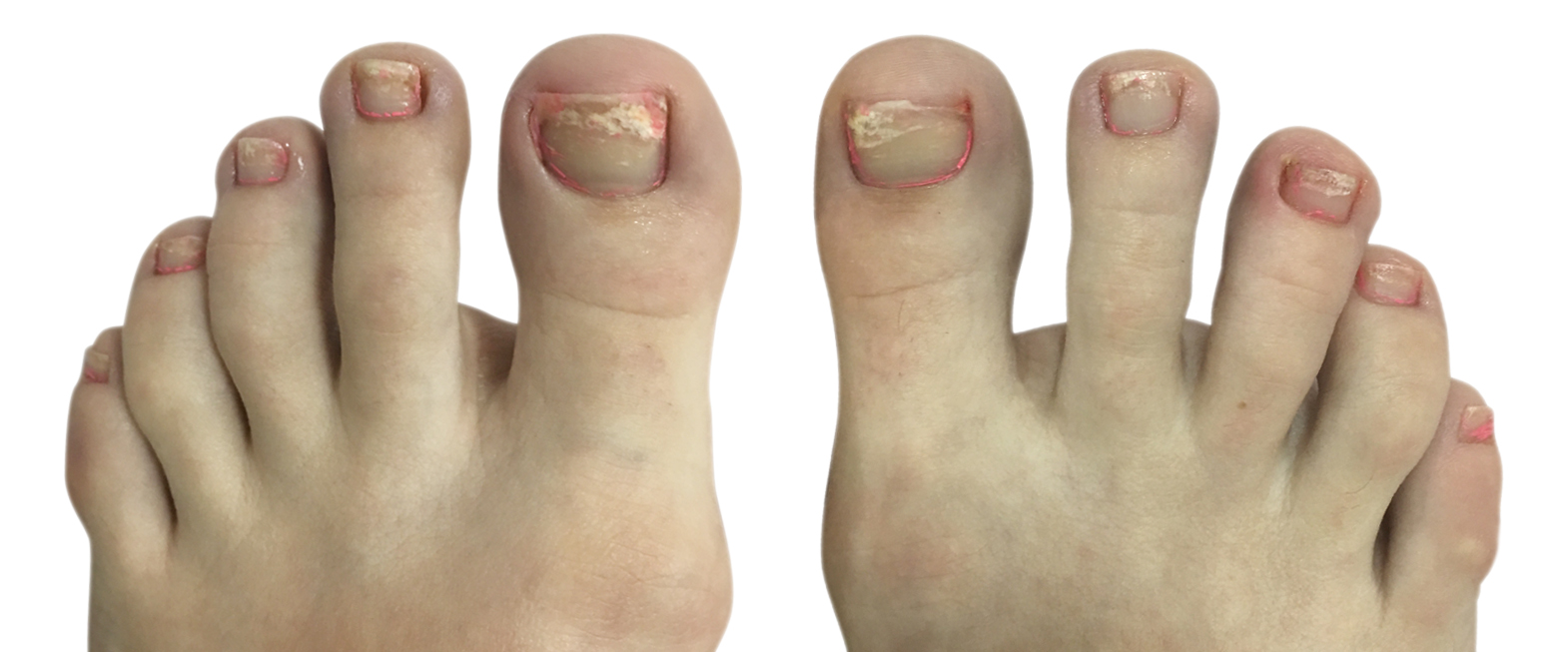
Nail polish can make your toenails look neat, but wearing it for long periods may hide changes in the nail. If you notice white patches, cracking, thickening or crumbling after removing polish, avoid covering the area again until you know what is causing it.

White or chalky marks can be a sign of a fungal nail infection, also known as toenail fungus or onychomycosis. However, nail damage, staining and other conditions can look similar, so it’s best not to self-diagnose.

What should you do if you notice changes?

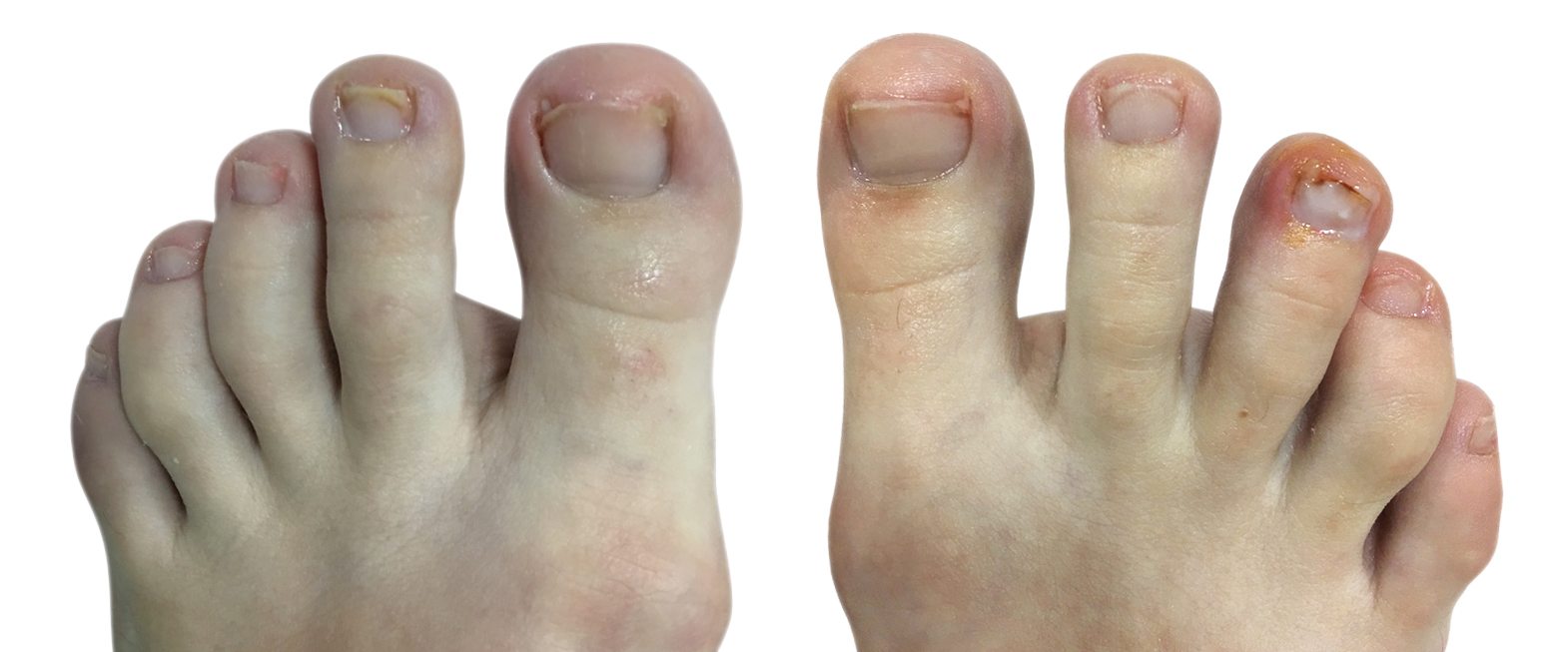
Remove the polish and arrange an assessment with a podiatrist. They can examine the nail and, if needed, take a sample to help confirm whether fungus is present. Depending on the findings, they may carefully reduce loose or damaged nail and recommend a suitable treatment, such as an antifungal nail lacquer.

Toenails grow slowly, so treating a fungal nail infection takes patience and consistent care. Professional nail care may improve the nail’s appearance, but clearing an infection and seeing healthy nail grow back usually takes time.

If you notice a change in your toenail, don’t simply cover it with more polish. A podiatrist can help identify the cause and guide you towards the right care.


Copyright Dubai Podiatry 2026. All rights reserved.

WhatsApp us