
fbpx

Please wait...


BLOG

No more posts

Flat feet in children are commonly caused by hereditary ligament laxity (stretchy ligaments), where the ankle joints are soft and roll inward excessively. This inward ankle movement, known as pronation, causes the foot arch to collapse and the feet to appear flat. In many children, an inward ankle tilt of more than 5 degrees is enough to flatten the arch completely.

When left untreated, flat feet can affect a child’s walking pattern, posture, balance, and overall foot development. Excessive pronation may also place additional strain on the ankles, knees, hips, and lower back as the child grows.

يحدث تسطّح القدمين لدى الأطفال غالبًا بسبب ارتخاء الأربطة الوراثي (الأربطة المرنة أو المتمددة بشكل زائد)، حيث تكون مفاصل الكاحل أكثر ليونة وتميل إلى الانحراف نحو الداخل بشكل مفرط. ويُعرف هذا الانحراف الداخلي للكاحل باسم الكبّ الزائد للقدم (Pronation)، وهو يؤدي إلى انهيار قوس القدم وجعل القدم تبدو مسطحة.

وفي كثير من الأطفال، قد يكون ميل الكاحل إلى الداخل بأكثر من 5 درجات كافيًا للتسبب في اختفاء قوس القدم بالكامل.

وعند ترك هذه الحالة دون علاج، يمكن أن تؤثر في طريقة مشي الطفل، ووضعية الجسم، والتوازن، والتطور الطبيعي للقدمين. كما أن الكبّ الزائد للقدم قد يفرض ضغطًا إضافيًا على الكاحلين والركبتين والوركين وأسفل الظهر مع نمو الطفل، مما يزيد من احتمالية حدوث مشكلات في الجهاز العضلي الهيكلي مستقبلًا.


How Corrective Orthotics Help Flat Feet

Corrective orthotics are custom-made medical devices designed specifically for the child’s feet. They are carefully shaped and angled to match the exact degree of foot and ankle misalignment. The purpose of treatment is to gradually guide the ankles back toward a neutral 0° position, allowing healthy arch development during growth.

Unlike standard insoles, corrective orthotics are individually prescribed based on the severity of the child’s pronation. Each stage of correction is designed to improve ankle alignment progressively, typically by around 5 degrees at a time.

For example, if a child’s ankles roll inward by 15 degrees, treatment may involve a gradual correction plan using multiple orthotics to guide the feet step-by-step into proper alignment. Children with more severe flat feet may require additional stages of correction over time.

كيف تساعد التقويمات التصحيحية في علاج تسطّح القدمين؟

التقويمات التصحيحية للقدم (Corrective Orthotics) هي أجهزة طبية تُصنع خصيصًا لتناسب قدمي الطفل. ويتم تصميمها بعناية وفقًا لدرجة انحراف القدم والكاحل لدى كل طفل، بحيث تكون الزوايا والدعامات متوافقة تمامًا مع احتياجاته الفردية.

يهدف العلاج إلى توجيه الكاحلين تدريجيًا نحو الوضعية المحايدة الطبيعية (0°)، مما يتيح لقوس القدم أن يتطور بشكل صحي أثناء مراحل النمو.

وعلى عكس النعال الجاهزة أو التقليدية، يتم وصف التقويمات التصحيحية بشكل فردي بناءً على شدة الكبّ الزائد للقدم (Pronation) لدى الطفل. وتُصمم كل مرحلة من مراحل العلاج لتحسين محاذاة الكاحل بشكل تدريجي، وعادةً بمعدل يقارب 5 درجات في كل مرحلة.

فعلى سبيل المثال، إذا كان كاحلا الطفل يميلان إلى الداخل بمقدار 15 درجة، فقد تتضمن الخطة العلاجية تصحيحًا تدريجيًا باستخدام عدة تقويمات مختلفة تُستخدم على مراحل لتوجيه القدمين خطوة بخطوة نحو المحاذاة الصحيحة. أما الأطفال الذين يعانون من درجات أشد من تسطّح القدمين، فقد يحتاجون إلى مراحل إضافية من التصحيح على مدى فترة أطول.

Why Early Treatment Matters

Children’s bones, joints, and ligaments are still developing, making early intervention extremely important. Correcting foot alignment during childhood can help support normal walking mechanics, improve posture and balance, reduce stress on the joints, and encourage natural arch formation.

Early treatment with custom orthotics may also help prevent long-term foot and lower limb problems associated with excessive pronation and unstable foot posture.

لماذا يُعدّ العلاج المبكر مهمًا؟

تكون عظام الأطفال ومفاصلهم وأربطتهم لا تزال في مرحلة النمو والتطور، مما يجعل التدخل المبكر ذا أهمية كبيرة. فتصحيح محاذاة القدم خلال سنوات الطفولة يمكن أن يساعد على دعم آلية المشي الطبيعية، وتحسين القوام والتوازن، وتقليل الضغط على المفاصل، وتشجيع التكوّن الطبيعي لقوس القدم.

كما أن العلاج المبكر باستخدام التقويمات الطبية المخصصة للقدم قد يساعد في الوقاية من المشكلات طويلة الأمد التي قد تصيب القدمين والأطراف السفلية نتيجة الكبّ الزائد للقدم (Pronation) وعدم استقرار وضعية القدم. وهذا يساهم في تعزيز نمو صحي وسليم للجهاز العضلي الهيكلي مع تقدم الطفل في العمر.


For more information or to book an appointment please call our clinic +971 4 3435390 or WhatsApp +971 50 3553024
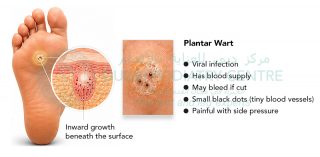


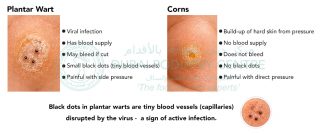
Illustration of a plantar wart on the sole of a foot, showing inward growth beneath the skin and a close-up with small black dots (blood vessels). Text highlights that it is a viral infection, may bleed if cut, and is painful with pressure.

A plantar wart, also known as a verruca, is a viral infection that occurs on the sole of the foot. Unlike warts elsewhere on the body that grow outward as raised bumps, plantar warts grow inward due to the constant pressure of standing and walking. This means they often appear flat on the surface while developing a bulb-like structure deeper within the skin.

Because of this inward growth, plantar warts can be more difficult to treat. Treatments that work well for outward-growing warts on the hands or other parts of the body, such as cryotherapy (liquid nitrogen) or salicylic acid, often have lower success rates on the sole of the foot. This is because the wart is not easily accessible on the surface, making it harder for these treatments to reach the infected tissue effectively.

الثؤلول الأخمصي، المعروف أيضًا باسم الفيروكا (Verruca)، هو عدوى فيروسية تصيب باطن القدم. وعلى عكس الثآليل التي تظهر في مناطق أخرى من الجسم وتنمو إلى الخارج على شكل نتوءات بارزة، فإن الثآليل الأخمصية تنمو إلى الداخل بسبب الضغط المستمر الناتج عن الوقوف والمشي. ولهذا السبب، غالبًا ما تبدو مسطحة على سطح الجلد، بينما تمتد في العمق على شكل كتلة تشبه البصلة داخل الأنسجة.

وبسبب هذا النمو الداخلي، تكون الثآليل الأخمصية أكثر صعوبة في العلاج. فالعلاجات التي قد تكون فعّالة للثآليل التي تنمو إلى الخارج على اليدين أو في أجزاء أخرى من الجسم، مثل العلاج بالتبريد (النيتروجين السائل) أو حمض الساليسيليك، غالبًا ما تحقق معدلات نجاح أقل عند استخدامها لعلاج الثآليل الموجودة في باطن القدم. ويعود ذلك إلى أن الثؤلول لا يكون مكشوفًا بشكل كافٍ على السطح، مما يجعل وصول هذه العلاجات إلى الأنسجة المصابة أكثر صعوبة وأقل فعالية.


So how does a plantar wart develop in the first place?

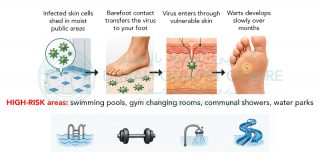
Infographic showing how plantar warts develop: infected skin cells spread in moist public areas, barefoot contact transfers the virus, it enters through small breaks in the skin, and a wart forms over months. High-risk areas listed include swimming pools, gym changing rooms, communal showers, and water parks, with related icons.The condition is caused by a virus that is spread through contact with infected skin cells. This typically occurs in high-risk environments where people walk barefoot, such as swimming pools, gym changing rooms, and water parks. An infected skin cell from another person can be shed onto the floor, and if you walk over that area within a short time frame, the virus may transfer to your foot.

However, the virus cannot easily penetrate healthy skin. The outermost layer of the skin, known as the stratum corneum, acts as a protective barrier. This layer is structured like tightly packed scales, similar to fish scales, forming a strong defence against external invasion.

When the feet are dry, this barrier remains tightly closed and highly protective. But when the skin becomes wet or sweaty for prolonged periods, the structure of this layer changes. The “scales” begin to separate slightly, creating microscopic gaps. This makes the skin more porous and vulnerable to viral entry.

At the same time, an infected foot in a moist environment can shed virus-containing skin cells more easily. These infected cells can then be picked up by another person walking over the same surface, particularly in high-traffic, damp areas.

Once the virus enters the skin, it develops slowly. It can take several months, often up to six months or more, before a plantar wart becomes visible. During this time, the virus grows within the deeper layers of the skin before gradually appearing on the surface.

فكيف يتكوّن الثؤلول الأخمصي في المقام الأول؟

تنجم هذه الحالة عن فيروس ينتقل من خلال ملامسة خلايا الجلد المصابة. ويحدث ذلك عادةً في البيئات عالية الخطورة التي يمشي فيها الأشخاص حفاة الأقدام، مثل أحواض السباحة، وغرف تبديل الملابس في الصالات الرياضية، والحدائق المائية. فقد تسقط خلية جلدية مصابة من شخصٍ ما على الأرض، وإذا مررت فوق تلك المنطقة خلال فترة قصيرة، فقد ينتقل الفيروس إلى قدمك.

ومع ذلك، لا يستطيع الفيروس اختراق الجلد السليم بسهولة. فالطبقة الخارجية من الجلد، والمعروفة باسم الطبقة القرنية، تعمل كحاجز واقٍ. وتتكوّن هذه الطبقة من خلايا متراصة بإحكام تشبه حراشف السمك، مما يشكّل خط دفاع قويًا ضد العوامل الخارجية.

عندما تكون القدمان جافتين، يبقى هذا الحاجز محكم الإغلاق ويوفر حماية عالية. ولكن عندما يصبح الجلد رطبًا أو متعرقًا لفترات طويلة، تتغير بنية هذه الطبقة. إذ تبدأ “الحراشف” الجلدية بالانفصال بشكل طفيف، مما يخلق فجوات مجهرية صغيرة. وهذا يجعل الجلد أكثر نفاذية وأكثر عرضة لدخول الفيروسات.

وفي الوقت نفسه، يمكن للقدم المصابة الموجودة في بيئة رطبة أن تطرح خلايا جلدية تحتوي على الفيروس بسهولة أكبر. ويمكن لهذه الخلايا المصابة أن تنتقل إلى شخص آخر يمشي على السطح نفسه، خاصةً في الأماكن الرطبة كثيرة الاستخدام.

وبمجرد دخول الفيروس إلى الجلد، فإنه يتطور ببطء. فقد يستغرق الأمر عدة أشهر، وغالبًا ما يصل إلى ستة أشهر أو أكثر، قبل أن يصبح الثؤلول الأخمصي مرئيًا. وخلال هذه الفترة، ينمو الفيروس داخل الطبقات العميقة من الجلد قبل أن يبدأ بالظهور تدريجيًا على السطح.

Comparison infographic of a plantar wart and a corn. The plantar wart shows small black dots (blood vessels), is a viral infection with blood supply, may bleed, and is painful with side pressure. The corn is a build-up of hard skin from pressure, has no blood supply, does not bleed, has no black dots, and is painful with direct pressure. A note explains that black dots in plantar warts are tiny blood vessels indicating active infection.Plantar warts are sometimes confused with corns, but they are very different. A corn is a build-up of hard skin caused by pressure and friction. It can often be reduced without bleeding, although it may feel like walking on a sharp point. A plantar wart, however, is a living viral lesion. If disturbed or cut, it will bleed because it has developed its own blood supply within the skin.

One of the key identifying features of a plantar wart is the presence of small black dots within the lesion. These are not roots, but tiny blood vessels known as capillaries. The virus disrupts and constricts these vessels, causing them to appear dark. Their presence is a sign that the wart is active and established within the tissue.

This is where Dermojet® treatment is particularly effective. Because plantar warts grow deep within the skin, a treatment that can reach and disrupt the infected tissue at its core is essential. Dermojet® delivers a high-pressure microjet that penetrates beneath the surface, targeting the area where the virus is thriving and improving the likelihood of successful resolution.

يتم الخلط أحيانًا بين الثآليل الأخمصية ومسامير القدم، لكنهما حالتان مختلفتان تمامًا. فمسمار القدم هو تراكم للجلد السميك والصلب نتيجة الضغط والاحتكاك المتكرر. وغالبًا ما يمكن تقليصه أو إزالته دون حدوث نزيف، رغم أنه قد يسبب إحساسًا يشبه المشي على جسم حاد. أما الثؤلول الأخمصي فهو آفة فيروسية حية. وعند العبث به أو قصّه، فإنه ينزف لأنه يكون قد كوّن شبكة من الأوعية الدموية الخاصة به داخل الجلد.

ومن أبرز العلامات التي تساعد على التعرف على الثؤلول الأخمصي وجود نقاط سوداء صغيرة داخل الآفة. وهذه النقاط ليست جذورًا كما يعتقد البعض، بل هي أوعية دموية دقيقة تُعرف باسم الشعيرات الدموية. ويؤثر الفيروس في هذه الأوعية ويُضيّقها، مما يجعلها تبدو داكنة اللون. ويُعد وجود هذه النقاط علامة على أن الثؤلول نشط ومتجذر داخل الأنسجة.

وهنا تبرز فعالية علاج ديرموجيت® (Dermojet®) بشكل خاص. فبما أن الثآليل الأخمصية تنمو عميقًا داخل الجلد، فإن الوصول إلى الأنسجة المصابة في مركز الثؤلول وتعطيلها يُعد أمرًا أساسيًا لنجاح العلاج. ويعمل ديرموجيت® من خلال إطلاق نفثة دقيقة عالية الضغط تخترق ما تحت سطح الجلد، لتستهدف المنطقة التي ينشط فيها الفيروس، مما يزيد من احتمالية القضاء على الثؤلول بنجاح.


For more information or to book an appointment please call our clinic +971 4 3435390 or WhatsApp +971 50 3553024
 

Continue reading our next blog to learn more : How can you avoid catching a plantar wart?


الأظافر الناشبة غالبًا ما تكون مشكلة عرض وليست مشكلة قصّ. عندما يكون ظفر القدم أعرض من الإصبع، تضغط الجوانب إلى أسفل داخل الجلد. هذا يبطئ نمو الظفر، ويؤدي إلى زيادة سماكة الجذر للظفر، ومع مرور الوقت يصبح الظفر أكثر تقوّسًا وأكثر ألمًا.

الاستئصال الجزئي للظفر هو إجراء طبي دائم في طبّ القدم، يتم فيه إزالة بضعة مليمترات فقط من حافة الظفر بعناية — بالقدر الكافي ليصبح الظفر مناسبًا للإصبع بشكل صحيح. من خلال تخفيف الضغط الجانبي، يمكن للظفر أن ينمو بحرية من الجذر مرة أخرى، مما يقلل الألم ويمنع تكرار المشكلة، مع الحفاظ على مظهر جمالي وطبيعي للظفر.

👣 عودة الوظيفة الطبيعية.
تخفيف الألم.
حل طويل الأمد.

#الظفر_الناشب #طب_القدم #صحة_القدم #العناية_بالأظافر #صحة_الأظافر #الاستئصال_الجزئي_للظفر #العناية_الطبية_بالقدم #أقدام_دون_ألم #أظافر_صحية #طب_القدم_دبي

لمزيد من المعلومات أو لحجز موعد، يرجى الاتصال بعيادتنا على
+971 4 3435390
أو عبر واتساب
+971 50 3553024


Most people think of toenails as purely cosmetic, but in reality, toenails serve an important protective function.

A good way to understand this is to think of a bicycle helmet or a hard hat. Just as a helmet protects your skull from impact, your toenail protects the small bone at the end of your toe, known as the distal phalanx.

This bone is surprisingly fragile and is located in a high-risk area of the body. The toes are frequently exposed to trauma, including objects falling, stubbing, sports injuries, or repeated pressure from footwear. The toenail acts as a rigid protective shield, absorbing and dispersing force away from the bone underneath.

The shape of the toenail is crucial. Rather than transmitting force directly downward, its curved structure helps spread impact sideways into the surrounding fibro fatty padding at the sides and underneath the toe. This load distribution significantly reduces the risk of fractures and crush injuries to the distal phalanx.


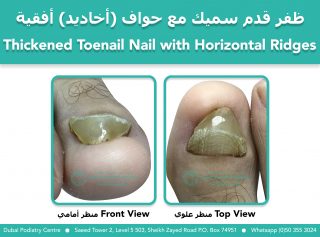
Close-up views of a thickened toenail with horizontal ridges, shown from the front and above


Why Do Toenails Become Thickened or Ridged?

Toenails are highly responsive to trauma. When the nail root, also known as the matrix, senses repeated stress or impact, it adapts by producing thicker nail material as a protective response.

Mild Repetitive Trauma

  • Horizontal ridges or lines across the nail
  • Gradual thickening over time
  • Often caused by tight shoes, sports footwear, or work shoes

Single Significant Trauma

If you stub your toe hard or hit it against a wall, you may notice a horizontal ridge appearing several months later. This ridge represents a short period where the nail temporarily grew thicker to protect itself. Once the trauma stops, nail growth usually returns to normal.


When Thickened Toenails Signal a Footwear Problem

If one toenail, especially the big toenail or fifth toenail, becomes thick while the others remain normal, this often points to daily repetitive trauma rather than infection.

Common causes include:

  • Shoes that are too tight or too narrow in the toe box
  • Almond shaped or pointed shoes worn by people with square or broad forefeet
  • Ill fitting work or safety shoes

With correct footwear, toenail thickness often begins to normalise. However, because toenails grow slowly, it can take around six months before you visibly see healthier nail growth from the root.


Sports, Slippage, and Toenail Damage

Even well fitting shoes can cause nail trauma if the foot slides forward inside the shoe.

This is common in:

  • Tennis
  • Padel
  • Squash
  • Badminton
  • Downhill walking or hiking

Repeated forward movement increases pressure on the nail, sometimes leading to bruising beneath it. In more severe cases, blood may collect under the nail, known as a subungual haematoma.

If the trauma is strong enough, the nail may shed naturally after two to three months as a new nail grows underneath. Treatment is usually unnecessary unless the nail becomes painful, there are signs of infection, or the old nail fails to detach properly.

In these cases, a podiatrist can safely assist with nail removal and aftercare.

Tip. Cushioned sports or hiking socks with extra padding in the toe box can significantly reduce impact and prevent nail damage.


Curved and Involuted Toenails

Some toenails thicken not because of footwear, but because of their shape.

A healthy toenail resembles an upside down dinner plate.
Problem nails may resemble an upside down dinner bowl, curving excessively at the sides.

When a nail is too wide for the toe, it embeds into the surrounding skin, growth in length becomes restricted, and the nail thickens instead. Increased thickness causes more curvature, and more curvature causes more pressure. This vicious cycle often results in a very thick, involuted toenail.

In these cases, nail bracing alone is often ineffective unless the nail is aggressively thinned. The most reliable solution is a medial and lateral partial nail avulsion with phenolisation, often followed by a total nail avulsion. This allows a new, flatter nail of the correct width to grow back.


Toenail Trauma from Toe Hyperextension

Another overlooked cause of toenail thickening or separation is hyperextension of the toe.

When walking or running, the heel strikes the ground and the big toe lifts excessively upward. The nail repeatedly hits the roof of the shoe. This can happen even when shoe size is correct.

While taping or splinting may limit movement, it often leads to tendon strain or tendonitis because the muscle force remains strong.

In most cases, the safest approach is to allow natural toe movement and protect the nail with thick cushioned socks, particularly in the toe box.

Diabetic socks, hiking socks, and specialist padded sports socks are often very effective.


When to See a Podiatrist

You should seek professional assessment if a toenail continues to thicken despite correct footwear, one nail looks significantly different from the others, the nail is painful, curved, or repeatedly bruising, or a nail has detached or is not shedding normally.

Early assessment can prevent long term nail deformity and unnecessary procedures.


For more information or to book an appointment please call our clinic +971 4 3435390 or WhatsApp +971 50 3553024


Troublesome Ingrown Toenails and Their Permanent Solution

By Michelle Champlin, Chief Podiatrist – Dubai Podiatry Centre


Troublesome ingrown toenails that require professional trimming can lead to infection and a great deal of pain if left untreated. Fortunately, there is a permanent solution available through podiatric care.


Why Ingrown Toenails Develop

In some patients, the toenail itself has structural features that make it prone to ingrowth. For example, when the nail plate is too wide for the width of the toe, much like overcrowded teeth in a small jaw, there simply isn’t enough space for it to fit properly.

A toenail that is flat and fan-shaped, widening towards the tip of the toe, often causes severe ingrown toenails. Similarly, when the nail collapses inward and becomes involuted, the edges dig into the surrounding skin, creating intense pinching and pressure.


When Trimming Isn’t Enough

Although corrective trimming and regular medical pedicures can help, they may not resolve the problem completely. Because the nail continues to grow in the same distorted shape from its root, professional trimming offers only temporary relief. In persistent cases, a minor surgical procedure called a Partial Nail Avulsion provides a long-term solution.


Partial Nail Avulsion Explained

This procedure is performed under local anaesthetic, specifically formulated for use in the toes. Unlike dental anaesthetics, which contain adrenaline to reduce blood flow, podiatrists use plain anaesthetic solutions without vasoconstrictors to preserve circulation. Maintaining blood flow is essential, as restricting it for too long can cause tissue necrosis.

To control bleeding during the short treatment period, a tourniquet is gently applied to the toe, making the area temporarily pale and bloodless. This ensures a clear field for the procedure. The podiatrist then removes the ingrown portion of the nail while leaving the healthy nail intact.

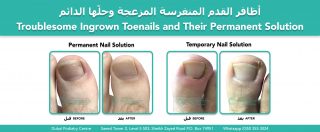
Graphic comparing before-and-after photos of ingrown toenail treatment, showing a permanent nail procedure alongside temporary nail trimming

Preventing Regrowth

If the removed nail section is not treated, it will simply grow back in the same way. To prevent recurrence, the podiatrist applies a chemical called phenol to the exposed nail root and matrix, a process known as phenolization.

Phenol chemically cauterizes the nail root, preventing regrowth while minimizing scarring. Surgical removal of the nail root, by contrast, can result in scarring and, over time, may still allow regrowth.


Healing and Aftercare

Phenolization causes a mild chemical burn, leading to a temporary inflammatory reaction called a phenol flare and some sticky exudate from the healing tissues. This is normal.

The risk of infection is extremely low when post-operative care instructions are followed. Podiatrists provide sterile dressings, antiseptic solutions, and close follow-up to ensure healthy tissue repair.


Scope of Practice and Expertise

Partial and total nail avulsion procedures are considered the gold standard for treating chronic ingrown toenails. Podiatrists perform these procedures routinely and are specifically trained for them within their professional scope of practice.

In the United Arab Emirates, the Department of Health and Ministry of Health explicitly include these procedures within the podiatrist’s scope of practice, ensuring that patients receive safe, regulated, and expert care.


For more information or to book an appointment please call our clinic +971 4 3435390 or WhatsApp +971 50 3553024


Flat feet can cause changes with the legs in some cases.

In this first example, the ankles have leaned in and the arches have collapsed down.

This in turn makes it every difficult for the person to walk with straight feet.

So, they’ have moved their feet outwards and this is called abduction.

This also makes the knees point outwards and can creates issues with the hips.

In this next example, the arches have collapsed, the ankles are leaning in and it brings the knees in together. We call this ‘X’ legs.

In this one, one leg is straight, the other foot has a collapsed arch and an ankle leaning in.

This brings the knee in to touch the other.

So one leg is straight and the other is not, we call this a ‘K’ leg.

In all of these cases it is very import to put something under the feet, lift the arches and tilt the ankles back to straight.

This helps the ankle, knee and hip alignment back in to the perfect position.


قد تسبب القدم المسطحة تغيرات في الساقين في بعض الحالات.

في المثال الأول، يميل الكاحلان إلى الداخل ويهبط قوسا القدم.

وهذا يجعل المشي مع توجيه القدمين إلى الأمام أمرًا صعبًا للغاية.

لذلك، يوجّه الشخص قدميه إلى الخارج، ويُسمّى ذلك «إبعاد القدمين».

وقد يؤدي هذا أيضًا إلى توجيه الركبتين إلى الخارج، مما قد يسبب مشكلات في الوركين.

في المثال التالي، يهبط قوسا القدمين ويميل الكاحلان إلى الداخل، فتتقارب الركبتان. ويُسمّى ذلك «الساقين على شكل X».

في هذا المثال، إحدى الساقين مستقيمة، بينما قوس القدم الأخرى منخفض والكاحل يميل إلى الداخل.

وهذا يجعل إحدى الركبتين تقترب من الأخرى.

أي إن إحدى الساقين مستقيمة والأخرى ليست كذلك، ويُسمّى هذا «الساق على شكل K».

في جميع هذه الحالات، من المهم وضع دعامة تحت القدمين لرفع قوسي القدمين وإعادة الكاحلين إلى وضع مستقيم.

يساعد ذلك على تحسين محاذاة الكاحلين والركبتين والوركين وإعادتها إلى وضعية سليمة.

For more information or to book an appointment please call our clinic +971 4 3435390 or WhatsApp +971 50 3553024


Young children with flat feet.
.الأطفال الصغار بأقدام مسطحة

It is quite normal for babies and little children to have flat feet.
.من الطبيعي جدًا أن يكون لدى الرضع والأطفال الصغار أقدام مسطحة

They have extra fatty padding in the sole of their foot and as they grow a little bit older the fatty padding disperses.
.لديهم بطانة دهنية إضافية في باطن أقدامهم، وعندما يكبرون قليلاً تختفي البطانة الدهنية

However, if you think there is a problematic flat foot you might notice the child is walking with their feet turned outwards.
.ومع ذلك، إذا كنت تعتقد أن هناك مشكلة في القدم المسطحة، فقد تلاحظ أن الطفل يمشي وأقدامه متجهة إلى الخارج

When they are running you might notice their feet turned outwards and the legs are quite wide.
.عندما يركضون، قد تلاحظ أن أقدامهم متجهة إلى الخارج وأرجلهم واسعة جدًا

When they are standing they might have to stand with their feet quite wide apart with their feet turned outwards as well.
.عندما يقفون، قد يضطرون إلى الوقوف وأقدامهم متباعدة تمامًا مع توجيه أقدامهم إلى الخارج أيضًا

That type of flat foot requires treatment.
.هذا النوع من القدم المسطحة يتطلب العلاج

The treatment we would propose to do is put an insole inside the shoes that lifts the arches up and gets the ankles and the legs aligned.
.العلاج الذي نقترح القيام به هو وضع نعل داخل الحذاء يعمل على رفع الأقواس للأعلى ومحاذاة الكاحلين والساقين


For more information or to book an appointment please call our clinic +971 4 3435390 or WhatsApp +971 50 3553024

‎لمزيد من المعلومات أو لحجز موعد يرجى الإتصال بعيادتنا على الرقم : ٠٠٩٧١٤٣٤٣٥٣٩٠ أو التواصل على الواتساب على الرقم  ٠٠٩٧١٥٠٣٥٥٣٠٢٤


These are some of the effects that flat feet can have on a growing child.

When a child is very young, 2 years old, it is quite normal for them to have flat feet.

As the child grows to 4 years old, the arches of the feet normally develop quite nicely and they grow out of flat feet.

If you notice your young child is having difficulty walking, falling down too easily and they become tired, it could be because the ankles are leaning-in. This makes the feet look flat and that is very tiresome for the child.

Without treatment when the child gets to 10 years old you might notice the feet are even more flat, the feet turn outwards and they are beginning to get a slouched posture.


Illustration of a 2-year-old child with feet turned outward and a wide stance, highlighting delayed walking, frequent falls, and balance concerns Rear-view illustration of a 10-year-old child with feet turned outward, with captions noting possible difficulty running, jumping, and sprinting Rear-view illustration of a 16-year-old with outward-facing feet and a slouched posture, highlighting possible difficulty running


Without treatment the child grows to 16 years old and may have feet turned out even more with very flat feet and obvious slouched position when they standing and walking.

Treatment as young as possible involves putting an insole inside the child’s school shoes and sports shoes that help to lift the arches and align the ankles. The child will have better stability and ease when it’s come to running and doing sports.


For more information or to book an appointment please call our clinic +971 4 3435390 or WhatsApp +971 50 3553024


Do you have a young person in your family that has poor posture, shoulder slouching and feet turning out as they walk?

It could be a result of flat feet. When the feet are flat, the arches collapse, the feet turn outwards, the hips tilt forward and the shoulders roll forward.

In the clinic we would put orthotic insoles inside their shoes, under their feet, helping to lift the arches.

Turning their feet into a straighter position, tilt the pelvis, rib cage, shoulders and raising the chin.

These orthotic insoles go into school shoes and sports shoes to allow for the better posture.


For more information or to book an appointment please call our clinic +971 4 3435390 or WhatsApp +971 50 3553024


A client wants to buy some sneakers.

She went into Chanel so we advised her to take the insoles out of the shoes.

She thought she was a size 39, but size 39 was too small and so was size 40.


For more information or to book an appointment please call our clinic +971 4 3435390 or WhatsApp +971 50 3553024


.أحد العملاء تريد شراء بعض الأحذية الرياضية

.ذهبت إلى شانيل لذلك نصحناها بإخراج النعال من الحذاء

.لقد ظنت أن مقاسها ٣٩، لكن مقاس ٣٩ كان صغيرًا جدًا، وكذلك مقاس ٤٠


‎لمزيد من المعلومات أو لحجز موعد يرجى الإتصال بعيادتنا على الرقم : ٠٠٩٧١٤٣٤٣٥٣٩٠ أو التواصل على الواتساب على الرقم  ٠٠٩٧١٥٠٣٥٥٣٠٢٤


Copyright Dubai Podiatry 2026. All rights reserved.

WhatsApp us